

Review · CRETAN COOKING CLASSES
Chania: Authentic Cooking Class
Cooking in a real Cretan home makes this class feel different fast. I love the wood-fired stone oven timing (that long roast shapes the whole meal) and the family-atmosphere where you’re treated like part of the household. One thing to plan for: it’s about a 10 to 15 minute drive from central Chania, so you’ll want a taxi/car or to coordinate pickup.
You’ll start with a homemade refreshment or Greek coffee, then work through a Mediterranean-style menu that includes hands-on rolling and stuffing, plus easy-to-learn techniques you can repeat later. The possible drawback is that, because the event is semi-private, you might share transport with other participants.
In This Review
- What makes this class feel authentically Cretan
- Key highlights you’ll care about
- Step inside: your first drink, your first lesson
- The 4-hour flow: how the menu fits together
- Thieves dinner and the wood-fired oven magic
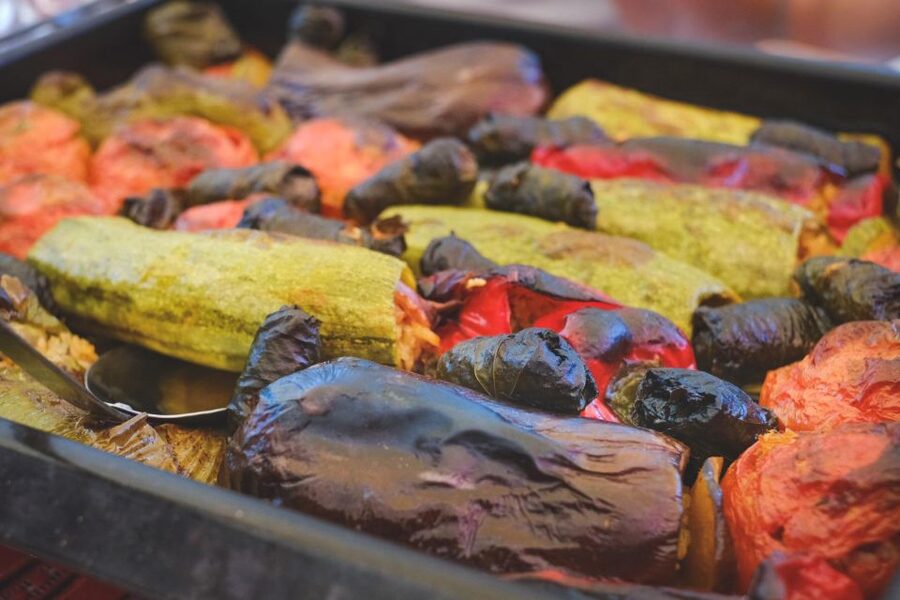
- Dolmades and stuffed vegetables: learn the roll, not just the recipe
- Kalitsounia pies: rolling pin confidence with cheese and wild greens
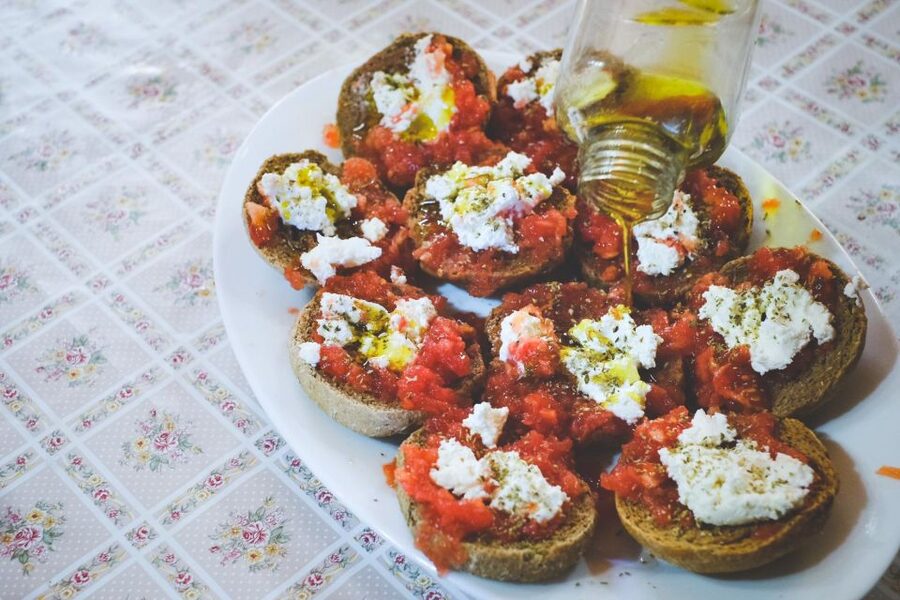
- Tzatziki and dakos: the snacks you’ll want to remake immediately
- Dinner with wine, raki, and dessert that actually matters
- Who is Veerna, and why the teaching feels personal?
- Price and value: is $129 worth it?
- Getting to Nerokourou: parking, pickup, and the taxi question
- What if you have kids, a group, or dietary needs?
- Should you book this Cretan cooking class?
- FAQ
- How long is the Chania cooking class?
- What do you cook during the class?
- Is transportation included?
- Where is the class located?
- What language is the instruction in?
- What’s included in the price?
- Is there dessert?
- Is the class wheelchair accessible?
- Do you get recipes or leftovers?
What makes this class feel authentically Cretan
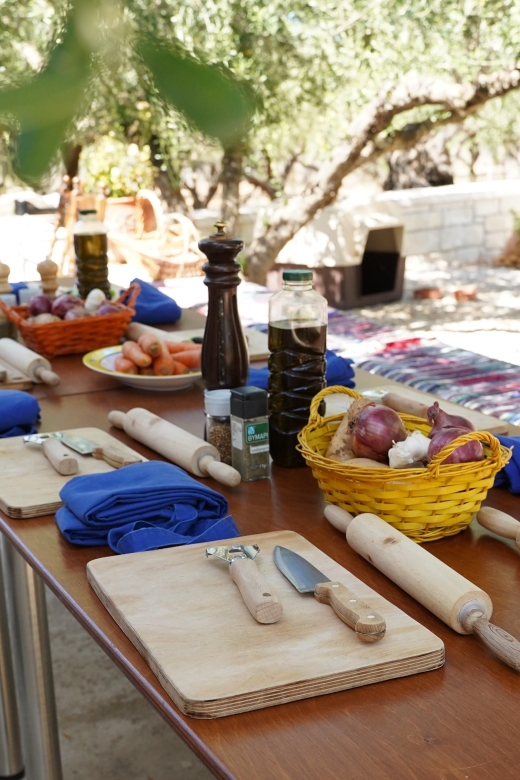
The setting is the big reason people keep talking about it: avocado and olive trees overhead, an orchard vibe, and a purpose-built kitchen and outdoor area where baking is part of the schedule. I also really like that ingredients are chosen from the garden or from local farmers, because it makes the food taste like it came from somewhere specific, not a supermarket recipe list.
And yes, the hosts earn trust quickly. Veerna is often singled out for being the best cook in the area, with kalitsounia sold for years. Still, if you’re expecting a strict classroom format with lots of sitting and note-taking, you may prefer a different style. This one is work-first, eat-first, laugh-in-between.
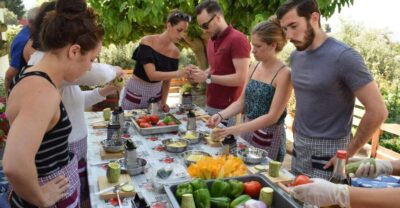
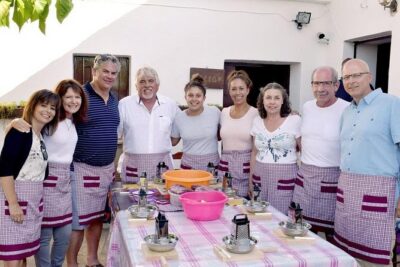
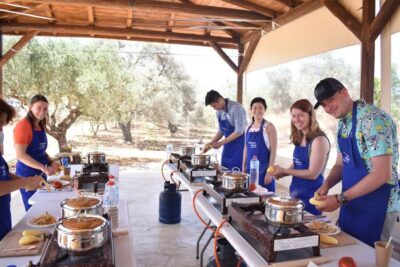
Aprons on for a proper Cretan kitchen
- Chania: Authentic Cooking Class
★ 5.0 · 74 reviews - Chania Cooking Class in Crete with rustic, delicious and homely Cretan food!
★ 4.5 · 14 reviews - Authentic and Traditional Cooking Class in Chania Crete
★ 5.0 · 5 reviews
Key highlights you’ll care about
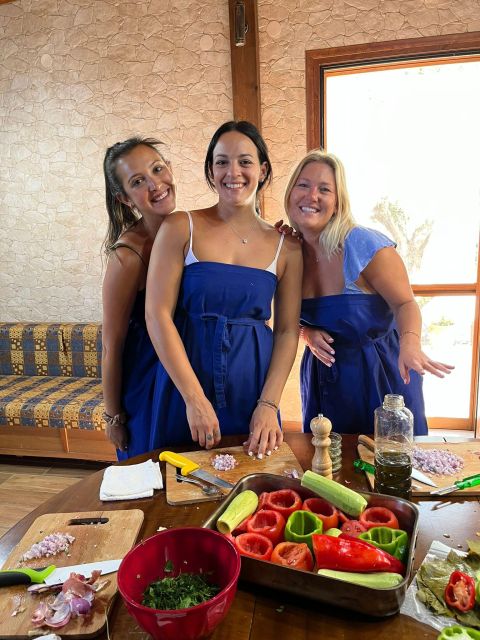
- Garden-to-table ingredients gathered from the property or local farmers, so the flavors feel local and not generic
- Wood-fired lamb with history, including why it’s called thieves dinner and the story behind the name
- Hands-on dolmades rolling, where you get the practice to roll grape leaves without fear
- Kalitsounia pie dough practice, using a rolling pin and learning how to fill cheese and wild greens
- Appetizers served after prep, so you get a tzatziki and dakos break that tastes like instant reward
- Time with the family and other diners, with conversation, humor, and a proper sit-down meal
Step inside: your first drink, your first lesson
Your afternoon starts with a welcome that feels personal. You’ll get a homemade refreshment or Greek coffee, plus cookies to snack on while the plan for the meal gets explained. This is when the hosts set expectations: you’ll be cooking a curated set of essential Mediterranean dishes, not just doing one or two demos.
This opening also matters because it tells you how the class will run. It’s not rushed, and it’s not random. The structure is built around what can cook slowly, what needs rolling, and what should be made while something else is baking. That rhythm is one of the reasons the experience lands well for both food lovers and first-timers.
And you’re not stuck in a sterile studio. You’re invited into the household feel of the place. Familiar faces may stop by to greet guests, and that small detail changes the vibe from activity to actual community.
The 4-hour flow: how the menu fits together
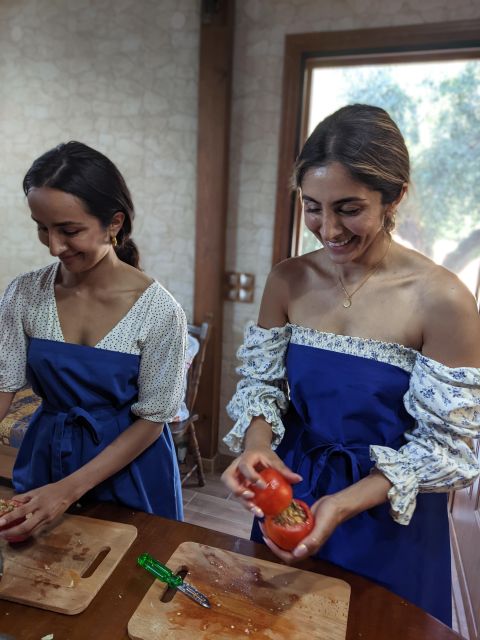
The whole experience is about four hours, and the timing is part of the craft. Dishes are cooked in a way that keeps the work moving but doesn’t leave you standing around.
Here’s the practical sequence you can expect:
You start with oven-roasted lamb early because it needs time in a wood-fired stone oven, well over two hours. While that cooks, you shift into prep tasks that don’t require constant oven attention.
Next comes stuffed vegetables and stuffed grape leaves (dolmades). The class builds confidence here by letting you gather ingredients from the garden, then guiding you through stuffing and rolling.
After that, you move to dough work for kalitsounia, the traditional pies. You roll out the dough, fill it with cheese and wild greens, and learn how to handle it so it’s workable without turning into a disaster.
Then you circle back to snacks and appetizers. They’re prepared later in the process but enjoyed first, including tzatziki and dakos. It’s a smart order because you get the fun payoff before the final meal.
Finally, you sit down for the dishes you made, with lots of local wine and raki, and dessert at the end. The group meal part is a big deal here: you’re not just cooking and leaving. You eat together, properly.
Worth lining up before you lock in this one:
Thieves dinner and the wood-fired oven magic
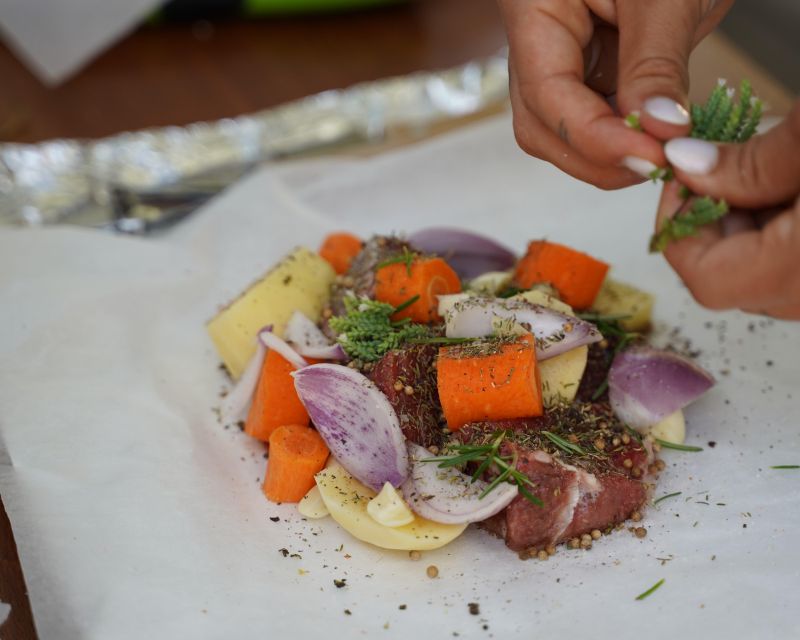
The centerpiece is the lamb, roasted in a wood-fired stone oven. That slow cooking isn’t just for flavor, though it absolutely does deliver deep, comforting results. It’s also practical staging. When one big thing is roasting, the rest of the class can stay hands-on without losing momentum.
You’ll also learn why the dish is called thieves dinner and what its historic significance is. You don’t need to know the story in advance. The hosts explain it as part of the cooking, which turns an ingredient into context.
One thing I like about this setup is that it teaches you how Mediterranean home cooking really works. Often the most important dish is the one you start first, then build everything else around. It’s the opposite of fast-cooking culture, and you’ll feel the difference in the final meal.
Dolmades and stuffed vegetables: learn the roll, not just the recipe
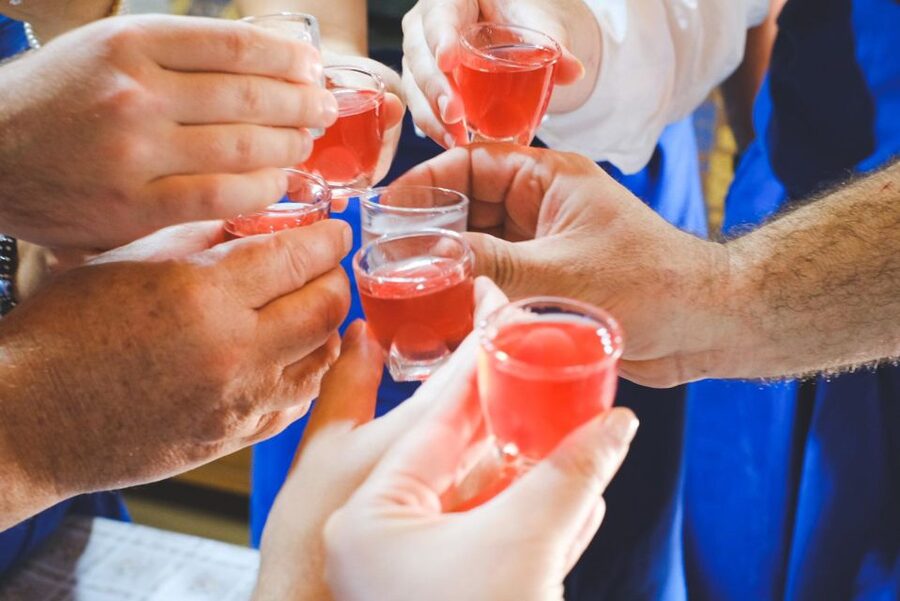
Dolmades are where many people get nervous, but this class uses a steady approach. You gather herbs and veggies for the stuffing from the garden area and/or local sources. That part matters because you’ll understand what’s going into the filling, not just follow measurements.
Then you learn the delicate skill of rolling grape leaves. The rolling technique is taught in a way that makes it feel doable, even if you’ve never touched dolmades before. You get to practice, and you’re not left to guess.
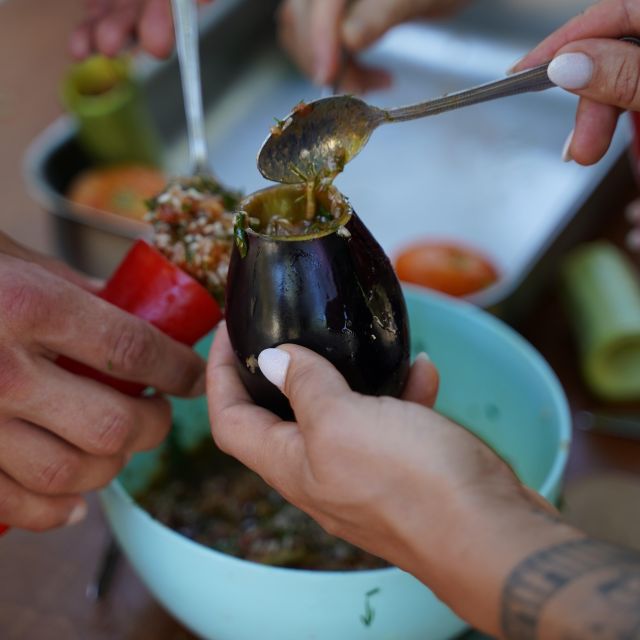
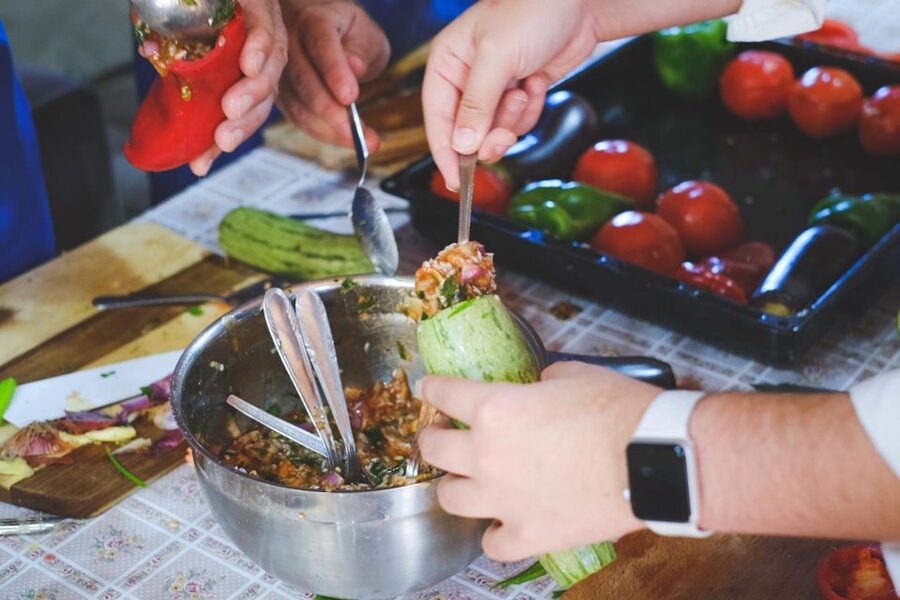
Stuffed vegetables come alongside this, so you’re working with similar flavors and methods while still getting variety in shape and texture. The result is that you end up with more than one new skill. You leave with understanding.
A practical tip: plan for having a little patience with the grape-leaf rolling. This isn’t a five-minute trick. But the payoff is real, because you’ll sit down later with a plate where you made the complicated part.
Kalitsounia pies: rolling pin confidence with cheese and wild greens
After dolmades, you shift into dough work for kalitsounia. This is another highlight that shows up again and again in the praise: people say the instructions are accessible enough to try at home.
The host guidance focuses on the dough texture and how to roll it without overworking it. You’ll roll out the dough, fill it with cheese and wild greens, and form the pies. It’s hands-on from start to finish, and the process is paced so you don’t feel like you’re fighting the clock.
Veerna is repeatedly mentioned as a top cook in the area, especially for her kalitsounia that have been selling for years. That reputation shows up in how the class teaches the pie-making part. You’re not just copying a shape; you learn what the dough should feel like as it becomes pies.
If you’re the type who likes tangible progress, this is your moment. You’ll see your work go from dough to dinner-ready food while you’re still inside the class.
Tzatziki and dakos: the snacks you’ll want to remake immediately
One of the smartest moves in the flow is how appetizers work. Tzatziki and dakos are prepared later but enjoyed first. So while the bigger dishes cook, you get immediate rewards that keep energy high.
Tzatziki is simple, but it’s also where good technique matters. In this class, you learn how to build that creamy, tangy component into something you can recreate later.
Dakos brings a different kind of satisfaction. It’s not just filler; it’s a Cretan-style snack that feels like a meal starter with a personality. Even if you’ve had Greek food before, dakos is the kind of dish you might not have made yourself.
And because the class is taught in a friendly, conversational way, these appetizers become training wheels for later dinner plates. You taste, you understand, and you move on.
Dinner with wine, raki, and dessert that actually matters
When it’s time to eat, you’ll enjoy the dishes you created together. The class includes copious amounts of local wine and raki, and the meal isn’t a quick walk-by plate situation. You sit, you eat, and you talk.
That shared table moment is one reason the reviews stay so consistent. People describe it like family dinner, with hosts and staff mixing instruction with warmth. It’s also when you get the clearest sense of what the class is really selling: not just food, but connection.
Dessert is always part of the end of the experience. And while the exact sweets aren’t listed in the details you provided, the consistent promise is that something sweet is offered at the end, so you can count on a finish that doesn’t stop at dinner.
You may also get practical extras. Several past participants mention to-go boxes for leftovers, and some note that the recipes are provided so you can try again at home. That’s value beyond the moment.
Who is Veerna, and why the teaching feels personal?
The name that comes up again and again is Veerna, described as the best cook in the area. She isn’t just a chef; she’s a host and teacher, and people mention her warmth, humor, and ability to explain.
Other names show up too, which helps explain why the experience feels like a team effort rather than a one-person show. In one mention tied to a different scheduled session, Nico picked guests up and Alex assisted, and participants talked about bread-making history in that context. Across classes, the thread is the same: you’re not stuck listening. You’re involved.
If you’re worried about language barriers, good news: instruction is in English.
Price and value: is $129 worth it?
For $129 per person over roughly four hours, you’re paying for several things at once:
- Multiple dishes, not just one or two course components
- An ingredient sourcing approach that uses garden harvest and local farmers
- Full meal service: lunch or dinner depending on the timing, plus wine and raki
- Hands-on teaching and guided cooking, including techniques like dolmades rolling and dough work
- A sit-down shared meal with hosts, plus dessert
That value is strongest if you want a guided way to learn Cretan cooking without playing guesswork at home. If you already cook everything well and hate group activities, you might find classes like this less useful.
But if you’re traveling and want the kind of food experience that sticks in your head, this price often lands as fair to generous. You’re not buying ingredients only. You’re buying time with the people behind the recipes and the chance to eat what you make.
Getting to Nerokourou: parking, pickup, and the taxi question
Chania Cooking Class is located 10 to 15 minutes from the center of Chania in the neighborhood of Nerokourou. It’s in a beautiful residential area, and you can access it by car or taxi.
Parking is along the fence. If you’re driving yourself, that detail matters because it avoids the last-minute stress that can ruin your start.
Transportation is a mixed bag depending on how you book. The details you have say transportation isn’t included, but pickup is also listed as included, plus transfer can be added for an extra fee based on your location. In plain terms: plan either on meeting/pickup as offered, or on arranging your own taxi/car. If you want the easiest door-to-door option, ask about the extra-fee transfer when you book.
Also note that transport is semi-private. They use a 9-seat van and a 5-seat EV, and you might share with other participants.
What if you have kids, a group, or dietary needs?
From the feedback patterns, this class works for families. One family even mentioned that their 11-year-old and 14-year-old did fine and ended up eating vegetables they expected to dislike. That’s not a guarantee, but it suggests the menu isn’t overly picky or overly complicated for teenagers.
Dietary alternatives: one participant mentioned a vegetarian alternative was provided for those who needed it. If you have allergies or a strict diet, you’ll want to confirm specifics before you go, since the provided details only confirm that an alternative exists, not what every limitation will be.
Also, the class is wheelchair accessible, which is an important check if mobility is part of your planning.
Should you book this Cretan cooking class?
Book it if you want a Chania food experience that feels like real life in an olive orchard, not a demo behind glass. You’re learning real techniques: roasting lamb in a wood-fired stone oven schedule, stuffing and rolling grape leaves, and making kalitsounia dough. You’ll eat what you make with wine, raki, and dessert, and you’ll get a meal that’s more than just tasty. It has context.
Skip it if you’re trying to do everything efficiently and hate any kind of off-center travel. It’s not in the old town core. You’ll need a taxi/car or pickup/transfer planning. Also skip it if you want a strictly passive tour where you watch and never touch food.
If you’re on the fence, here’s the practical call: if you can spare four hours and you’re excited by hands-on cooking in an olive-tree setting, this one is a strong yes.
FAQ
How long is the Chania cooking class?
It lasts about 4 hours.
What do you cook during the class?
You’ll prepare oven-roasted lamb, stuffed vegetables, stuffed grape leaves (dolmades), kalitsounia pies, plus appetizers including tzatziki and dakos.
Is transportation included?
The details provided say transportation is not included, but pickup is listed as included, and transfer is available for an extra fee depending on your location. You should confirm what meeting point or pickup applies to your booking.
Where is the class located?
It’s 10 to 15 minutes from the center of Chania in the Nerokourou neighborhood. Parking is along the fence.
What language is the instruction in?
The class is taught in English.
What’s included in the price?
You get everything you need for the experience, including ingredients, lunch or dinner, and generous amounts of local wine and raki.
Is there dessert?
Yes. Something sweet is always offered at the end.
Is the class wheelchair accessible?
Yes, it is wheelchair accessible.
Do you get recipes or leftovers?
Some participants mention recipes are provided to try at home and that leftovers may be given in to-go boxes.
Try Your Hand at Something

More Tour Reviews in Chania


Cook the Cretan Classics
Fresh Off the Boat: Newest Crete Reviews



Cretan Cooking Classes, compared.
 ★ 4.9Chania: Authentic Cooking Class in the White MountainsFrom $129529 reviews
 ★ 5.0The Real Cretan Cooking ExperienceFrom $133528 reviews
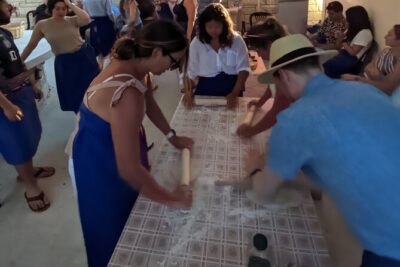 ★ 5.0Chania Cooking Class-The Authentic Enjoy traditional Cretan mealFrom $133339 reviews
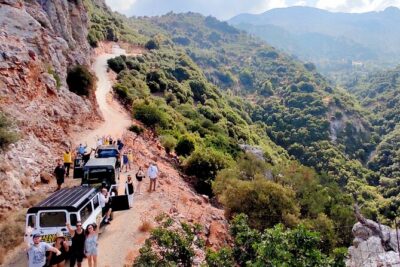 ★ 5.0Full-Day Jeep Safari Tour with Cooking LessonFrom $111284 reviews
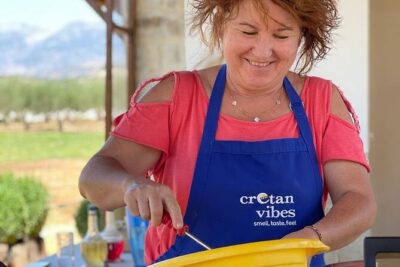 ★ 5.0Cretan Cooking Class and Olive Oil TastingFrom $114178 reviews
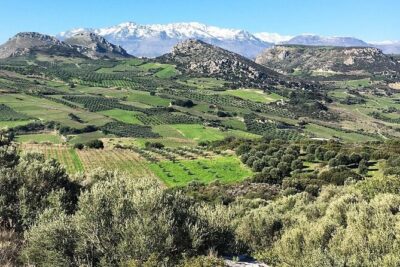 ★ 5.0Olive Oil, Soap, Wine, Raki – Flavorful Culinary JourneyFrom $111119 reviews
 ★ 5.0Rethymno: Chrysoula’s Cretan Home Cooking LessonsFrom $11698 reviews
 ★ 5.0Moires: Cooking Class and Olive Oil Tasting at a Family FarmFrom $10093 reviews
Browse the lists this tour appears in