
Review · WORKSHOPS
Rethymno: Traditional Arts & Workshops Tour.
Handmade Crete starts in Rethymno’s lanes. This Rethymno Traditional Arts & Workshops walk keeps things human and real: you’ll meet craftsmen in family-run workshops, talk techniques, and even make something with your own hands. With English guide Virginia leading the way, the tour turns a quick walk into a behind-the-scenes look at how Cretan traditions keep working.
My favorite part is the hands-on moment. I love how the tour makes papier-mâché more than a demo—you create a piece you can take home, made from recycled paper and cardboard. The other big win for me is the souvenir set: you’ll leave with handmade items from wood and leather, not generic “made somewhere else” stuff.
The only thing to consider is time. You visit four workshops in a short loop (each workshop runs about 20 minutes), so if you want long, slow instruction at just one craft, this may feel a bit fast.
In This Review
- Key highlights at a glance
- Rethymno’s Old Town craft walk: why it feels different
- Meeting point, pacing, and how to plan your day
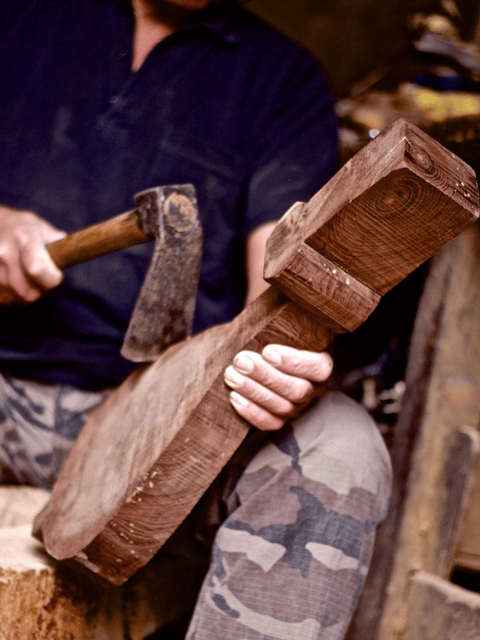
- Stop 1: the wood workshop and the magic of basic tools
- Stop 2: a quick detour through artisan lanes
- Stop 3: leather work from a third-generation craftsman
- Stop 4: papier-mâché art you actually make
- Stop 5: the Cretan lyra workshop and the story behind the music
- Why the guide matters: Virginia’s role in making it feel personal
- Price and value: what $81 actually buys you
- What’s the tradeoff? When this tour may not be for you
- Who should book this tour?
- FAQ
- How long is the Rethymno Traditional Arts & Workshops Tour?
- What is included in the tour price?
- Where do we meet for the tour?
- Is food or drinks included?
- Are children allowed?
- What language is the tour guide?
- Is there a cancellation option?
- Should you book this tour?
Key highlights at a glance
- Four family-run workshops in Rethymno Old Town, each with a different craft focus
- Hands-on papier-mâché using recycled materials, plus something you can take home
- Wood carving with bare hands and simple tools, ending with a small carved souvenir
- Third-generation leather work and a personalized leather keepsake
- Cretan lyra workshop access, including documentary-level instrument craftsmanship talk
Worth lining up before you lock in this one:
- Rethymno: Chrysoula’s Cretan Home Cooking Lessons
★ 5.0 · 98 reviews - Rethymno: Authentic Cooking Class with a Local
★ 4.8 · 23 reviews
Rethymno’s Old Town craft walk: why it feels different
Rethymno’s Old Town has a way of making daily life look artistic. This tour leans into that. Instead of treating crafts like museum objects, you meet people still making them for customers, festivals, and family use.
You’ll start at the Former Customs House and walk through the pedestrian core around Πλατεία Μητροπόλεως (Metropolitan Square). From there, the route threads through side streets and recognizable spots like Guora gate. Along the way, you get time in each workshop to see tools at work, ask questions, and understand what makes the craft “Cretan,” not just “old.”
And because the group is limited to up to 12 people, you’re not stuck watching from the back row. You can actually talk.
Meeting point, pacing, and how to plan your day
You’ll meet in front of the information centre at the start of the walk. The tour is listed at 1.5 hours, and it breaks cleanly into four workshop visits of about 20 minutes each, plus walking and orientation between stops. That means you can fit it into a morning or early afternoon without burning half a day.
A smart practical tip: wear comfortable shoes. You’ll be moving through Old Town lanes for the whole session, and the pacing is part of the experience. It’s a lot of “watch, talk, try” in a short window.
One more note: no food or drinks are included. If you’re planning this between meals, bring water and plan for a snack afterward.
Stop 1: the wood workshop and the magic of basic tools
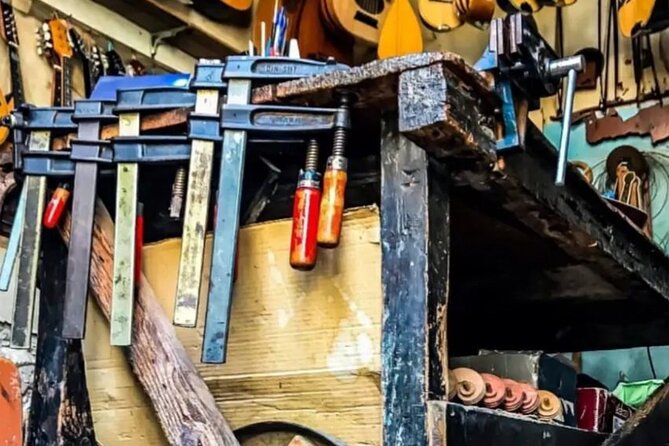
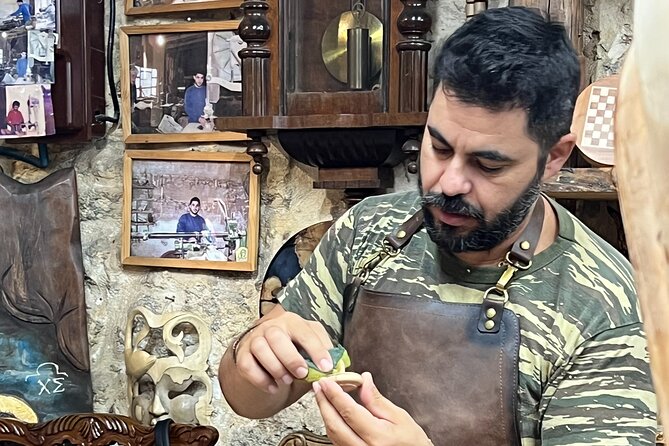
The first workshop focuses on wood—carving and sculpting with minimal equipment. That matters, because it highlights a core idea of craft: you don’t need fancy gear to make something beautiful. You just need skill, patience, and repetition.
In this stop, you can see an artisan transforming raw wood into a finished souvenir using hands-on technique. It’s the kind of working process that makes you look at everyday objects differently. Even if you’re not a hobbyist, you’ll likely find yourself paying attention to how the tool moves and where the artisan pauses to judge the wood’s grain.
At the end, you’ll receive a handcrafted wooden souvenir. That’s a nice payoff because it’s tied to what you watched, not an unrelated shop purchase.
What to look for while you’re watching: the small decisions. Craftspeople don’t just “carve.” They read the material.



Stop 2: a quick detour through artisan lanes
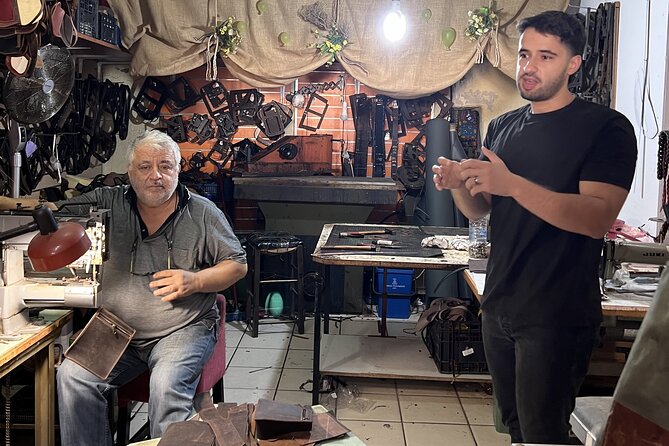
Between workshops, you’ll walk and get short sightseeing moments. The route includes stops such as a secret stop and a hidden gem segment, with time marked for sightseeing and shopping in arts-and-crafts style surroundings.
Don’t expect a museum lecture here. This part is built for atmosphere and context: you’re getting oriented in Rethymno’s Old Town and building a sense of where these workshops sit in everyday life. If you like taking photos, this is the time to do it. If you don’t, you’ll still appreciate the way the guide ties the craft stops back to local culture.
The big value of these in-between segments is mental reset. After watching one craft up close, you have a short walking transition before you switch gears.
Stop 3: leather work from a third-generation craftsman
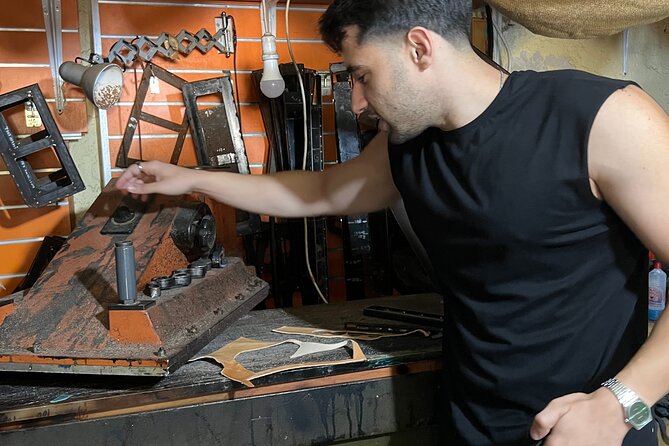
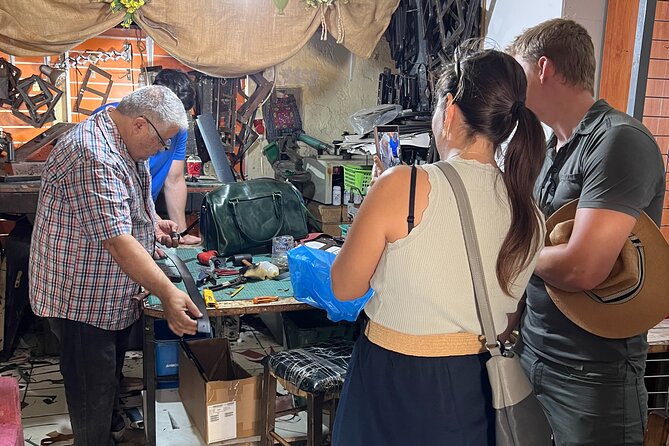
Next comes leather, guided by a third-generation craftsman. The tour leans on something that’s easy to miss with modern shopping: knowledge passed down through people you can name and families you can picture.
You’ll see traditional leather goods made the old-fashioned way. That doesn’t mean it’s antique or slow in a bad sense—it’s simply a different logic than mass production. Instead of turning out identical items quickly, the process is shaped by technique and careful finishing.
A highlight here is the take-home piece. You’ll receive a personalized leather keepsake. I like that because personalization turns a souvenir into a small memory. It also means the item feels connected to the person making it.
If you care about craftsmanship, this stop usually lands well because it answers a question you didn’t realize you had: how do these skills stay alive year after year?
Stop 4: papier-mâché art you actually make
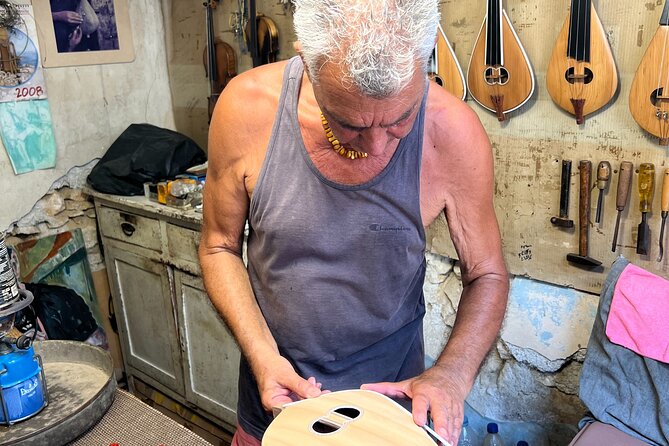
This is where the tour shifts from watching to doing. The tour explains papier-mâché as a creative craft with practical roots: recycled paper and cardboard can become decorative pieces, theatrical props, and carnival-style art.
And then you get to try it.
You create your own papier-mâché piece to take home. Yes, it’s messy for a few minutes. That’s part of the fun. I like tours that let you participate in the process, because you learn faster by doing small steps than by listening to a long description.
From a value perspective, this hands-on workshop is the best “skill transfer” moment. You’re not just buying. You’re practicing the basics of how the material behaves and why the technique matters.
A practical tip: wear clothes you don’t mind getting a little dusty. This is art-making, not a performance.
Stop 5: the Cretan lyra workshop and the story behind the music
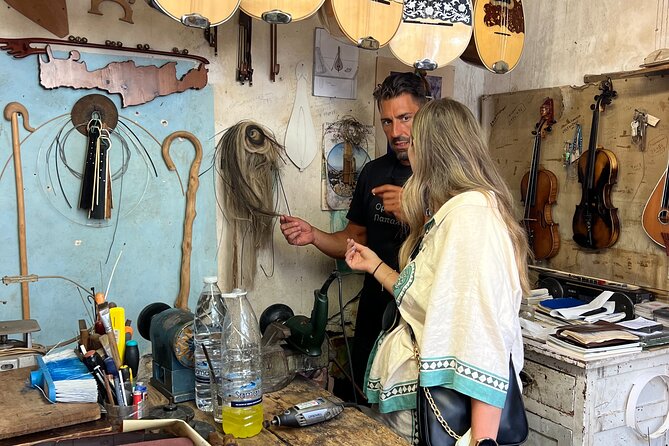
The last stop centers on the Cretan lyra—often described as central to traditional Cretan music. Here, you meet the people building the instruments and learn what goes into making one.
What makes this part special is that you’re hearing the craft behind an instrument that people recognize worldwide. The workshop is noted for exceptional instruments and has been featured in documentaries, and that context helps you understand why the makers treat the work with seriousness.
You’ll get explanations directly from the master himself, and you’ll likely hear family stories tied to the instrument-making tradition. One detail that stood out in a recent group experience: the lyra maker shared that his mother was born in Scotland, and that kind of surprising personal connection is exactly why this tour works.
Also, you’re not just learning about sound. You’re learning about technique, materials, and why certain choices matter for the instrument’s voice.
If you love music, you’ll leave with a new respect for what you hear in tavernas and festivals. If you don’t, you’ll still leave with a feel for why the craftsmanship is treated like a calling.
Why the guide matters: Virginia’s role in making it feel personal
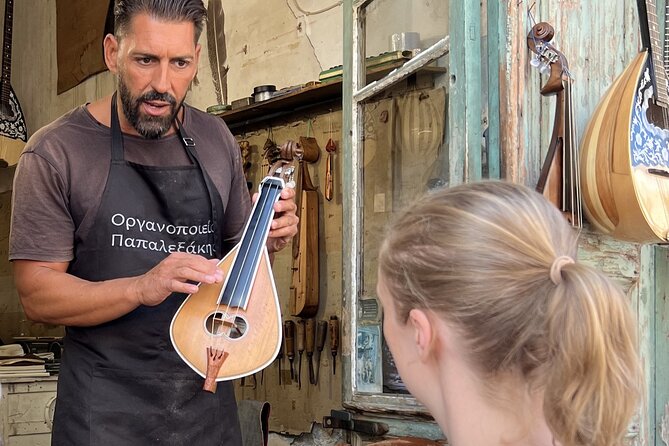
The tour’s tone is strongly shaped by guide Virginia. The way she presents the crafts is friendly and clear, and she makes space for questions without rushing anyone.
In a hands-on setting, that matters. One participant needed a bit of assistance during craft-making, and Virginia stepped in to help finish the piece. That’s a quiet reminder that the tour isn’t just about showing you what to do—it’s about making sure you can take part.
Virginia also introduces cultural ideas you can carry with you. The word Μεράκι (meráki) comes up during the tour. It’s a reminder that craft is not only technical. It’s emotional. People put heart, soul, and creativity into what they make.
That’s also the difference between a workshop tour that feels transactional and one that feels like a conversation.
Price and value: what $81 actually buys you
At $81 per person, this is not a budget “sit and watch” experience. But the value equation looks solid once you break it down.
You’re paying for:
- a guided walking tour through Old Town
- visits to four family-run workshops
- a hands-on papier-mâché activity where you take your creation home
- handmade souvenirs from wood and leather
That’s multiple craft items plus time with working artisans in a small group. If you’ve ever ended up in “tourist shop stops” where everything looks the same, you’ll probably appreciate the difference here. The souvenirs you receive are tied to the process you see at each workshop.
Add in the lyra stop—arguably the most culturally specific craft on the route—and the price feels more like a cultural entry fee than a shopping trip.
One more value detail: the group cap of max 12 affects what you experience. More interaction means you’re not stuck waiting your turn to ask something.
What’s the tradeoff? When this tour may not be for you
This tour’s structure is efficient. That efficiency is great for most people, but it can be a mismatch if you’re the type who wants to linger for a long time at one craft.
Because each workshop is about 20 minutes, you get a strong overview and a real hands-on try, but you won’t get deep, hour-long instruction in one single technique.
Also, there’s no mention of food. If you’re touring when you’re usually hungry, plan to grab a snack after.
And if you’re traveling with kids: children under 5 can join for free, but they won’t actively participate or receive souvenirs. Older kids should be fine to join the craft parts, though the tour data doesn’t list specific child-friendly adjustments beyond that.
Who should book this tour?
You’ll probably love it if you:
- want something more personal than a standard sightseeing route
- enjoy making things, even briefly (papier-mâché is the big one)
- care about the people behind traditional Cretan crafts
- want souvenirs with a story, not just a sticker price
It’s also a strong pick for couples and small groups because the small group size keeps the vibe calm and conversational.
If you’re in Rethymno for a short time and you like the idea of packing a lot of craft culture into about 1.5 hours, this tour is made for that.
FAQ
How long is the Rethymno Traditional Arts & Workshops Tour?
The tour lasts about 1.5 hours, with workshop time built into the loop.
What is included in the tour price?
You get a guided walking tour, visits to four family-run artisan workshops, a hands-on papier-mâché experience, a personalized leather souvenir, and a handcrafted wood souvenir, plus stories and insights from the artisans. The group is small (max 12).
Where do we meet for the tour?
You meet in front of the information centre, at the start point near the Former Customs House.
Is food or drinks included?
No. Food and drinks are not included.
Are children allowed?
Yes. Children under 5 can join for free, but they do not actively participate or receive souvenirs.
What language is the tour guide?
The tour is in English.
Is there a cancellation option?
Yes. You can cancel up to 24 hours in advance for a full refund. The tour also offers a reserve now & pay later option.
Should you book this tour?
If you want a memorable Crete experience that’s not just about looking, book it. The combination of four working workshops, a real hands-on papier-mâché session, and handmade take-home souvenirs makes it feel like you’re participating in living culture, not consuming it.
I’d skip it only if you’re after a long, slow deep-dive into one craft or you strongly prefer tours with lots of downtime. Otherwise, this is one of those short, focused experiences that makes Rethymno feel personal fast.
Try Your Hand at Something


More Tour Reviews in Rethymno






Fresh Off the Boat: Newest Crete Reviews




Workshops, compared.
 ★ 4.9Chania: Authentic Cooking Class in the White MountainsFrom $129529 reviews
 ★ 4.9Heraklion: Beginner Scuba Diving Lesson with PADI InstructorFrom $88355 reviews
 ★ 5.0Chania Cooking Class-The Authentic Enjoy traditional Cretan mealFrom $133339 reviews
 ★ 5.0Full-Day Jeep Safari Tour with Cooking LessonFrom $111284 reviews
 ★ 5.0Cretan Cooking Class and Olive Oil TastingFrom $114178 reviews
 ★ 5.0Rethymno: Chrysoula’s Cretan Home Cooking LessonsFrom $11698 reviews
 ★ 5.0Moires: Cooking Class and Olive Oil Tasting at a Family FarmFrom $10093 reviews
 ★ 4.8Sightseeing Day Trip with Cooking Lesson and LunchFrom $10877 reviews
Browse the lists this tour appears in