
Review · IMBROS & CRETAN GORGES
Unknown Crete -sarakina Gorge
One day, a whole lot of Crete. This Unknown Crete route links mountain villages, a gentle gorge walk, and time by the Libyan Sea, all from Agios Nikolaos. You’ll ride in comfort in an air-conditioned vehicle and get a structured plan that avoids the guesswork of island road trips.
I like two things right away: the included lunch and bottled water, and how the day mixes photogenic stops with an actually doable Sarakina Gorge visit. One thing to consider: narration can vary by guide and group language balance, so if you need strictly English-only explanations start to finish, you should keep that in mind.
In This Review
- Key takeaways before you go
- A day that strings together five places (and keeps moving)
- Price and value: what your $107.06 buys you
- Timing and comfort with a 9:00 am start
- Kritsa village and Panagia KERA: where old Crete feels real
- Katharo Plateau (1,200m): cypress shade, goats, and vultures
- Selakano forest: honey country and a slower kind of nature stop
- Sarakina Gorge: easy access, serious rock drama
- Myrtos on the Libyan Sea: your time buffer for swimming and tea
- Guides and the small details that make it feel safe
- Who should book this Unknown Crete day?
- Should you book Unknown Crete – Sarakina Gorge?
- FAQ
- What time does the tour start?
- Where is this tour located?
- How long is the experience?
- What’s included in the price?
- Is the tour offered in English?
- What should I bring?
- Can I cancel and get a refund?
- How big is the group?
Key takeaways before you go
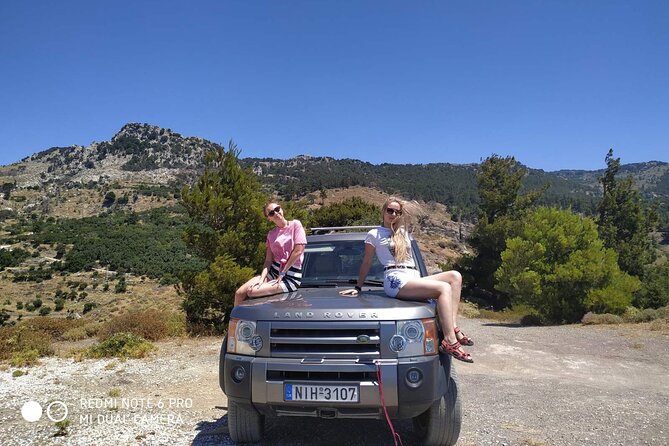
- Kritsa + Panagia KERA (12th century): a historic village stop with a major church you can actually see, not just pass by.
- Katharo Plateau at about 1,200m: cypress forest views, goats and sheep, and a real chance at spotting Cretan vultures.
- Mira a B Elo Gulf: Venetian naming and big viewpoint moments you can turn into a great photo sequence.
- Selakano forest honey: a taste of local production from an area known for high-quality honey.
- Sarakina Gorge (easy access): good shoe time for dramatic rock scenery without a punishing hike.
- Myrtos by the Libyan Sea: a practical payoff—swim, shop a little, or slow down with tea.
More Cretan gorges to walk, Imbros and the rest
- Sarakina Gorge, Kritza, Oliveoil Tasting, Mountains, South Coast
★ 5.0 · 92 reviews - HIDDEN GEMS – RICHTIS GORGE for nature lovers!
★ 4.5 · 30 reviews - Unknown Crete -sarakina Gorge
★ 4.5 · 14 reviews
A day that strings together five places (and keeps moving)
This tour is built for people who want to check off a lot without doing the planning. In roughly six hours (give or take), you’ll bounce from inland history to mountain plateau views, then down to a gorge, and finally to a coastal break in Myrtos. It’s not a “stay and soak” kind of day. It’s a “see it, learn it, photograph it, then breathe by the sea” kind of day.
What makes it work is the variety. You get a village with layers of time, a high-altitude viewpoint with animals and possible vultures, a forest area tied to honey production, a gorge you can walk into, and then a real coastal moment where the day slows down.
The pacing also matters for value. If you tried to DIY all these stops, you’d spend time mapping routes, timing parking, and figuring out which side roads are worth it. Here, you’re paying for the driving and for the guidance that helps you notice what you’d otherwise miss.
Price and value: what your $107.06 buys you
At $107.06 per person, this isn’t the cheapest thing on Crete—but it also isn’t just a “ride somewhere.” Your price includes lunch, bottled water, an air-conditioned vehicle, and parking fees (plus a fuel surcharge). GST is listed as not included, so plan for that if your total receipt asks for it.
The best value angle is the bundle:
- You’re paying for transportation between multiple distinct areas.
- You’re getting a guided experience in English.
- You’re getting a meal without hunting for one mid-day.
Is it worth it for everyone? If you love spontaneous stops and you’re comfortable driving and navigating rural roads, you could DIY parts of this. But if you want a day that reduces friction—especially from Agios Nikolaos—this price starts to look more reasonable, because you’re buying time and clarity.
Also, the group size is kept small: maximum 18 travelers. That’s big enough to feel social, but small enough that you’re less likely to feel like a number.
Timing and comfort with a 9:00 am start
The tour starts at 9:00 am, which is ideal if you want daylight for viewpoints and photos. A morning departure also helps you reach the higher places before crowds build at scenic spots.
You also start with an advantage: pickup is offered. That matters on a tour like this, because you’ll be dealing with multiple locations, and losing time to meeting logistics can ruin a tight schedule.
On the comfort side, the vehicle is air-conditioned. On warm Crete days, that’s not a luxury—it’s what keeps you in good shape for the gorge walk and the afternoon sea time.
One more practical detail: you’ll want to keep your phone and camera charged. The itinerary is built around stops where you’ll want photos—villages, views from Katharo Plateau, and gorge walls.

Kritsa village and Panagia KERA: where old Crete feels real
Kritsa is the kind of place that slows people down in the best way. It’s known for its long timeline—stretching from the era of the ancient city of LATO through to Ottoman times. You’re not just seeing modern storefronts. You’re walking through a village shaped by centuries.
The headline religious stop is Panagia KERA, a monument dating to the 12th century. This is one of those moments where you get to connect architecture to time. Even if you’re not a church-history person, it’s a tangible marker that you’re in a place with deep roots.
Why this stop is worth it: villages like Kritsa make the rest of the day make sense. When you later look out from Katharo Plateau or walk into Sarakina Gorge, you’re seeing the island’s geography—then connecting it to how communities historically lived across it.
Possible drawback? Village time can feel a bit short if you like long wandering. The tour format moves on, so treat Kritsa as a focused visit: quick streets, photo points, then back on the bus.
Katharo Plateau (1,200m): cypress shade, goats, and vultures
From Kritsa you head toward Katharo Plateau, at around 1,200 meters. This altitude shift is a key part of why the tour feels like more than one outing. You go from village atmosphere to a high viewpoint world.
The route includes a cypress forest area, and this is where the day gains a little “wild Crete” energy. You may see goats and sheep along the way. And if you get lucky, you may spot Cretan vultures in the wild.
I’d plan for photos here, but also plan to look longer than you think you need. The viewpoint moments aren’t just pretty; they’re useful. From higher ground you can better understand how the island folds—where the sea sits in relation to the mountains and how valleys open up.
You’ll also get viewpoint time for Mira a B Elo Gulf—a name given by the Venetians meaning beautiful view. That’s a fun detail because it turns the photo opportunity into a small history lesson. It’s not just “look at the water.” It’s “learn why this place got attention.”
In cooler seasons, you might catch leftover snow in higher areas. One guide description even mentioned snow still hanging on in the mountains on their day. So if you’re visiting outside peak summer, don’t be surprised if the plateau feels wintry for a moment.
Selakano forest: honey country and a slower kind of nature stop
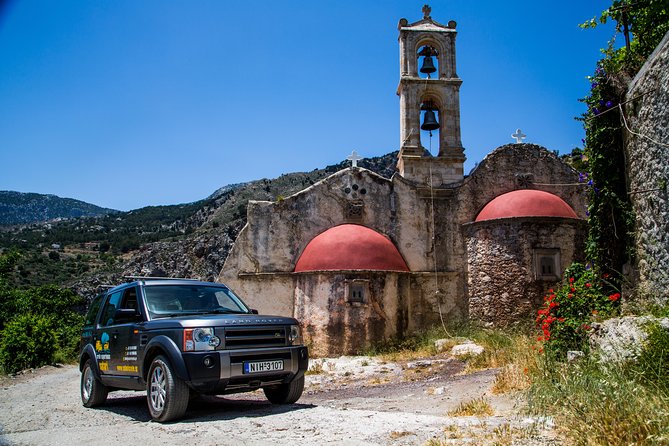
After the plateau and viewpoints, the tour heads to Selakano forest, known for high-quality honey produced in the area.
This stop gives your day a different rhythm. Instead of another pure photo stop, it’s a chance for a sensory break—taste (if offered by your route) and a calmer walk-through feeling compared to the more dramatic gorge segment.
Why I like this part: it’s one of the easier ways to get beyond “scenery only.” Crete isn’t just mountains and coastline; it’s also food, local craft, and season-based production. Honey is a perfect example because it connects to what the landscape supports.
If you’re the type who likes edible souvenirs, this is the area where your day offers something you can take home—at least conceptually. Even if you don’t buy anything, it’s a good reminder that the island’s plants and forests are the base layer for local life.
Sarakina Gorge: easy access, serious rock drama
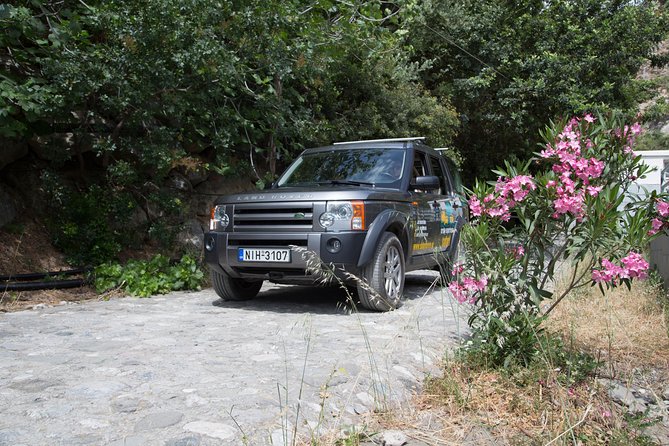
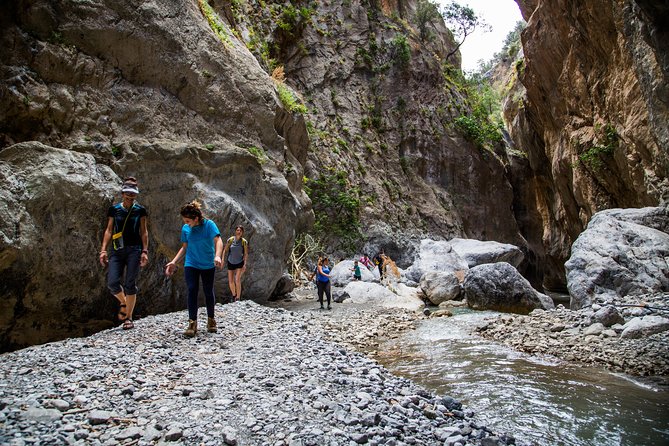
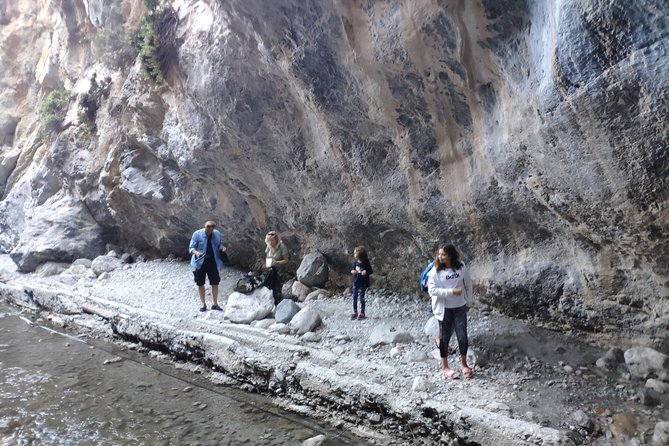
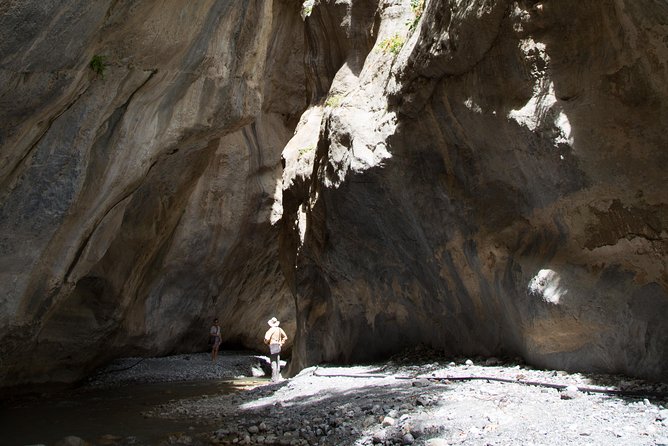
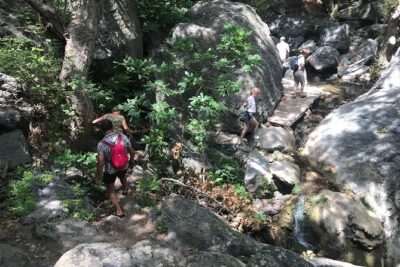
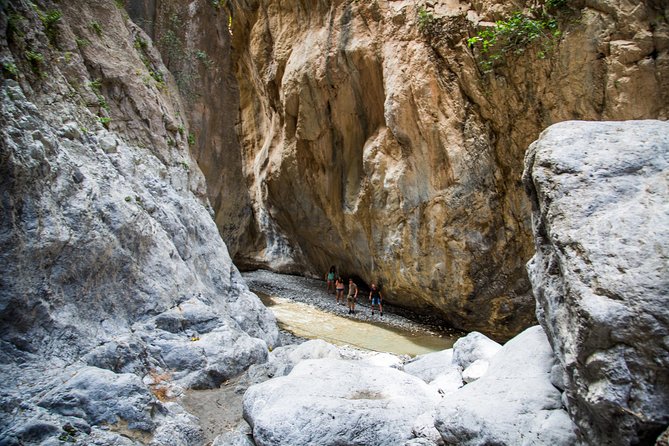
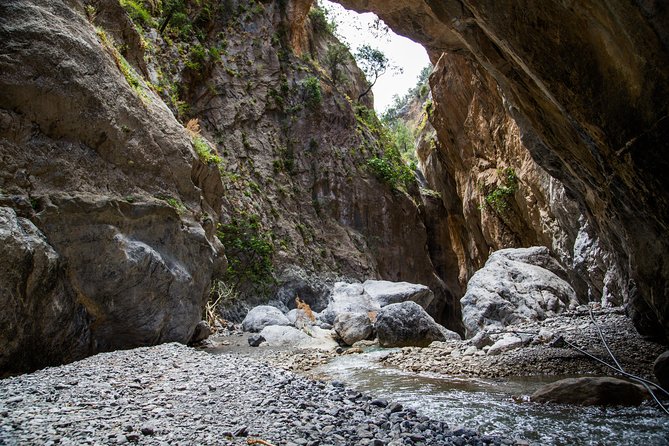
Then comes the main physical moment: Sarakina Gorge. It’s described as having easy access, which matters. This isn’t presented as a technical hike. It’s more about getting you into a dramatic gorge setting without requiring climbing gear or advanced trail skills.
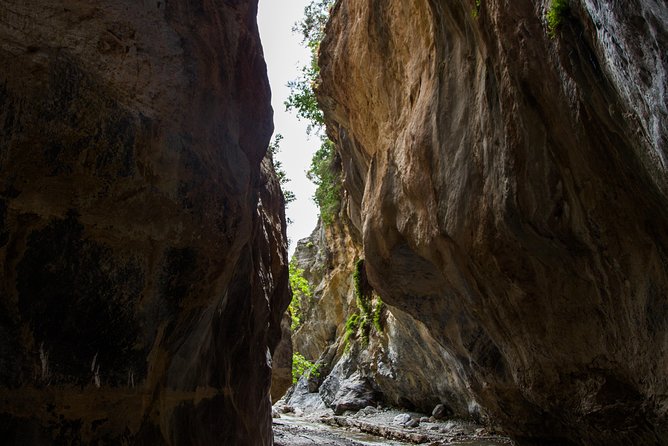
What you’re really buying here is photo payoff. Gorge walls create strong shapes and depth, and even short walks tend to produce “how is this real?” moments for friends back home.
Practical advice for this part:
- Wear sneakers (not flip-flops).
- Bring a towel (useful later if you end up getting near water in Myrtos).
- Have sunscreen on hand early—shade is helpful in forests, but gorge openings can still bake.
Also, pace yourself. The tour is fast overall, but the gorge segment is one of the places where you’ll want to stop for photos and take a slow look. If you rush through, you’ll miss the best angles.
Myrtos on the Libyan Sea: your time buffer for swimming and tea
The day ends with a coastal shift to Myrtos, a fishing village and described as the southernmost point in Europe (in terms of the tour framing). This is where you get your breathing space.
You’ll have time for:
- a swim,
- shopping (light browsing is the expectation, not a full retail spree),
- or a cup of tea by the Libyan Sea.
Why this stop matters: it gives your day a natural reset. You’ve been in inland villages, forest corridors, and stone gorges. Coming to open sea light changes how the whole day feels.
It also solves a common travel problem. On many island days, you finish sightseeing and realize you missed the beach. Here, the itinerary actually makes room for that decompression.
Guides and the small details that make it feel safe
The tour is run by Safari Crete Experience, and the guiding quality shows up in the feedback for multiple guides. Names you’ll see linked with great days include Nikos and George, plus mentions of other leaders like Panos and Danny.
Two recurring strengths stand out from those descriptions:
- Guides who know plants and vegetation and can explain what you’re seeing.
- Drivers who feel careful and confident, including stopping at the best viewpoints.
One specific note: Nikos is mentioned as being able to talk in 8 languages and having a funny, intelligent style. Even if you’re only listening in English, that multilingual skill often translates into clearer communication.
There’s one watch-out from the feedback: in a mixed-language group, narration can tilt more toward one language than another, and that can leave non-speakers feeling out of the loop. The way to handle that is simple—go into the day expecting guidance, but also be comfortable using your own eyes when language balance shifts.
Who should book this Unknown Crete day?
I’d point you toward this tour if you:
- want a highly efficient Crete day that hits multiple regions,
- like photography but still want context (church, plateau names, honey area),
- prefer guided driving over navigating rural roads,
- enjoy easy walking like a gorge entry without turning it into a full-day hike.
I’d hold back if:
- you need strict, uninterrupted English narration for every stop, or
- you don’t handle group dynamics well when different languages are present.
If your main goal is pure relaxation with zero schedules, this may feel like too many switches. But if your goal is to experience a wider slice of Crete than the beach next door, it’s a strong match.
Should you book Unknown Crete – Sarakina Gorge?
I’d book it if you want a smart mix of history (Kritsa + Panagia KERA), nature and animals (Katharo Plateau with goats and possible vultures), a taste of local production (Selakano honey area), and a walk that looks dramatic (Sarakina Gorge)—then finishing with real sea time in Myrtos.
Before you say yes, just plan for the realities of a day like this: comfortable shoes, sun protection, and charged devices. And if language is a concern, consider that the group format can affect how much you catch at each stop.
If you’re spending limited time around Agios Nikolaos and you want a day that feels like it pays off, this is the kind of trip that earns its place on your itinerary.
FAQ
What time does the tour start?
The start time is 9:00 am.
Where is this tour located?
It’s based in Agios Nikolaos, Greece.
How long is the experience?
The duration is about 6 hours.
What’s included in the price?
The tour includes lunch, bottled water, an air-conditioned vehicle, fuel surcharge, and parking fees.
Is the tour offered in English?
Yes, it’s offered in English.
What should I bring?
Bring sneakers, a towel, sunscreen, and make sure your camera/phone is fully charged.
Can I cancel and get a refund?
Yes, you can cancel for a full refund up to 24 hours before the experience’s start time.
How big is the group?
The tour has a maximum of 18 travelers.
More Tour Reviews in Agios Nikolaos


More Cretan Gorges to Walk

Fresh Off the Boat: Newest Crete Reviews

Imbros & Cretan Gorges, compared.
 ★ 4.3Rethymno: Preveli Beach Damnoni Beach Kourtaliotiko Day TripFrom $25929 reviews
 ★ 4.1Rethymno/Chania: Preveli Beach and Kourtaliotiko Gorge TourFrom $23359 reviews
 ★ 4.4From Rethymno/Chania: Imbros Gorge HikeFrom $30353 reviews
 ★ 4.8Sarakina Gorge, Forests, and South Coast SafariFrom $115301 reviews
 ★ 4.7From Rethymno: Kourtaliotiko, Preveli Palm Beach, & DamnoniFrom $29287 reviews
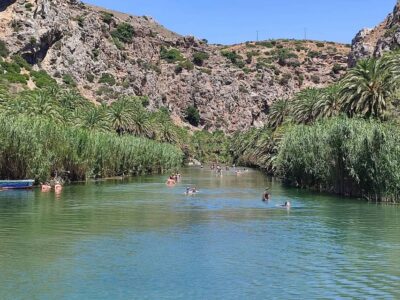 ★ 4.5Heraklion: Preveli By Boat, Damnoni & Kourtaliotiko SpringsFrom $58254 reviews
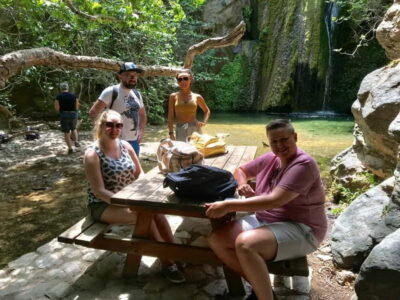 ★ 4.8Richtis Waterfall Full-Day Tour with Olive TastingFrom $115188 reviews
 ★ 4.5From Chania: Imbros Gorge Guided Hike and Village VisitFrom $35133 reviews
Browse the lists this tour appears in