
Review · WALKING TOURS
Guided Walking Tour in Chania
Knives, leather, and churches in one short walk. This guided route is interesting because it strings together Chania’s everyday craft scenes with landmark stops, so you start seeing the city as more than just a postcard. You’ll get a tight 2-hour circuit and a mix of local trades and faith sites without feeling stuck in one museum.
I also like the small group size (up to 15)—it keeps the pace human and makes it easier to ask questions instead of only nodding along. And the route includes free admissions at the listed stops, so your money goes into the guide and your time, not ticket booths.
One thing to consider: the stops are kept short (about 20 minutes each), so if you’re hoping for long, story-heavy narration at every location, this can feel more like a fast guided walk than a deep dive into any single place.
In This Review
- Key highlights worth planning for
- A 2-hour Chania walk that actually helps you read the city
- Price and logistics: $32, English, and a small group
- Meeting point near Venizelos Graves at 5:00 pm
- Stop-by-stop: knives, leather, churches, and the sea
- Skalidakis Cretan Knives: a craft street with real character
- Skridlof Street of Leather: shopping lane you can navigate without stress
- Holy Catholic Church of the Assumption: a quiet architectural breather
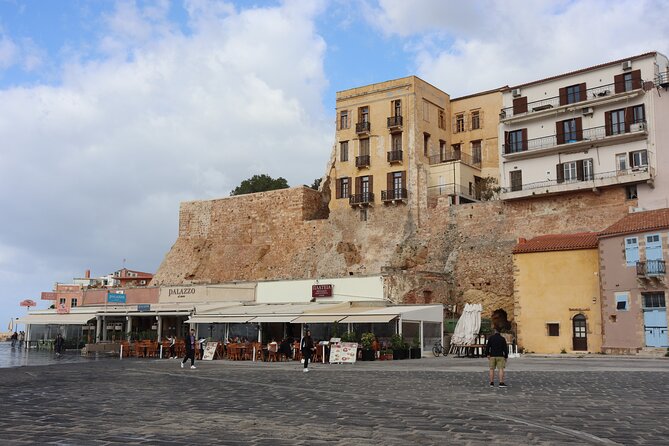
- Old Venetian Harbor: your photo break with real context
- Küçük Hasan Mosque and Agios Nikolaos: different faiths, same city
- How much you’ll cover (and when you might want a longer day)
- Getting value from the guide (not just the route)
- Extra practical tips for a smooth Chania evening walk
- Should you book the Guided Walking Tour in Chania?
- FAQ
- How long is the Guided Walking Tour in Chania?
- What is the price per person?
- Where does the tour start, and when does it run?
- Is the tour offered in English?
- What’s included in the tour price?
- Do the stops require paid admission?
Key highlights worth planning for
- Skalidakis Cretan Knives: a focused look at how Cretan knife-making shows both tradition and newer styles
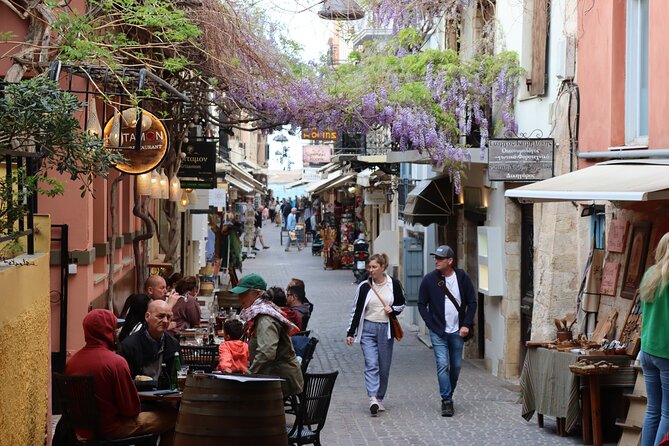
- Skridlof Street of Leather: you’ll pass an entire shopping lane built around leather goods (bags, shoes, belts, jackets)
- Church stops for tone changes: you’ll go from market streets to quieter religious architecture without rushing
- Old Venetian Harbor viewpoint time: short, practical photo and sea-air breaks in the heart of town
- Ottoman-era architecture with Kucuk Hasan Mosque: one stop that helps you read Chania’s layered past quickly
- English guidance with a mobile ticket: easy to manage day-of, especially at a 5:00 pm start
More of Crete covered on foot
- Knossos: Knossos Palace Skip-the-Line Guided Walking Tour
★ 4.8 · 1,380 reviews - Heraklion: Food Tastings Walking Tour
★ 5.0 · 136 reviews - Rethymno Walking & Gastronomy Tour
★ 5.0 · 103 reviews - Rethymno: Old Town Walking Tour with Meal
★ 4.9 · 73 reviews
A 2-hour Chania walk that actually helps you read the city
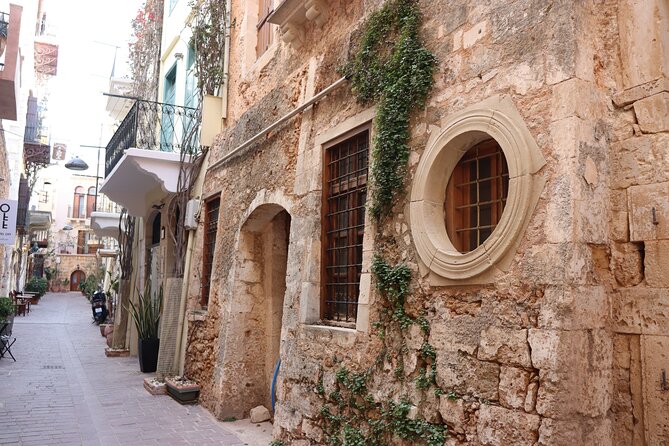
Chania can feel like a blur when you only have a few hours. What I like about this kind of guided walk is that it gives you structure. You move through craft streets, then you hit major landmarks, so the city starts making sense as you go.
Instead of treating sights like separate checkboxes, the route connects themes. Knife-making points you to local work and skilled hands. Leather stores show you what people buy, carry, and wear—small choices that reveal taste and craft culture. Then the churches and mosque give you the city’s “why” behind the street layout: centuries of different communities sharing the same geography.
This is a good format for an evening stroll too. Starting at 5:00 pm means you’re walking while the light is kinder and the streets are awake. It’s also long enough for you to feel like you got your money’s worth, but short enough that you’re not stuck all night.
Price and logistics: $32, English, and a small group
At $32 per person for about 2 hours, you’re paying mainly for a guide to connect the dots. The stops shown on the route have no admission fees, so this doesn’t turn into a “surprise costs” situation.
A couple logistics details matter for comfort:
- The tour is in English.
- The group limit is 15 travelers, which usually makes it easier to keep together.
- You’ll use a mobile ticket (handy on your phone rather than hunting for paper).
- It runs with a professional guide—this is the core value.
Also worth knowing: most travelers can participate, and service animals are allowed. If you’re relying on transit, the start is described as being near public transportation.
Meeting point near Venizelos Graves at 5:00 pm
The tour meets at Venizelos Graves, Agorastaki 4, Chania 731 33 and ends back at the meeting point. That “back where you started” layout is underrated. You don’t have to plan a second ride or figure out a new endpoint.
Starting at 5:00 pm is smart for two reasons:
- You get to see Chania as an active city, not just an empty street grid.
- You have time after the tour for a low-effort dinner in the harbor area.
If you’re the kind of person who likes a stress-free evening, show up a few minutes early. In old towns, finding a small group’s exact start spot can take longer than you think—especially once you’re juggling photos, directions, and other tours.


Stop-by-stop: knives, leather, churches, and the sea
This route is built out of six named stops, each about 20 minutes. That timing includes time to look, take photos, and listen—plus the real-world walking between places, which is where you feel the “guided” part most.
There’s also a note that there are a few additional stops that are kept as a surprise. Since those aren’t specified, treat the plan as a flexible scaffold. You’ll still get the major anchor locations, but you might catch a bonus side street moment—often the best kind.
Below is how each listed stop works in practice: what you’ll see, why it’s there, and where you might need to adjust your expectations.
Skalidakis Cretan Knives: a craft street with real character
The walk starts in the Skalidakis Cretan Knives area, in the Knives district. This is the kind of stop that works whether you’re a serious collector or just curious.
Here’s what makes it interesting:
- You’ll see specialized knife shops rather than a random tourist stall.
- The focus is on craftsmanship, including traditional Greek styles alongside modern designs.
- It’s a shop district, so the vibe is practical: tools, materials, finishes—things you can actually point to.
Where this stop can fall flat: if you’re expecting a “museum style” presentation with deep historical storytelling, you may get more of the visual and shopfront side than a long lecture. In that case, ask the guide a question like: what makes Cretan knife styles distinct from other regions? Guides usually know the talking points if you prompt them.
Value tip: if you do want to shop, use this first stop strategically. It’s early, so you can compare brands and styles before your tastes get swayed by later displays.
Skridlof Street of Leather: shopping lane you can navigate without stress
Next comes Skridlof Street, also called the Street of Leather. This area is dedicated to leather goods: think bags, shoes, belts, and jackets.
What I like about this stop is that it turns wandering into something purposeful. Instead of “shopping, maybe,” you understand what you’re looking at. The guide can help you spot differences that matter—like quality cues and construction styles—without making you feel like you have to buy anything.
Potential drawback: leather shopping can be visually tempting, but it’s also easy to lose time if you stop at every storefront. The tour timing keeps it from turning into a shopping spree, but you’ll still want to manage your impulse.
Practical move: if you want one souvenir, set a small target before you enter—one item, one budget. Then you can enjoy the browsing without turning it into a long detour.
Holy Catholic Church of the Assumption: a quiet architectural breather
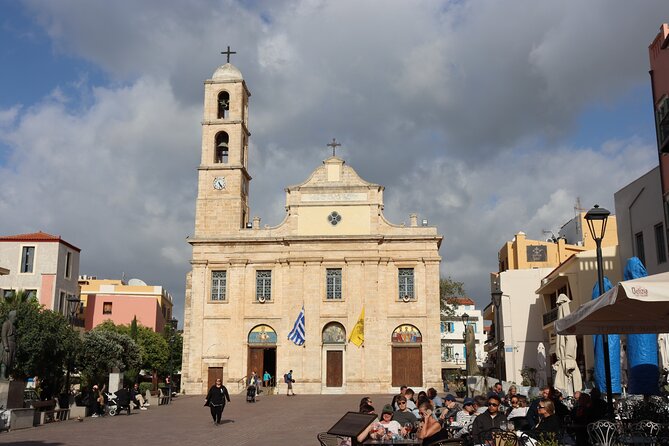
The route then slows down for the Holy Catholic Church of the Assumption of the Blessed Virgin Mary. In practice, you’ll experience this as a change of tone. After craft streets focused on products, you get a space meant for stillness.
This stop is worthwhile because:
- It’s a serene landmark in central Chania.
- You’re looking at elegant architecture and absorbing the feeling of a working place of worship.
- It helps you balance the “shopping streets” energy with something spiritual and historical.
What to expect: you’ll have time to look and take in the details, but it’s not a long sit-down. If you want a longer pause, treat this stop as your chance to reset your brain, then continue with the walk.
If you visit respectfully, this is often the moment when the whole route starts to feel more complete—like you’re seeing how Chania organizes daily life around community anchors.
Old Venetian Harbor: your photo break with real context
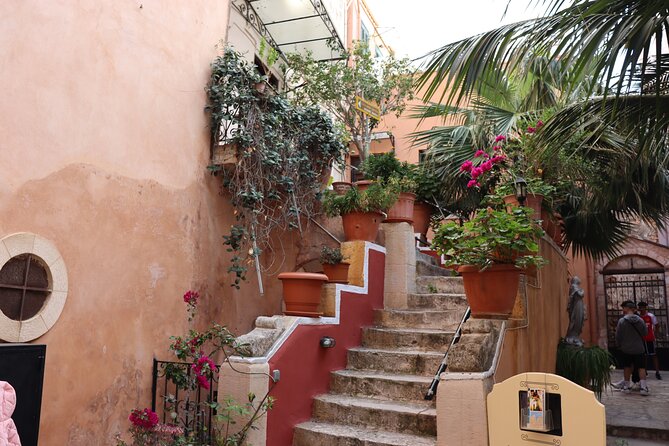
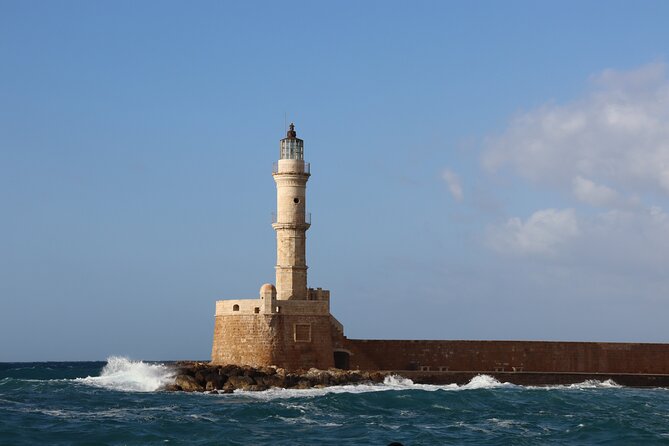
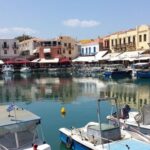
Then you hit Old Venetian Harbor, one of the big reasons people love Chania. Here, the tour becomes more outward-facing: sea air, waterfront views, and the sense of a historic trading hub.
You’ll typically notice:
- Cafes and colorful buildings along the seafront
- The view lines near the lighthouse
- The presence of the Venetian fortress area in the broader harbor picture
This stop works because it gives you a “big picture” location after narrower craft streets. It’s also easier to enjoy with a guide—harbor areas can look obvious, but a guide can point out what mattered historically and what you’re actually seeing now.
Where to watch your time: it’s easy to linger here on photos and snacks. Since the route keeps moving with roughly 20-minute blocks, keep one eye on the group so you don’t drift into an accidental solo mission.
Küçük Hasan Mosque and Agios Nikolaos: different faiths, same city
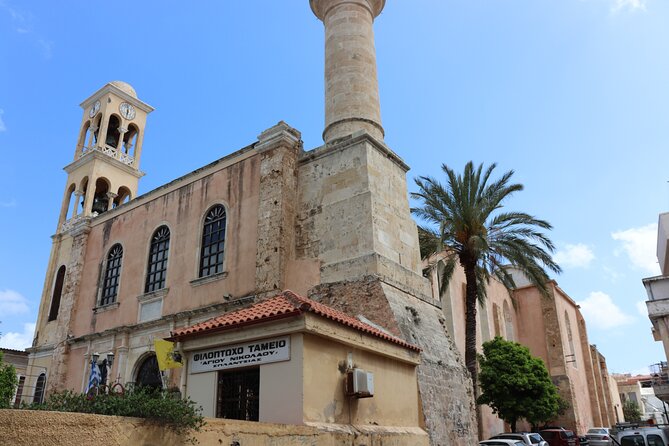
The route includes the Küçük Hasan Mosque, described as a key reminder of Chania’s Ottoman past. It’s a meaningful stop because it adds an architectural and cultural layer that you’d miss if you only focused on Venetian or modern tourist areas.
From a visitor’s point of view, this stop helps you:
- See how different communities shaped the city
- Compare architectural forms across time periods
- Understand Chania as multicultural, not one-note
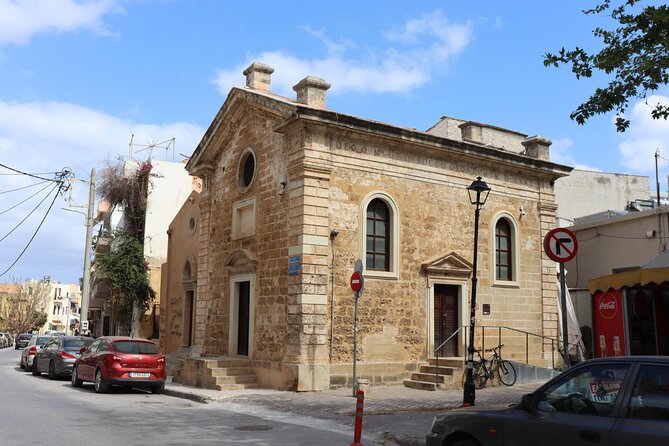
Then you continue to the Church of Agios Nikolaos. The information provided keeps details minimal, so I recommend using this part of the walk as your “observe and listen” moment. Let the guide connect what you’re seeing to the broader story of the city, and then you can decide if you want to do more reading on your own after.
A smart way to enjoy these faith stops: don’t treat them like background scenery. Look at the doorway, the structure details, and how people move through space. Those small choices tell you how a community uses a building—not just how it looks in a photo.
How much you’ll cover (and when you might want a longer day)
Since the named stops are all about 20 minutes each, this walk is designed for pacing and variety. You won’t spend half a day in one museum. You won’t do a deep architectural analysis of any single church.
So who is it for?
- If you want an efficient intro to Chania—craft streets plus major landmarks—this is a strong fit.
- If you like to walk but hate long “sit and listen” blocks, the short timing can be a relief.
- If you’re a traveler who wants deep storytelling for every site, you may leave wanting more.
One more practical consideration: schedules can change. If you’re tight on plans, double-check the exact timing the day before, and don’t build your entire evening around a single fixed minute.
Getting value from the guide (not just the route)
You’re paying for the guide to connect details. That means your best strategy is to ask questions that make the guide work less like a walking brochure and more like a local storyteller.
Here are a few good prompts that fit the stops on this route:
- For the knife district: what features separate styles, and why do people still care about them?
- For leather street: how do you spot quality when stores are selling similar items?
- For the church and mosque stops: what makes these places important in the city’s “who lived here” story?
Even if you don’t speak a lot, one or two questions can turn a short tour into a more memorable one.
And yes, there’s optional gratuities. If the guide helps you understand what you’re seeing, tipping is a simple way to reward that effort.
Extra practical tips for a smooth Chania evening walk
A walking tour is only as good as your comfort level. A few things to plan for:
- Wear shoes you can stand in for a couple hours. Old town streets are rarely flat and rarely forgiving.
- Bring a light layer. In the evening, sea air can feel cooler than you expect.
- Have your phone charged for the mobile ticket.
- If you plan to shop at the leather or knife shops, decide your budget early so you don’t spiral later.
If you want to extend the experience after the tour, the harbor area is the logical place to keep your evening going. You’ll already have the layout in your head, which makes wandering feel easier.
Should you book the Guided Walking Tour in Chania?
If your goal is a 2-hour intro that mixes craft streets with major landmarks, I think it’s a solid choice. The small group and professional guide help, and the fact that the listed stops have free admissions makes the value easier to swallow.
I’d skip it (or at least set expectations) if you want long, in-depth storytelling at each site. This tour is structured for movement and variety, so it won’t feel like a full day of deep immersion.
One last tip: consider booking if you can commit to timing with a bit of flexibility, and keep your expectations aligned with short stops. With that mindset, you’ll come away with a clearer sense of Chania’s different layers—and a route you can keep using the rest of your trip.
FAQ
How long is the Guided Walking Tour in Chania?
It lasts about 2 hours.
What is the price per person?
The price is $32.00 per person.
Where does the tour start, and when does it run?
It starts at Venizelos Graves, Agorastaki 4, Chania 731 33, Greece and begins at 5:00 pm. It ends back at the meeting point.
Is the tour offered in English?
Yes, the tour is offered in English.
What’s included in the tour price?
You get a professional tour guide and the 2-hour guided walking tour.
Do the stops require paid admission?
The listed stops show admission ticket free, so you won’t be paying entrance fees at those locations.
More of Crete on Foot


More Tour Reviews in Crete




Fresh Off the Boat: Newest Crete Reviews


Walking Tours, compared.
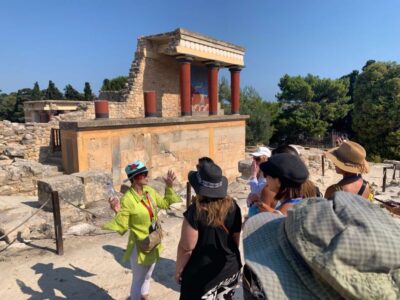 ★ 4.8Knossos: Knossos Palace Skip-the-Line Guided Walking TourFrom $1041,380 reviews
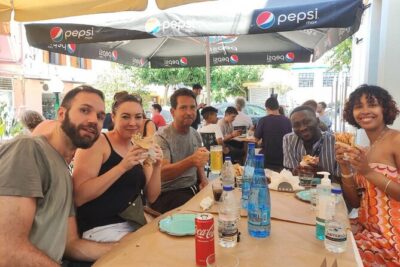 ★ 5.0Walking “Food tasting tour” in the town of ChaniaFrom $105297 reviews
 ★ 5.0Heraklion: Food Tastings Walking TourFrom $114136 reviews
 ★ 5.0PRIVATE Walking Tour with Lunch and Wine Tasting by a SommelierFrom $193113 reviews
 ★ 5.0Rethymno Walking & Gastronomy TourFrom $107103 reviews
 ★ 4.9Rethymno: Old Town Walking Tour with MealFrom $20573 reviews
 ★ 4.5Chania Walking Food Tours Crete with a local!From $10761 reviews
 ★ 5.0Knossos Palace Guided Walking TourFrom $7260 reviews
Browse the lists this tour appears in