
Review · CYCLING TOURS
Small Villages and Cretan Nature. E-Bike tour
Electric bikes make Crete’s quiet side reachable fast. I especially like how this ride strings together Aposelemis Canyon scenery and a visit to Skotino cave while keeping the pace friendly. I also like the local angle: you’ll learn about traditional olive cultivation from the guide (often mentioned by name as Stelios), not just pass olive trees from a bus window.
One consideration: it’s still 37 km of cycling with about 800 meters total up-and-down, plus a few short, easy off-road sections.
In This Review
- Key things to know before you go
- Aposelemis Canyon to Skotino Cave: what makes this ride feel like Crete
- Your e-bike setup and route profile: the real effort level
- From Lyttos Beach Hotel to the small-village rhythm
- The canyon ride: why Aposelemis makes a difference on a bike
- Skotino Cave and the monastery stop: the cultural jolt
- Olive cultivation and the village coffee break: the part you’ll remember later
- Weather, clothing, and the small practical things that matter
- Who this tour is for (and who should skip it)
- Price and value: is $84.69 per person a smart buy?
- Should you book this e-bike canyon-and-olive tour?
- FAQ
- How long is the e-bike tour?
- Where does the tour start and end?
- What time does the tour begin?
- Is pick-up or drop-off included?
- What’s the distance and elevation change?
- What kind of bike is used?
- Is the route mostly on pavement?
- What level of fitness do I need?
- Who can join the tour?
- What’s included for food and drinks?
Key things to know before you go
- Bosch 250W assist on a Cube mountain e-bike helps you keep momentum on climbs without turning the ride into a workout for the ages
- Canyon + villages + caves in one morning gives you real variety in about four hours
- Skotino Cave (often linked with the Cave of St. Paraskevi) adds a memorable culture-and-nature stop
- Olive cultivation lessons with a local guide (Stelios) make the farmland feel personal and understandable
- Small group size (up to 6) keeps it more relaxed than big sightseeing tours
More bike routes across the island
- From Rethymno: Half-Day Quad Bike Safari
★ 4.8 · 1,444 reviews - Chania: City Highlights Small Group Bike Tour
★ 4.9 · 176 reviews - Small Villages and Cretan Nature. E-Bike tour
★ 5.0 · 152 reviews - Hersonissos: ATV Quad Bike Safari in the Mountains of Crete
★ 4.9 · 122 reviews
Aposelemis Canyon to Skotino Cave: what makes this ride feel like Crete
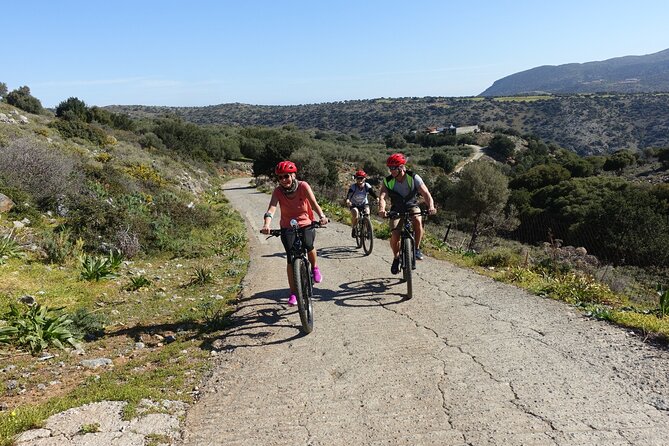
This is the kind of tour that works because it mixes big scenery with small human details. You start on a route that takes you through the Aposelemis Canyon area, where the air feels cooler and the views change as the canyon opens and closes. On an e-bike, you’re not just moving through places—you’re actually able to look while you ride.
Then the tour adds a stop that most people don’t plan on their own: Skotino cave. One review highlights that the cave connects with the Cave of St. Paraskevi, described as being used since Neolithic times. That’s the sort of fact that lands differently when you arrive after a few hours outdoors. It stops being a random attraction and starts feeling like part of the island’s long rhythm—people living with these hills, these rocks, these paths.
I also like that the day isn’t only about nature. You get the cultural layer through the olive topic and a village coffee break—so you leave knowing what you saw, not just taking photos.
Your e-bike setup and route profile: the real effort level
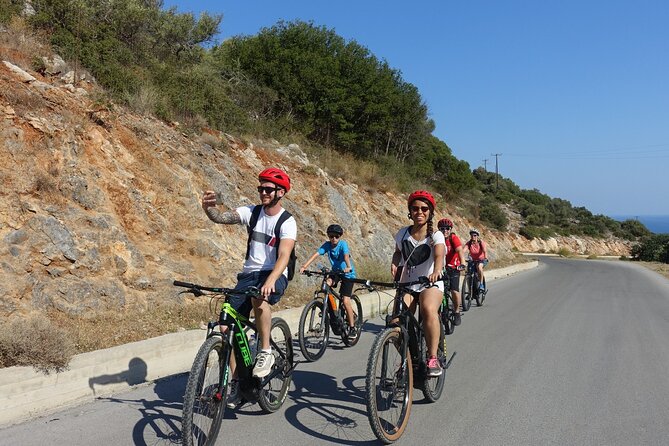
Even with electric assist, you’ll want to show up ready to ride. The tour is about 4 hours total, covering 37 km with about 800 m of total climbing. That climbing number matters. It’s not Alpine, but it’s enough that you’ll feel it if you treat the motor like an optional feature.
The bike itself is a Cube mountain e-bike with a Bosch 250W motor. That’s a solid, practical setup for mixed terrain. You also get a helmet, and the tour description also notes gloves as part of your kit. Bottled water is included, which helps on a hot Crete morning.
The route includes some short, easy off-road sections. Translation: don’t expect a perfect bike-lane smoothness the entire time. You’ll be on paths where traction and balance matter a bit. It’s “easy,” but you still need confidence.
If you’re someone who enjoys cycling and can handle a moderate effort, you’ll be fine. If you want a totally flat, low-effort ride, this one might feel like “stretching your comfort zone,” not “coasting.”
From Lyttos Beach Hotel to the small-village rhythm
The ride meets at Lyttos Beach Hotel in Hersonissos, starting at 9:00 am. It ends back at the same place, so you don’t have to figure out transport once you’re done. It’s also described as near public transportation, so it’s not a logistical headache.
From the start, the pacing is designed for enjoying the day. The tour includes stops for sightseeing and photos, which is important on an e-bike ride—otherwise you roll past the best viewpoints while the group “keeps moving.”
The middle of the morning leans into the “Crete you don’t see from the main road” feeling: you ride through small traditional villages and spend time in places where the pace is slower. I like that you’re not just looking at architecture from a distance. You’ll have time to slow down, take in details, and actually connect the landscape to daily life.
A small note from a practical traveler mindset: wear breathable sport clothes and shoes you trust on uneven ground. Also, expect that “short off-road” can mean dust or loose gravel. Good shoes make you feel calmer.
Worth lining up before you lock in this one:

The canyon ride: why Aposelemis makes a difference on a bike
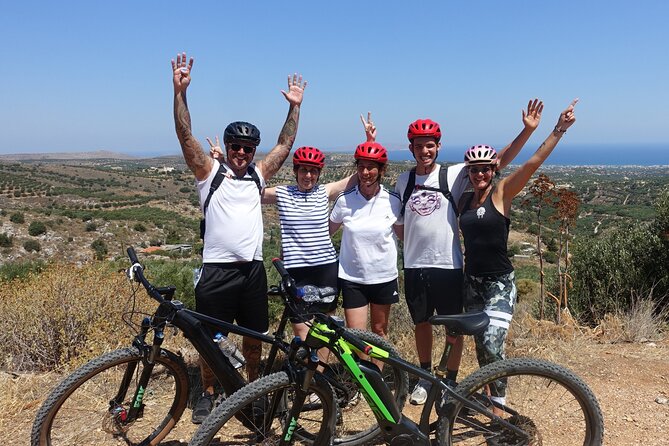
Canyons change everything about a ride. You get shade where the rock walls cut the sun, and you feel the air shift when the canyon opens. On a bike, those changes are faster and more noticeable than from a car.
This part of the experience is a big reason people book it in advance. It’s sensory: you’re not only seeing scenery, you’re hearing it, moving through it, and sensing temperature differences as you go. The tour description leans into this idea of a ride through Cretan nature with all your senses in play—and the canyon is the right setting for that.
If you’re visiting Crete mainly for beach time, this is a good counterbalance. It gives you inland character without requiring a full-day hike.
Skotino Cave and the monastery stop: the cultural jolt
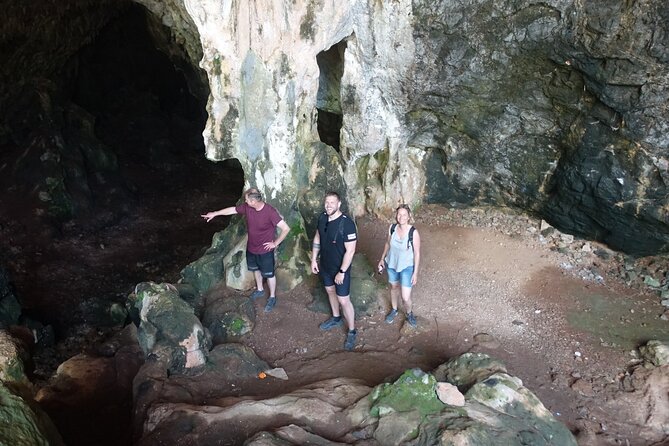
The cave is the star moment for many people, and the guide’s explanation helps it click. One review calls out the Cave of St. Paraskevi and notes that it’s been in use since Neolithic times. That kind of continuity makes caves feel less like tourist scenery and more like places people return to—again and again—because of what they offer.
You also get a monastery experience mentioned as a favorite moment. Even if you don’t come in hunting for a religious site, monastery stops tend to have two benefits: the viewpoints are often strong, and the stories are usually human-sized. You get something to anchor the morning beyond scenery.
My advice: don’t rush these stops. The best part of a cave visit is usually the pause—looking around, listening, and letting the temperature and acoustics do their thing.
Olive cultivation and the village coffee break: the part you’ll remember later
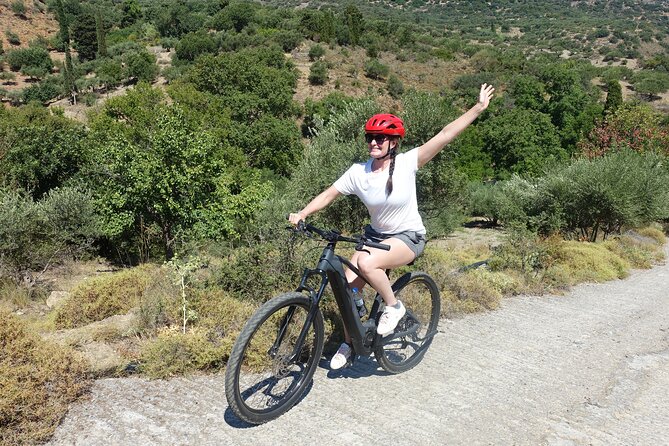
This tour spends real time on olives—traditional olive cultivation in Crete—taught by a local guide. That’s valuable because olive trees are everywhere on the island, but “everywhere” can also make them feel like wallpaper. When you learn how people cultivate, prune, and harvest, the whole countryside makes more sense.
You’ll also ride past olive groves, pastures, and working farmland—not just pretty backdrops. This is where the e-bike helps your brain. You can look around, connect details, and still keep the ride moving without needing to power uphill like a road cyclist.
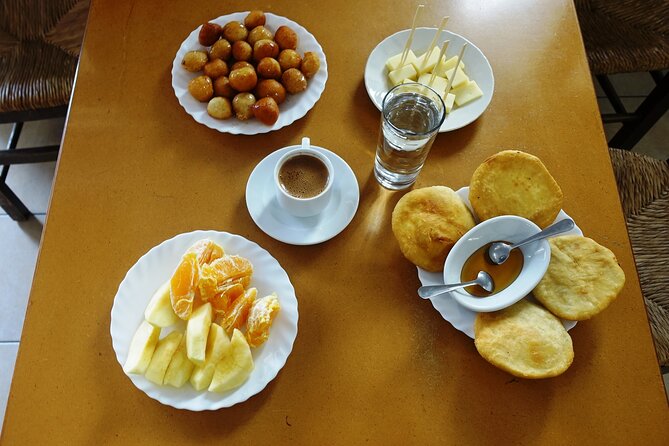
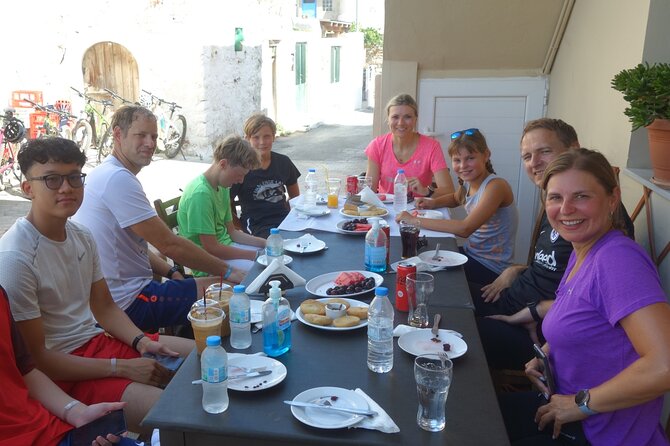
Then you get a café stop with Greek coffee or a local soft drink plus food tasting. One review specifically mentions loukoumades with Cretan honey and other Cretan treats. Even if the exact sweets change by season, the structure is the same: you take a break, taste local flavors, and slow down enough to enjoy the village atmosphere.
This is a great moment to ask questions. Use it to confirm what you’re seeing outside the café—because the guide will often tie the landscape to the olive lesson you just heard.
Weather, clothing, and the small practical things that matter
The tour operates in all weather conditions. That doesn’t mean you’ll ride in a storm forever, but it does mean you should dress for reality. Bring a light rain layer or shell you can throw on without wrecking your outfit. Crete sun can also be sneaky—sunscreen and a hat can still save you even if skies look friendly.
You’ll be outdoors for hours, so think about comfort:
- breathable layers you can adjust
- shoes with grip for short off-road sections
- a small daypack if you like, for your rain layer and personal items
And because you’re cycling, treat hydration seriously. Water is provided, but if you tend to get thirsty fast, you’ll appreciate sipping steadily rather than chugging later.
Who this tour is for (and who should skip it)
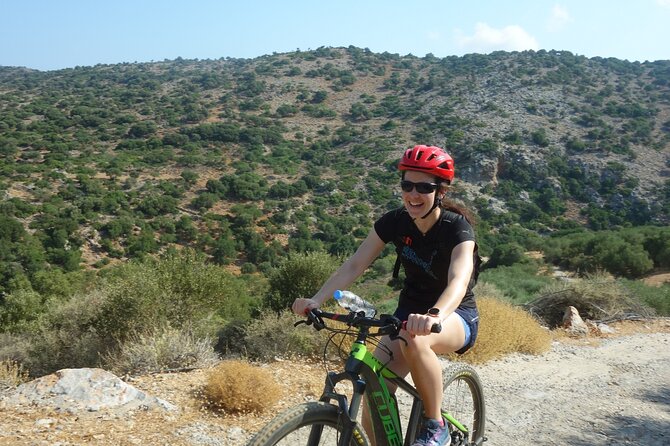
This ride is best for people who are comfortable cycling and have moderate physical fitness. You should be able to ride confidently, and the tour requires riders to be age 15 or older. Riders under 18 must be accompanied by an adult.
There are also clear bike-fit limits: minimum body height 158 cm and maximum 195 cm so you can ride the proper bike size. If you’re outside that range, ask directly what options exist—because the tour is built around proper sizing.
Health-wise, it’s not recommended for participants with heart complaints, pregnancy, or other serious medical conditions. If any of those apply, it’s safer to choose a different style of excursion.
If you love e-bikes, countryside riding, village stops, and learning a real local craft (olives), this should land well. If you want a purely sightseeing bus tour with minimal effort, you’ll likely find the cycling part more work than you want.
Price and value: is $84.69 per person a smart buy?
At $84.69 per person for about four hours, the value comes from what’s included and what you avoid. You get:
- a quality Cube e-bike with a Bosch 250W motor
- helmet (and gloves noted in the tour description)
- bottled water
- Greek coffee or a local soft drink
- seasonal fruits
- a local guide
- photo and sightseeing stops
- and it’s listed as having free admission
That’s a lot for a half-day. The big cost you’re avoiding is renting an e-bike on your own, plus paying a guide to teach you why the landscape looks the way it does. The guided olive component is especially where the money makes sense—without instruction, olive groves can blur together.
The one trade-off is you’ll be responsible for getting to the meeting point; pick-up and drop-off aren’t included. If you’re already in Hersonissos, that’s usually manageable. If you’re staying far away, you’ll need to plan your morning transport.
Also, the group size tops out at six travelers. That small number usually improves the experience: fewer slowdowns, more room for questions, and a less chaotic photo rhythm.
Should you book this e-bike canyon-and-olive tour?
You should book if you want a morning that feels active but not punishing. This works well when you want Crete nature + villages + a cave visit + olive cultivation learning in one smooth plan. The small-group feel, quality e-bike setup, and the added context around olives make it more than just scenic riding.
Skip it if you want an entirely flat ride, if you’re not confident on uneven surfaces, or if you have health concerns that the tour specifically warns about. Also think twice if you prefer not to deal with variable weather—this one is outdoors no matter what.
If you’re visiting Crete and your days are already packed with beaches, this is a smart way to balance the week with inland character and a story you’ll carry home—especially once you’ve tasted what comes from those olive-lined hills.
FAQ
How long is the e-bike tour?
It’s approximately 4 hours.
Where does the tour start and end?
It starts at Lyttos Beach Hotel in Hersonissos and ends back at the same meeting point.
What time does the tour begin?
The start time is 9:00 am.
Is pick-up or drop-off included?
No. Pick-up and drop-off service are not included.
What’s the distance and elevation change?
The tour distance is 37 km with about 800 meters total up and down.
What kind of bike is used?
You ride a Cube electric mountain e-bike with a Bosch 250W motor.
Is the route mostly on pavement?
Not entirely. The ride includes some short, easy off-road sections.
What level of fitness do I need?
Moderate physical fitness is recommended. You should also be able to confidently ride a bike.
Who can join the tour?
The tour is for age 15 and older. Riders under 18 must be accompanied by an adult. There are also height limits (158 cm to 195 cm) for proper bike sizing.
What’s included for food and drinks?
Seasonal fruits are included, plus Greek coffee or a local soft drink, along with bottled water. The tour also includes stops for sightseeing and photos.
More E-Bikes in Crete

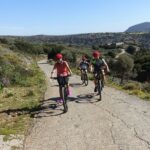

Crete on Two Wheels

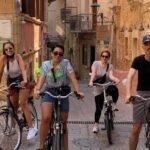
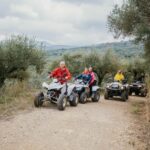
More Tour Reviews in Crete


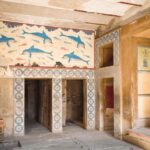
Fresh Off the Boat: Newest Crete Reviews



Cycling Tours, compared.
 ★ 4.8From Rethymno: Half-Day Quad Bike SafariFrom $701,444 reviews
 ★ 4.9Chania: City Highlights Small Group Bike TourFrom $51176 reviews
 ★ 4.9Hersonissos: ATV Quad Bike Safari in the Mountains of CreteFrom $107122 reviews
 ★ 5.0Heraklion: E-Bike Food Tour – Discover the Flavors of CreteFrom $139106 reviews
 ★ 4.8e-Bike Guided Tour to Myli Gorge with Full Lunch includedFrom $8274 reviews
 ★ 5.0Eleftherna E-Bike and MTB Tour – Experience The Authentic CreteFrom $9069 reviews
 ★ 4.9Chania Alternative Sunset Bike TourFrom $5148 reviews
 ★ 4.8Chania: E-Bike City Highlights TourFrom $5745 reviews
Browse the lists this tour appears in