Review · CRETE
Orthodox Crete: In the Footsteps of the Apostle Paul from 55 AD
Orthodox Crete feels like a living story. This private 8-hour drive links you to Orthodox Christian sites with a clear theme tied to the Apostle Paul era, plus stops that mix faith, nature, and archaeology. I also like how the day runs with a premium chauffeur setup and a guide who can explain what you’re seeing in plain language, not just recite dates.
One thing to consider: several stops are very time-efficient (and one major site, the Palace of Faistos, has an admission fee not included). If you want slow museum-style wandering, you’ll need to treat this day as a focused highlights route, then return later.
By the end, you’re not just passing landmarks. You’re getting a guided way to understand why these places matter—especially if you’re interested in the early Christian world in Crete.
In This Review
- Key Points I’d Put on Your Shortlist
- Orthodox Crete: How the Apostle Paul Theme Shapes the Day
- Pickup, Vehicle Comfort, and Why It Matters in an 8-Hour Day
- Stop 1: Heraklion Prefecture (45 Minutes) and Setting the Story Frame
- Stop 2: Agios Myronas Village and the 400m Cave With Healing Water (35 Minutes)
- Stop 3: The Ancient Messara Plain—Seeing Crete Through Local Eyes (45 Minutes)
- Stop 4: Moni Palianis—Assumption Monastery and the Myrtle Tree Relic (35 Minutes)
- Stop 5: Palace of Faistos (35 Minutes) and What to Budget for Admission
- Stop 6: Odigitria Monastery (Agiofarango) at the Island’s Southern Corners (45 Minutes)
- Stop 7: Matala Beach for Caves, Gortyna, and Seafood Time (2 Hours)
- Value and Pace: What You’re Really Buying With This Day Trip
- Who This Tour Suits Best (and Who Might Prefer Something Else)
- Should You Book Orthodox Crete: In the Footsteps of the Apostle Paul from 55 AD?
- FAQ
- Is pickup and drop-off included?
- Is this a private tour?
- What language is the tour offered in?
- Are admission tickets included?
- What’s included to keep the day comfortable?
- What’s the cancellation refund policy?
Key Points I’d Put on Your Shortlist
- Private guide with Judeo-Christian framing that helps the day click, not just photos for later
- Monasteries and caves that turn spirituality into something you can actually see and walk around
- VIP skip-the-line help and assistance with ticket purchasing where needed
- Prime comfort: a chauffeured premium vehicle with water, snacks, Wi-Fi, and USB ports
- Real time outdoors: Agios Myronas altitude cave stop and a long finish at Matala Beach
Still weighing it up? A handful of other Crete trips worth a look beside this one.
- Heraklion: Dia Island Sailboat Cruise with Swimming and Meal
★ 4.8 · 2,579 reviews - Heraklion Area: CRETAquarium Admission Ticket
★ 4.4 · 2,055 reviews - Crete: Palace of Knossos E-Ticket and Audio Guide
★ 3.8 · 1,540 reviews - Crete: Sunset or Morning Quad with Local Products Tasting
★ 4.9 · 1,135 reviews
Orthodox Crete: How the Apostle Paul Theme Shapes the Day
This tour is built around a spiritual through-line: tracing the world connected to the Apostle Paul in the mid-1st-century context (55 AD is right there in the concept). You’re not spending the day in a classroom. You’re visiting places that let you connect the dots between religious life, local tradition, and how Christianity took root in Crete.
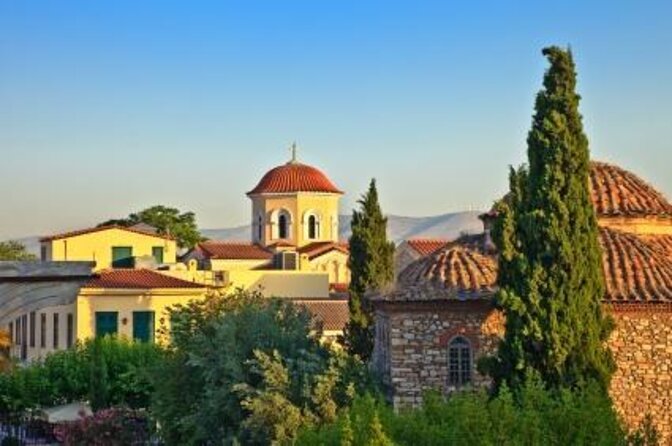
What I like about this approach is the pacing of understanding. You start with the big picture (Heraklion Prefecture), then you move to specific sacred sites—caves, monasteries, and fortifications—where your guide can explain the meaning behind the setting. Even if you’re not a “religion-history” person, you can follow the thread because the day keeps giving you physical landmarks: rock-hewn spaces, monastery architecture, and the viewlines you’d expect from sites built for both worship and protection.
If you care about Orthodox Christianity specifically, this theme is a strong fit. You’ll also get a useful perspective on how faith and everyday place-making blend together on Crete.
Pickup, Vehicle Comfort, and Why It Matters in an 8-Hour Day
This is a private tour, which changes the feel immediately. It’s just your group, and the driver keeps things smooth while your guide handles the story and logistics. Pickup is offered from your hotel, villa, cruise, or any point on Crete island, with a flexible pickup time confirmed at the end.
The vehicle details aren’t fluff. For a full day that includes drive time across central areas and then down toward the southern coast, comfort helps. You’re set up with mineral water, Cretan fruits & snacks, plus Wi-Fi, USB sockets, and hygiene amenities. That means you don’t spend the day stressed about basic needs—especially helpful if you’re traveling with kids or you just like arriving at each stop ready to pay attention.
A small but practical bonus: there’s also assistance with restaurant recommendations and reservations, which is handy when you want to eat at the end (Matala is a popular choice, and you’ll want food plans that don’t eat your time).
Stop 1: Heraklion Prefecture (45 Minutes) and Setting the Story Frame
You begin with a 45-minute introduction in the Heraklion Prefecture area. This first stop matters because it’s your orientation. Your guide’s job here is to give you the context you’ll use again and again: what you’ll see later, why it’s connected to Orthodox Christianity, and how the Apostle Paul theme ties into the places you’re visiting.
Because this is private, the guide can tailor the emphasis. In the experiences I’ve read about from guides like Ioanna, Gethsemane, Alex, and Nektar, the common thread is that they bring the setting to life through explanation and discussion—not just a quick walkthrough. That “story frame” helps the later stops feel less random.
No admission ticket is listed for this stop, which is nice. It’s a low-cost way to start your day confident about where you’re going next.


Stop 2: Agios Myronas Village and the 400m Cave With Healing Water (35 Minutes)
Then you head to Agios Myron, a village stop made for walking and looking closely. The interesting detail here is the altitude: you’ll reach around 400 meters. That elevation change is more than scenic trivia—it’s part of what makes the site feel separate from the road.
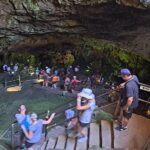
The star of this stop is the ascetic holy Cave linked to Agios Myronas, where healing water still gushes from within the rock. You’re not just hearing about a tradition. You’re standing near the physical feature that supports it.
This is also one of those stops where the guide’s approach really matters. If you’re the type who appreciates religious practice tied to place, this can feel moving. If you want strictly archaeological sites, this might feel slower—but it’s still short (35 minutes), so you won’t feel stuck.
Practical tip for this kind of place: wear shoes you’re comfortable in if the ground is uneven or slick near the cave area.
Stop 3: The Ancient Messara Plain—Seeing Crete Through Local Eyes (45 Minutes)
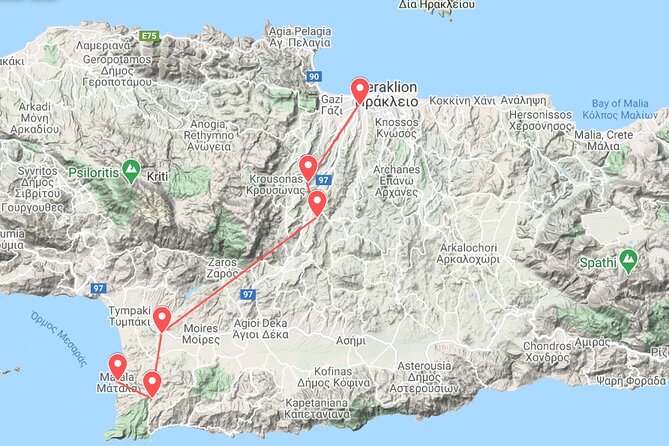
Next up is the Messara Plain, guided along the ancient valley to help you see Crete “through the eyes of a local.” That wording is doing real work. Plain stops can turn into fast sightseeing. Here, the goal is to connect the valley setting to how people live, worship, and travel through the island.
This stop is listed as 45 minutes, which tells you the intention: it’s a grounding moment between more intense sacred stops. You get a chance to absorb the wider area and then refocus when the monasteries start again.
If you like geography-as-storytelling, this is a good one. The tradeoff is time: you won’t have the kind of roaming session where you stop at multiple viewpoints. You’re getting a guided sweep that helps you understand the bigger picture.
Stop 4: Moni Palianis—Assumption Monastery and the Myrtle Tree Relic (35 Minutes)

At Moni Palianis, you’re visiting one of the oldest Cretan monasteries dedicated to the Assumption. The stop is tied to a specific, memorable detail: a sacred Myrtle tree, described as a relic of Minoan Crete dendrolatry.
That blend of eras is what makes this stop worth your attention. Even if you don’t know much about Minoan religion, your guide can explain why a tree relic matters in the context of local tradition. In a day like this, details like that turn a monastery visit from “pretty buildings” into a layered cultural story.
Time-wise, it’s 35 minutes. So you’ll get a meaningful look, but you won’t have hours for deep study. If you prefer long, slow religious spaces, keep that in mind—and plan to return later if Paliani speaks to you.
Admission is free here, which makes the stop feel like strong value: you pay in time and attention only.
Stop 5: Palace of Faistos (35 Minutes) and What to Budget for Admission

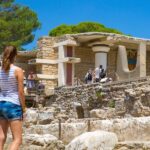
This is the one archaeology-heavy swing on the route: you’ll visit the Palace of Faistos (also spelled Festos/Faistos depending on the source). The description points to a Bronze Age palace, accessed by “roads that go deeper,” with prehistoric sites you might spot along the way.
Stop time is 35 minutes. That’s brief for a palace site, but it can still be a great “first contact” if your guide helps you identify the major parts quickly. The main drawback is obvious: you only have a short window to make sense of a big place.
Here’s the practical side: admission ticket is not included for this stop. Since this is a highlights-style tour, build your budget for at least one paid entry. The good news is the tour includes assistance with purchasing admission tickets and skip-the-line access, so you’re not stuck handling paperwork in transit.
If you’re the kind of visitor who loves museums and wants time to read every sign, you may want to add extra hours elsewhere in the area on a different day.
Stop 6: Odigitria Monastery (Agiofarango) at the Island’s Southern Corners (45 Minutes)
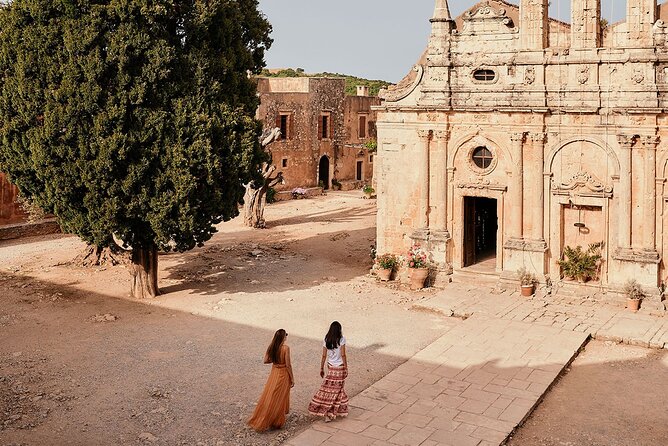
As you head toward the southern side, the tour brings you to Odigitria Monastery, also referenced as Agiofarango. This stop is described as a “jewel of monastic Crete,” and the key theme is architecture: fortified architecture that reflects a strong cultural legacy.
Fortified monastery architecture is its own kind of history. It tells you that monastic life wasn’t only about quiet reflection. It also responded to the realities of location and safety over time. In a private tour setting, your guide can point out what you’re looking at—defensive features, layout logic, and why this style would make sense where it’s built.
This one runs 45 minutes, giving you a bit more time to absorb the building and surroundings compared to the earlier shorter stops.
Admission is listed as free for this stop, which makes the overall day feel more balanced: you get a major viewpoint shift and a meaningful structure without extra entry costs here.
Stop 7: Matala Beach for Caves, Gortyna, and Seafood Time (2 Hours)
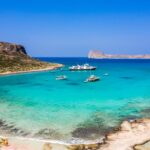
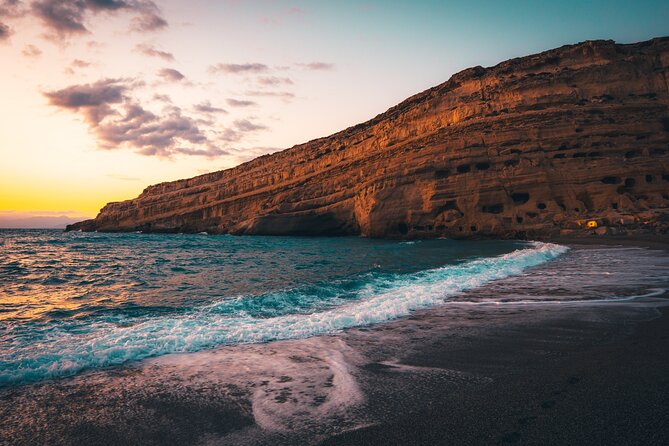
The day ends at Matala Beach, with 2 hours of time—enough to slow down and enjoy the setting. Matala is described as a prehistoric port of Gortyna, with iconic caves from the Neolithic Age. That’s a strong cultural overlap: you’re finishing the tour with a place that connects deep time to a very real, modern beach atmosphere.
Food is part of the deal here, too. The tour description encourages you to indulge in seafood dishes. Even though drinks and meals are not included, the tour includes help with restaurant recommendations and reservations, which you’ll appreciate if you don’t want to gamble on your first restaurant pick after a long day.
This is also where the private-guide style really pays off. After seeing monasteries and caves earlier, it’s nice to have a calm landing. You can choose to focus on the scenery and caves, or focus on food and people-watching, while your guide helps you avoid the time-sinks.
Value and Pace: What You’re Really Buying With This Day Trip
With tours like this, the question isn’t just what’s on the list. It’s how the day is managed.
Here’s what you’re getting that feels like real value:
- A chauffeured private vehicle means you’re not timing buses or wrestling with directions between stops.
- Snacks, water, Wi-Fi, USB ports help you stay comfortable through drive time.
- VIP skip-the-line access and ticket help reduce hassle at the paid stop.
- Insider access and tailored details are the big “human value.” Multiple guides mentioned in real experiences (Gethsemane, Ioanna, Alex, Nektar) emphasize conversation and personalization, and that’s often what makes the difference between a day you remember and a day you forget.
The tradeoffs are also clear:
- Some stops are short (many are around 35 minutes). You won’t get a slow, museum-level visit to everything.
- One major site has admission not included (Faistos), so you’ll need to budget for that.
- The focus is Orthodox Christianity and connected heritage. If you’re purely after beaches and easy strolling, the religious stops might feel heavy.
Overall, the pace works best if you like structured days with clear themes—and you trust your guide to point out what matters.
Who This Tour Suits Best (and Who Might Prefer Something Else)
This is a great fit for you if:
- You want a private day with direct conversation and on-the-spot explanations.
- You’re interested in Orthodox Christianity and want to see how faith connects to physical sites.
- You like a mix of monasteries, caves, and archaeology, not only one category.
- You appreciate comfort and fewer logistics headaches.
This might be less ideal if:
- You want long stays at major archaeological sites where you can read and wander for hours (Faistos, in particular).
- You’re traveling with a strict schedule where an 8-hour day is too much.
- You’re not interested in religious architecture and cave traditions.
One more note from the style of guides associated with this kind of tour: people often mention that guides keep younger minds engaged through talk and storytelling. If you’re bringing kids, this format can actually work well because it turns the day into a guided question-and-answer experience rather than a silent march.
Should You Book Orthodox Crete: In the Footsteps of the Apostle Paul from 55 AD?
Yes, I’d book it if you want a focused, spiritually themed day that still delivers real scenery and a solid archaeology moment, all without the stress of driving and ticket juggling. The combination of private guidance, comfort perks, and assistance at paid sites makes this a smart value play for people who like their history with context.
If you’re someone who likes to linger and study independently, consider booking this as a “highlights + orientation” day and then plan a second pass to the places that grab you most—especially if the Palace of Faistos pulls you in.
FAQ
Is pickup and drop-off included?
Yes. The tour includes personal pick-up & drop-off from your hotel, villa, cruise, or any other point on Crete island, with a flexible pickup time confirmed at final confirmation.
Is this a private tour?
Yes. It’s a private tour/activity, so only your group participates.
What language is the tour offered in?
The tour is offered in English.
Are admission tickets included?
Some stops list admission as free, but the Palace of Faistos has admission marked as not included. Drinks and meals are also not included.
What’s included to keep the day comfortable?
You get a chauffeured premium vehicle with mineral water, Cretan fruits & snacks, Wi-Fi, USB sockets, and hygiene amenities.
What’s the cancellation refund policy?
You can cancel for free up to 24 hours in advance for a full refund. If you cancel less than 24 hours before the start time, the amount paid isn’t refunded.