
Review · LASITHI PLATEAU & ZEUS CAVE
Knossos Palace and Plateau of Lassithi from Heraklion Region
One day, three eras of Crete. This trip strings together the Lassithi Plateau and its classic mountain wind-pumps with two Orthodox monasteries, then finishes at Knossos Palace to connect the myths to real Bronze Age architecture. It’s the kind of itinerary that’s ideal when you want highlights without juggling rental cars.
I especially like that hotel pickup is included, so you can spend the morning looking out at Crete instead of figuring out bus connections. And I love how the day keeps moving: you’re not just driving past sights—you’re given time to actually see, walk around, and understand what you’re looking at with a certified guide.
One possible drawback: plan on a lot of coach time. Even though the main stops are time-blocked, pickup can start early and the bus can feel like the “real attraction” if you’re unlucky with the order of drop-offs.
In This Review
- Key Points to Know Before You Go
- The Big Idea: Knossos Plus Lassithi Without the Car
- Price and Value: What You’re Paying For
- The Pickup Morning: Convenience With a Catch
- Lassithi Plateau: Wind-Pumps, Views, and Mountain Air
- Panagia Vidiani Monastery: A Living Place of Worship on the Plateau
- Kera Kardiotissa Monastery: Frescoes, Phases, and a Roadside Setting
- Knossos Palace: Myths Meet Bronze Age Architecture
- The Day’s Rhythm: What You’ll Feel on the Bus
- Who This Tour Fits Best (and Who Might Skip It)
- What to Bring for a Smooth Lassithi to Knossos Day
- Should You Book This Knossos and Lassithi Day Trip?
- FAQ
- FAQ
- Is hotel pickup included?
- How long is the tour?
- What’s included in the price?
- What entrance fees are not included?
- Is there an admission fee for the Lassithi Plateau stop?
- What monasteries do you visit?
- Is the tour offered in English every day?
- Is the Knossos Palace visit long enough?
- What fitness level do I need?
- What happens if weather is bad?
- Where does the tour start and end?
Key Points to Know Before You Go
- A packed highlights day: Lassithi Plateau plus Panagia Vidiani and Kera Kardiotissa, then Knossos Palace.
- Great starting convenience: hotel pickup via a designated bus stop near your accommodation.
- Entrance fees are extra: Knossos is not included (up to 25 free), and Kera Kardiotissa is not included (up to 18 free).
- Mountain timing matters: Lassithi is at about 840 m altitude, so weather and clothing can make a difference.
- This is a group tour: with a maximum of 100 people, plus potential for long pickup routes.
Deeper into Minoan Crete, more palaces and ruins
- Knossos: Knossos Palace Skip-the-Line Guided Walking Tour
★ 4.8 · 1,380 reviews - Crete: Knossos Palace & Heraklion Guided Tour
★ 4.4 · 1,127 reviews - Crete: Knossos Palace and Museum E-Tickets with Audio Guides
★ 4.0 · 828 reviews - Crete: Land Rover Safari on Minoan Route
★ 4.9 · 652 reviews
The Big Idea: Knossos Plus Lassithi Without the Car
If you’re basing yourself in the Heraklion area and you want both the “myth” side of Crete and the high-mountain side, this is a smart format. I like that the day doesn’t treat Crete as one stop—it treats it as layers: Bronze Age Knossos, 19th-century monastic life on the plateau, and older devotional art in the hills.
The tour is also built around the practical reality of staying in Heraklion: you get an air-conditioned bus and a certified tour-guide, with hotel pickup arranged through a nearby bus stop (up to about 800 m walking). That matters because driving and parking on your own can eat up half a day fast.
The trade-off is pacing. This is an 8–9 hour day, and a big slice of it is transportation. If you’re the type who hates sitting on a bus, you’ll want to mentally budget for it.
Price and Value: What You’re Paying For
At about $60.08 per person for an 8–9 hour guided day trip, the price mostly covers the “moving parts”: pickup, transport, and a guided route across multiple sites. The big thing to check is what isn’t included.
You’ll still need to budget for entrances:
- Knossos Palace: €20.00 per person (and up to 25 years old is free, per the tour’s note)
- Kera Kardiotissa Monastery: €2.00 per person (and up to 18 years old is free)
So is it good value? In my view, yes—because you’re combining several distinct experiences in one day. You’re not just paying for Knossos. You also get the scenic drive and mountain setting of Lassithi Plateau, plus two monasteries that show how Cretan religious life connects to landscape, farming communities, and pilgrimage.
The Pickup Morning: Convenience With a Catch
Hotel pickup is a major plus here. You don’t have to be on your feet at a distant meeting point at 7 a.m. You’ll be directed to a specific pickup stop near your hotel, and you’re asked to walk up to about 800 m if needed.
Do expect the timing to vary based on where you’re staying. Since this is a group tour, pickup is done in batches across a broad area, including many towns around Heraklion (Amudara, Karteros, Amnissos, Kokkini Hani, Hersonissos, Stalida, Malia, Sissi, and more). If your hotel is near the early portion of the route, you’ll likely start sooner. If not, you can spend longer in the bus shuffle.
One practical tip: bring water and a light layer. Even with air-conditioning, early morning coach rides can get warm, and you’ll be outside later at altitude.
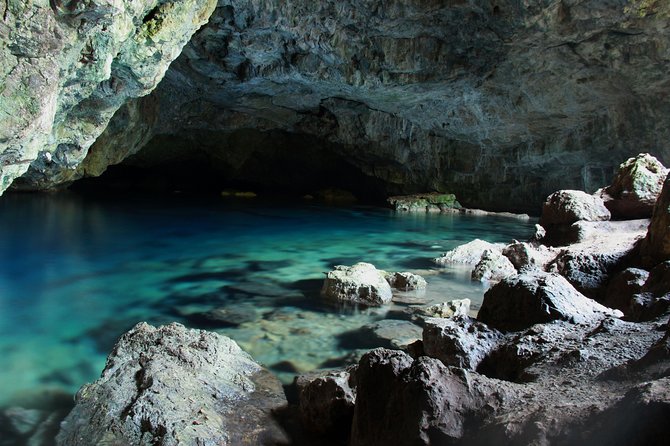
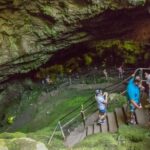
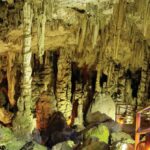
Up to the Lasithi plateau and the Zeus cave
Lassithi Plateau: Wind-Pumps, Views, and Mountain Air
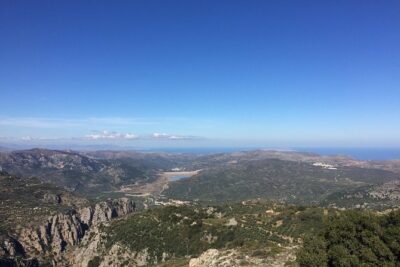
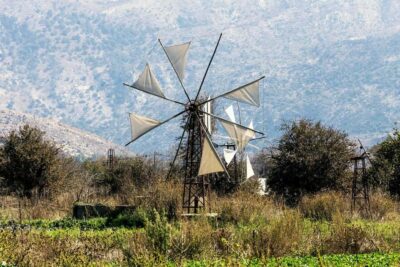
The Lassithi Plateau stop is the visual payoff for the drive east of Heraklion. You’re going up to a high plain in eastern Crete, about 70 km from Heraklion, sitting at an average altitude of 840 m.
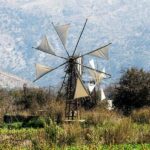
The plateau itself is huge for a day trip: roughly 11 km east–west and 6 km north–south. And the most recognizable detail here is the “white-sailed windmills”—more accurately, wind-pumps. They were created with a local design and used since the early 20th century to irrigate the land.
I like this stop because it’s not just pretty scenery. It helps you understand how Cretans have worked the water situation in a dry environment: irrigation isn’t an abstract concept when you can actually see the mechanisms.
Time on the plateau: about 30 minutes for this part of the day, and admission for that stop is noted as free.
What to watch for:
- Weather up high can feel different than Heraklion. If it’s breezy, plan on it.
- You’ll likely have a short walking window—wear shoes that are comfortable for uneven outdoor ground.
Panagia Vidiani Monastery: A Living Place of Worship on the Plateau
After the plateau viewpoints, the day turns quieter and more devotional with the Monastery of Panagia Vidiani. This Orthodox monastery was founded in the mid-19th century and is set among small villages and cypress groves on the plateau.
The monastery is linked to pilgrimage because of the Byzantine icon of Panagia Vidiani. That’s the heart of why people come: it’s a living worship site, not only a photo stop.
I also appreciate the historical framing around it. The monastery is described as a support and refuge center for local people and those who fought against invaders—so the site makes sense in a broader Cretan story of survival, faith, and community.
There’s no entrance price listed for this monastery in the tour details, so treat it as part of the included sightseeing time. If you’re sensitive to religious sites, dress respectfully and keep your pace gentle. This is the kind of place where “quick and loud” feels out of character.
Kera Kardiotissa Monastery: Frescoes, Phases, and a Roadside Setting
Next comes Kera Kardiotissa Monastery, located about 50 km southeast of Heraklion, in a wooded area in the North Dikti Range. It sits near the road leading to the plateau—so you’ll see how these monasteries weren’t cut off from life. They’re part of routes, villages, and local naming traditions.
The monastery has a stone-built church dedicated to the Nativity of Mary, celebrated on September 8. The present church was built in four phases, starting from an original single-aisled temple that expanded with additional rooms and a smaller chapel. Even where time has damaged details, the layers of construction help you read the building like a timeline.
The old frescoes—dating to the 14th century—are a major draw, though they’re noted as quite damaged by time. That’s also a useful reminder: you’re not seeing a “perfectly restored” museum. You’re seeing surviving religious art and architecture, which changes how you notice it.
Time: about 1 hour.
Entrance: not included (around €2.00 per person, with up to 18 free).
Practical tip: bring a bit of patience for the setting. Because it’s near a road and part of a driving route, the monastery experience can be a little more casual than the most remote sanctuaries. That doesn’t make it less meaningful—it just changes the vibe.
Knossos Palace: Myths Meet Bronze Age Architecture
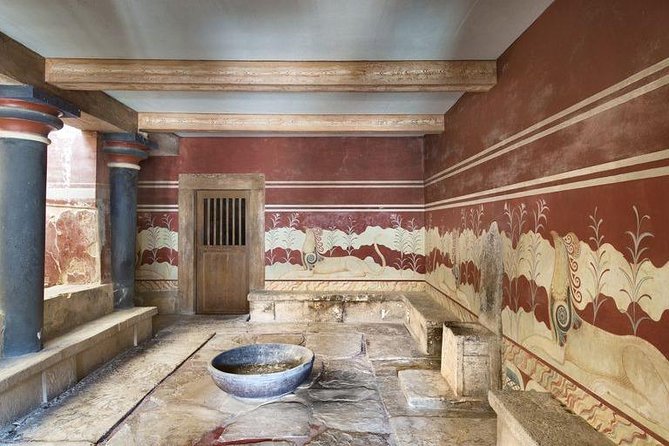
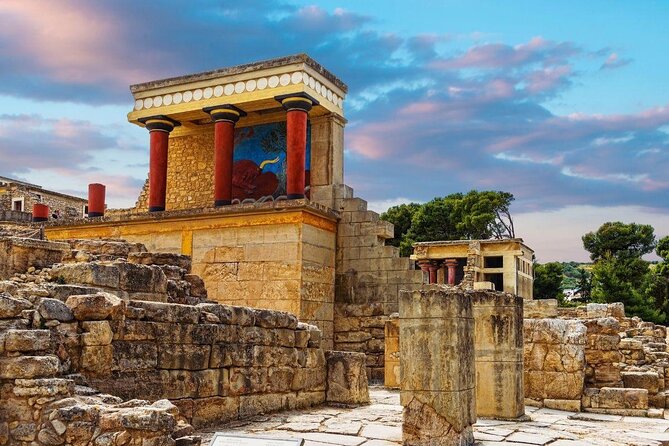
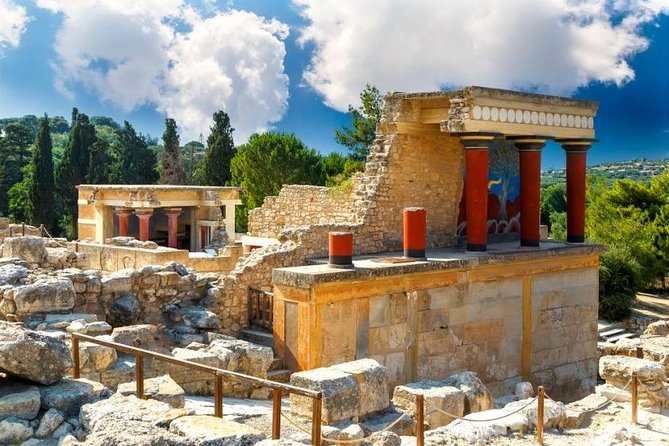
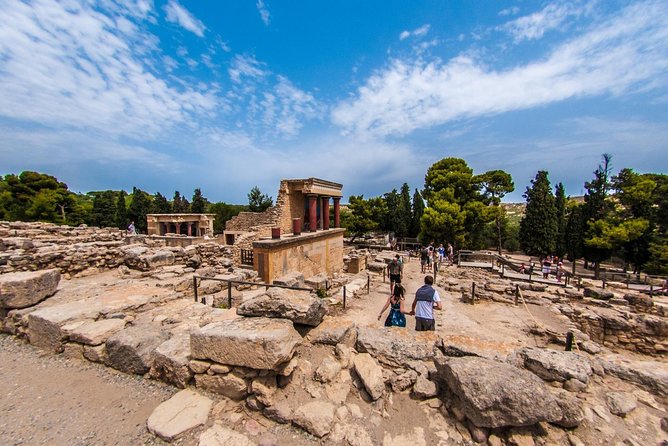
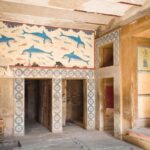
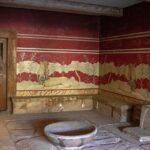
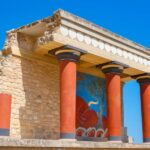
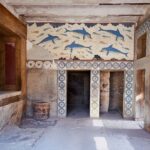
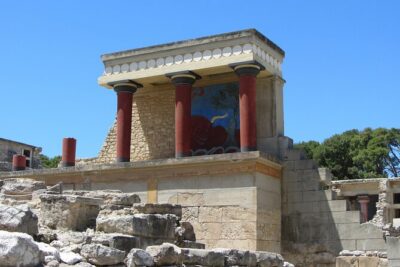
Then the day ends at the Palace of Knossos, Crete’s biggest Bronze Age archaeological site and often called Europe’s oldest city. This is where the tour connects myth and place: you’ll visit the famous palace where stories of the Minotaur are part of the popular imagination, but you’ll also learn the real architectural logic behind the site.
Time at Knossos: about 1 hour.
Entrance: not included, with an additional €20.00 per person (and up to 25 free, per the tour’s note).
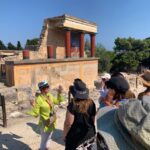
I like a shorter Knossos visit done with a guide. Without one, it’s easy to get lost in the scale and repetition of walls and corridors. With a guide, you can follow the key spaces and understand what they were built for—especially if your time is limited.
One key planning thought: because the entrance fee isn’t included, you’ll want to have payment ready. If you’re budgeting carefully, this is the main cost driver.
Also, aim for comfort footwear. Archaeological sites can mean uneven surfaces, and you’ll be walking more than the “1 hour” might suggest.
The Day’s Rhythm: What You’ll Feel on the Bus
This is a full-day loop with a lot of road. The tour description focuses on transport and stops, and you’ll feel the group-tour rhythm: pickup windows, scheduled viewing time, then the next location.
A few things help the day feel smoother:
- Bring water and a snack for later—especially since meals aren’t listed as included.
- Keep a light layer in your bag for the ride and the mountains.
- Don’t expect Wi‑Fi as part of the experience. It isn’t stated as included.
Also, remember that coach days sometimes include small surprises. One factor you can’t fully control is how quickly buses move between pickups and stops. If your pickup starts earlier than you expected, just roll with it: the payoff is getting to see a lot of Crete in one go.
Who This Tour Fits Best (and Who Might Skip It)
This tour makes the most sense if:
- You want Knossos but also want to see beyond it, into the mountains.
- You prefer a guided, multi-stop day over self-driving.
- You’ll enjoy monasteries as more than “ancient buildings,” and you’re open to religious sites with real significance.
You might consider a different option if:
- You strongly dislike long bus days.
- You plan to spend most of your time at one location and don’t like time-boxed stops.
- You don’t want to pay extra entrance fees on top of the base price.
For families, it can still work, but you’ll want to consider the moderate fitness level requirement and the outdoor time at altitude. For couples doing a first trip to Crete, it’s a classic “see the highlights” format that still feels more meaningful than only hitting one major site.
What to Bring for a Smooth Lassithi to Knossos Day
Since you’ll be outdoors at altitude and walking at archaeological sites, I’d pack for comfort rather than style:
- Comfortable walking shoes (especially for Knossos)
- A light jacket (plateau altitude can feel cooler)
- Sun protection (hat/sunglasses + sunscreen)
- Water (bus days are longer than you think)
- A small amount of cash or card for entrance fees and any onsite add-ons
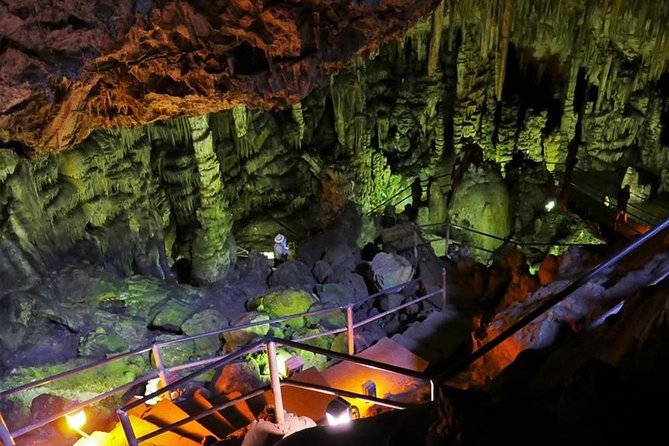
If your day includes any cave-like stops (not always shown in the basic description you might see), prioritize footwear with grip and plan for some climbing. One operational note from the tour operator side indicates that proper footwear matters for at least one steep area on some routes.
Should You Book This Knossos and Lassithi Day Trip?
I’d book it if your priority is a guided, efficient highlights day that mixes Knossos with the mountain setting of Lassithi Plateau and the devotional atmosphere of Panagia Vidiani and Kera Kardiotissa. The value is strongest when you want variety and you’re happy to trade some bus time for the convenience of pickup and the structure of a real plan.
I’d think twice if your ideal day is slow and flexible. This is not built for roaming. It’s built to move. If you’re okay with that, you’ll likely come away with a strong mental map of Crete: myth in Knossos, water engineering on Lassithi, and living faith at two monasteries.
FAQ
FAQ
Is hotel pickup included?
Yes. Pickup is offered from a designated tourist bus stop near your hotel (up to about 800 meters walking). The operator contacts you after booking to confirm the exact stop.
How long is the tour?
It’s listed as about 8 to 9 hours.
What’s included in the price?
Pickup from your hotel, transfer by air-conditioned bus, and a certified tour-guide.
What entrance fees are not included?
Knossos Palace entrance is not included (with a noted rate of €20.00 per person, and up to 25 free). Kera Kardiotissa Monastery entrance is also not included (noted as €2.00 per person, and up to 18 free).
Is there an admission fee for the Lassithi Plateau stop?
The plateau stop is marked as free, with about 30 minutes included there.
What monasteries do you visit?
The tour includes stops at the Monastery of Panagia Vidiani and the Monastery of Kera Kardiotissa.
Is the tour offered in English every day?
English is listed on Monday, Tuesday, Wednesday, Friday, and Saturday (with other languages added on some days).
Is the Knossos Palace visit long enough?
Knossos Palace is scheduled for about 1 hour. It’s a short visit, but guided for orientation through the main ruins.
What fitness level do I need?
The tour is described as requiring moderate physical fitness.
What happens if weather is bad?
The experience requires good weather. If it’s canceled due to poor weather, you’ll be offered a different date or a full refund.
Where does the tour start and end?
It starts at the Heraklion Archaeological Museum area and ends back at the meeting point.
More Tour Reviews in Crete
Up to Lasithi and the Zeus Cave

Further into Minoan Crete


Fresh Off the Boat: Newest Crete Reviews
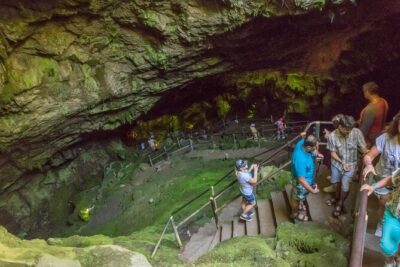
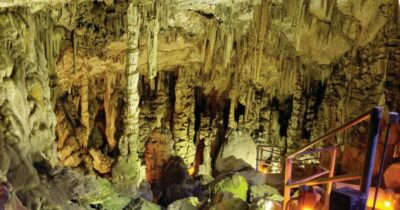
Lasithi Plateau & Zeus Cave, compared.
 ★ 5.0Full-Day Small-Group Tour in Crete with Zeus Cave VisitFrom $1071,099 reviews
 ★ 4.8Lasithi Plateau and Cave of Zeus Off-Road Safari TourFrom $104886 reviews
 ★ 5.0Knossos-Zeus Cave -Old Traditional Villages-Olive Oil FactoryFrom $136694 reviews
 ★ 4.4Road-trip to Lasithi, Zeus Cave & Olive Mill FarmFrom $47451 reviews
 ★ 4.6Lassithi, Zeus Cave, Olive Mill Farm & Knossos Combo TourFrom $58404 reviews
 ★ 5.0Zeus Cave, Lassithi Plateau, Olive Oil Factory, Kritza, PotteryFrom $119362 reviews
 ★ 5.0Knossos & Lasithi Plateau: Zeus Cave,Villages, Olive Oil TourFrom $127328 reviews
 ★ 4.7Zeus Cave, Lassithi Plateau, and Olive Factory TourFrom $115310 reviews
Browse the lists this tour appears in