Review · CRETE
WWII – The Battle of Crete Day Tour
Battle of Crete sites turn into a story fast. This 6-hour day trip from Chania uses a small group minivan to connect the key WWII locations with clear context you won’t piece together on your own.
I especially like the small group size (max 15), which keeps the pace human and makes it easy to ask questions. I also love that the day is built around the big real-world anchors of the battle, including Maleme and the Commonwealth cemetery at Souda Bay. One possible drawback: the schedule is tight, so if you want a minute-by-minute walk through every phase of the fighting, you may wish for a longer stay or extra stops.
In This Review
- Key things that make this tour worth your time
- WWII Battle of Crete: Why this day trip works so well from Chania
- Getting there smoothly: 9:00 am start, small group, and hotel pickup
- Stop 1: Maleme and the invasion story you can actually see
- Tavronitis Bridge: how transportation and terrain shaped the fight
- German Military Cemetery: respectful context on real ground
- Souda Bay War Cemetery: Commonwealth sacrifice, clearly framed
- The route isn’t just famous stops: you’ll get the in-between places
- The guide factor: why the day feels personal (and not like a lecture)
- The private collector stop: where memorabilia turns into context
- What the tour includes (and what it saves you from)
- Who should book this WWII Battle of Crete tour
- A fair heads-up: the main trade-off with six hours
- Should you book? My practical take
- FAQ
- How long is the WWII – The Battle of Crete Day Tour?
- What time does the tour start?
- Where does the tour visit during the day?
- Is the tour offered in English?
- What’s included in the price?
- How big is the group?
- What happens if the weather is poor?
Key things that make this tour worth your time
- Tight, focused route covering Maleme, Tavronitis Bridge, and both major cemetery sites
- Small group feel that keeps Q&A and photos from turning into a rush job
- Real WW2 ground you can stand on, not just look at from afar
- English local guide/escort who ties events to places you can recognize
- Admissions handled plus snacks and bottled water, so you can travel light
Still weighing it up? A handful of other Crete trips worth a look beside this one.
- Crete: Day Trip to Agios Nikolaos and Spinalonga Island
★ 4.6 · 4,416 reviews - Agios Nikolaos: Boat Trip to Spinalonga with Swim Stop
★ 4.4 · 3,031 reviews - Crete: Knossos Palace Entry Ticket with Optional Audio Guide
★ 3.9 · 2,251 reviews - From Chania: Day Trip to Elafonisi Island Pink Sand Beach
★ 4.5 · 2,014 reviews
WWII Battle of Crete: Why this day trip works so well from Chania
Crete’s WWII story is famous, but it can feel abstract from book pages. What this tour does well is give you a place-based version of the invasion. You start at Maleme, move through key points along the route, and end with cemetery ground that forces the scale of the human cost.
The format is also practical. You’re not renting a car, figuring out which roads connect which sites, or trying to interpret maps with limited time. Instead, you’re in an air-conditioned minivan with an English-speaking local driver/escort who helps you understand what you’re seeing as you go.
At $114.89 per person for a ~6-hour outing, this is priced like a proper guided day (not a casual drop-off and walk). The value lands because it includes transport from the Chania region, entrance fees, and basic comfort items like snacks and bottled water. You’re paying for organization plus interpretation, which is exactly what turns “I visited places” into “I understand what happened there.”
Getting there smoothly: 9:00 am start, small group, and hotel pickup
The tour starts at 9:00 am and runs for about six hours. It returns you to the same general meeting point you started from. The promise here is simple: fewer logistics, more time spent at meaningful places.
A big plus for your sanity is that it includes pickup and drop-off from specific places in the Chania region, handled by the provider. If you’re staying in/near Chania and want a historical day without driving stress, this setup is a good match.
Group size is capped at 15 travelers, which is noticeable in how the day flows. You get the benefits of a group tour without the feel of a stadium schedule. If you’re the type who asks questions during museum visits, you’ll likely appreciate this format.
Stop 1: Maleme and the invasion story you can actually see
Maleme is where the day begins, and it’s the right opening chapter. Even if you’ve read about the battle before, Maleme helps you connect the dots between strategy and geography. It’s the starting point where the story’s energy changes from theory into something you can picture.
You’ll have about 50 minutes here. That’s enough time to take in the main viewpoint(s), understand why this location mattered, and let the guide build the timeline without rushing you out the door.
One practical tip: wear comfortable shoes. WWII sites often mean uneven paths, gravel, and standing time. It’s not a strenuous hike kind of day, but you’ll be on your feet.
Tavronitis Bridge: how transportation and terrain shaped the fight
Next you head to Tavronitis Bridge, with around 40 minutes at the stop. Bridges are rarely where headlines live, but in battles they matter because they control movement. This is the kind of stop where a good guide makes the surrounding terrain “click.”
You’ll see a historical bridge and get the context for why it fits into the battle’s logic. The time here is long enough to go beyond a quick photo, and the pace helps you connect what you learned at Maleme to what comes next.
Also, since entrance fees are handled, you don’t waste time figuring out ticket lines or whether you’re at the right entry point. That alone saves energy in a day like this.
German Military Cemetery: respectful context on real ground
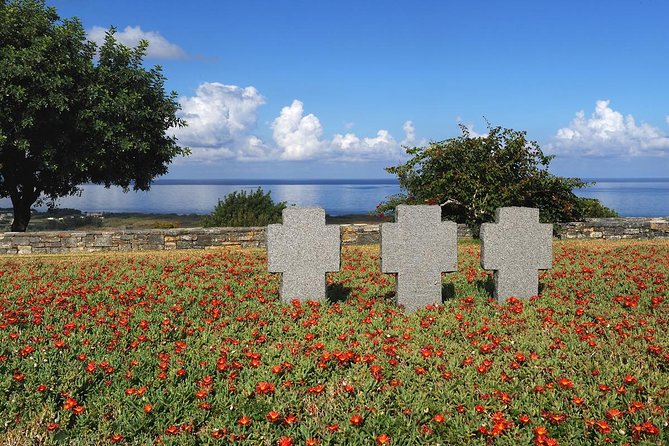
Then the tour moves to the German Military Cemetery, with about 30 minutes on site. Cemetery visits are always sobering, but they work especially well on this tour because they come after the route-based storytelling. By the time you arrive, you’ve already been learning how the conflict unfolded, so the cemetery reads as consequence, not just scenery.
This stop is short in duration, but it’s not a “drive-by.” It’s time set aside to absorb the scale and understand why the German losses are part of the larger Crete story—alongside Cretan suffering and Commonwealth casualties.
If you prefer your history straight and factual, this stop delivers. If you prefer emotional storytelling, your guide can usually give you the kind of context that makes the names and space feel more than numbers.
Souda Bay War Cemetery: Commonwealth sacrifice, clearly framed
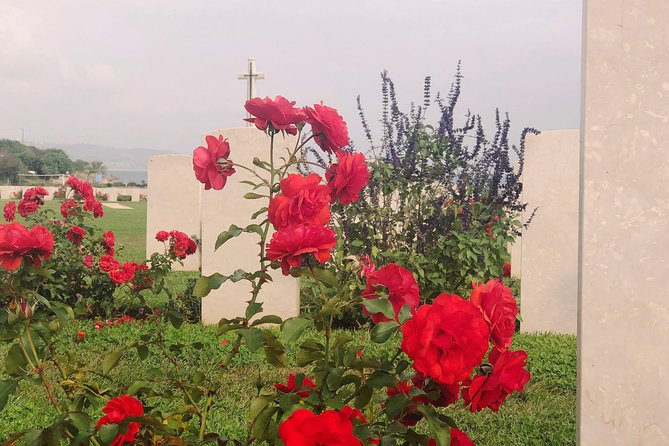
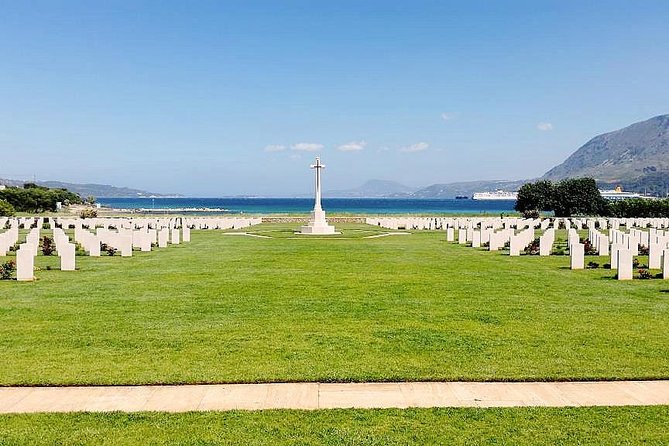
The final major cemetery stop is Souda Bay War Cemetery, also about 30 minutes. This is the British Commonwealth cemetery, and it anchors the end of the day in the losses paid by Allied forces.
Souda Bay is a powerful closing point because you’re not only learning about the battle’s events. You’re meeting the aftermath. The shift from tactical locations to commemorative space helps the whole day land.
From a learning perspective, this is smart scheduling. After you see both cemeteries, you start understanding the battle as a shared tragedy rather than a single-nation story. It also helps if you’re traveling with someone who knows WW2 well and someone who’s new to it. The guide can adjust the emphasis without changing the core route.
The route isn’t just famous stops: you’ll get the in-between places
One reason I like this style of day trip is that it mixes the headline locations with supporting points you’d probably miss alone. The idea is to build continuity: Maleme sets the stage, Tavronitis Bridge connects the movement story, and the cemeteries give the consequence.
This is especially valuable on Crete, where the terrain and road network make it easy to think you understand a site while actually missing the nearby context. With a local guide and transport covered, you can focus on reading the ground instead of managing directions.
The guide factor: why the day feels personal (and not like a lecture)
The most consistently praised aspect across experiences like this is the guide’s ability to keep the day moving while still answering questions. Names that come up in different departures include Yannis, Giannis, Ioannis, Babis, Stelios, and Nicos. The common thread is an emphasis on clarity and storytelling rather than a dry read of dates.
What you should look for in a good WWII guide (and what this tour aims to deliver) is the ability to explain:
- what you’re seeing right now
- how it fits into the sequence of the battle
- and how it connects to what Crete faced before and after
In the best moments, the day stops feeling like a checklist and starts feeling like a guided conversation in motion. That’s the difference between visiting a site and understanding it.
The private collector stop: where memorabilia turns into context
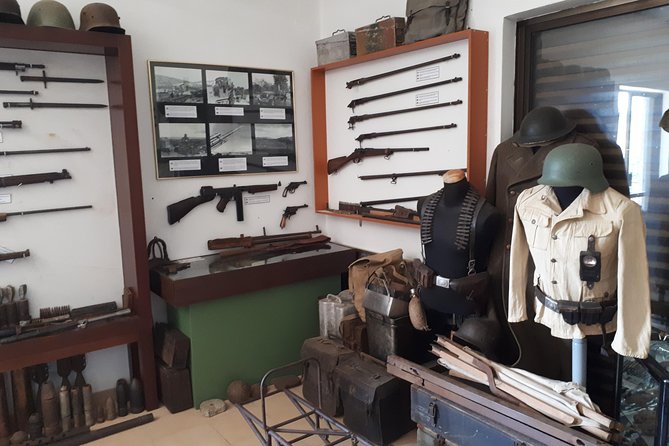
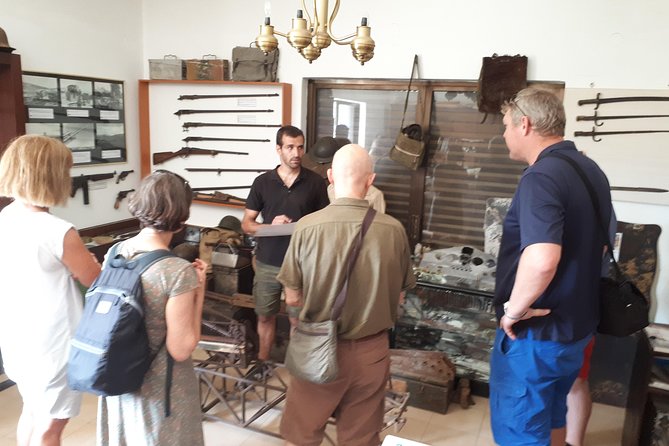
A standout extra element on this kind of tour is the chance to visit a private collection of WWII battle memorabilia run by someone connected to the subject. Depending on timing and the day’s flow, this stop can be the one that makes the history feel tangible.
In some cases, visitors have described hands-on access to period military artifacts, including items like rifles and bayonets, and other gear. Even without the hands-on element, the value of a private collection is the personal perspective: you get objects tied to the battle ground and stories that help you connect “what happened” to “what it looked like.”
This is also where the day can become less formal and more human. If you like history you can hold in your hands, this part can be a highlight.
What the tour includes (and what it saves you from)
Here’s what you can count on being handled:
- Air-conditioned minibus/minivan
- English-speaking local driver/escort
- Entrance fees for the stops
- Snacks and bottled water per person
- Pickup and drop-off from specific Chania region locations
- All taxes and fees included in the price
- A mobile ticket
- Confirmation received at booking time
Why that matters: you’re buying time and stress reduction. On a day like this, the big friction is not just getting to places. It’s understanding where to go, where to park, what tickets you need, and how to make sense of the route without losing your entire afternoon.
This tour keeps those problems off your plate.
Who should book this WWII Battle of Crete tour
This is a great fit if you:
- want a focused WWII day without driving
- enjoy guided historical context more than self-guided wandering
- like cemetery visits that come with explanation, not just silence
- travel with mixed interests (history buffs plus people who are still learning)
It’s also a good choice for military history students, because the day is built around real sites tied to the battle’s story. And with a max of 15 people, it tends to feel more interactive than group-tour crowded.
A fair heads-up: the main trade-off with six hours
The only real caution I’d give is about scope. You’re fitting a complex, fast-moving three-day battle into six hours with multiple stops. That means you’ll often be learning the flow using viewpoints and maps rather than doing long, on-foot exploration of every battlefield micro-area.
If you’re a serious WWII buff who wants ultra-detailed, ground-level walking through each phase, you may crave more time on fewer sites. If you’re happy to get the big picture plus key anchors, this tour does the job well.
Should you book? My practical take
Book it if you want a guided, efficient WWII day that starts at Maleme, moves through key terrain points like Tavronitis Bridge, and ends where the Commonwealth and German losses are commemorated at Souda Bay and the German cemetery. The route makes sense, the group size is manageable, and the price covers the stuff that usually eats half your energy on self-guided days.
Skip it (or consider adding extra time) if you know you want the deepest battlefield-by-battle walk-through and you prefer long site stays over a structured sequence.
If you’re doing only one WWII-related day trip from Chania, this is the kind that gives you clarity fast—and keeps the day feeling grounded in place.
FAQ
How long is the WWII – The Battle of Crete Day Tour?
It lasts about 6 hours.
What time does the tour start?
The start time is 9:00 am.
Where does the tour visit during the day?
The day includes stops at Maleme, Tavronitis Bridge, the German Military Cemetery, and Souda Bay War Cemetery.
Is the tour offered in English?
Yes, it’s offered in English.
What’s included in the price?
Entrance fees, an English-speaking local driver/escort, snacks and bottled water per person, hotel pickup and drop-off from specific Chania region locations, transport by air-conditioned minivan, and all taxes and fees.
How big is the group?
The tour has a maximum of 15 travelers.
What happens if the weather is poor?
This tour requires good weather. If it’s canceled due to poor weather, you’ll be offered a different date or a full refund.