Review · CRETE
PSILORITIS(mount Ida) Crete’s Highest Point 2456m
Psiloritis hits fast: Crete’s highest summit is the payoff. This full-day hike takes you up to 2456 meters on Mount Ida, in the Psiloritis range, a place tied to Zeus mythology and recognized as both a UNESCO Global and UNESCO European Geopark.
I especially like how this tour keeps things human-scale, with a maximum of 8 travelers, and how the day is paced to make the summit realistic. I also like the practical touches: trekking poles and snacks are included, so you can focus on your footing instead of your packing list.
One thing to consider: this is a serious hike. You should plan on about 900 meters up and down, and the tour depends on good weather, so cloudy or rainy conditions can shift the date.
In This Review
- Key highlights before you lace up
- Psiloritis: the climb that makes Crete feel huge
- Bali start point: what the morning sets you up for
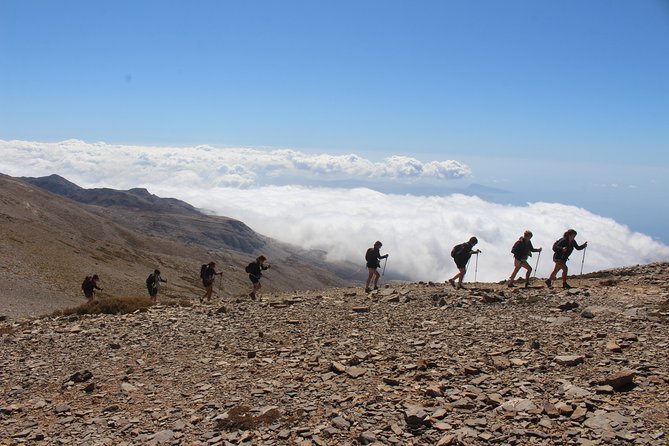
- The climb to Psiloritis summit: steady work, real payoff
- UNESCO geopark terrain: what you should look for on the hike
- Summit time: Zeus views plus the Gipfelsnack
- Descending smart: why the poles and pace matter
- Small-group value with Creta Trekking (and guide Michaelis)
- Price and what you get for $347.05
- Who this Psiloritis hike is best for
- Should you book Psiloritis with Creta Trekking?
- FAQ
- How long is the Psiloritis (Mount Ida) full-day hike?
- What is the group size for this expedition?
- What fitness level do I need?
- Is the hike to the summit only a short climb, or is it a full workout?
- What is included during the hike?
- What happens if the weather is bad?
- Where does the tour start and end?
Key highlights before you lace up
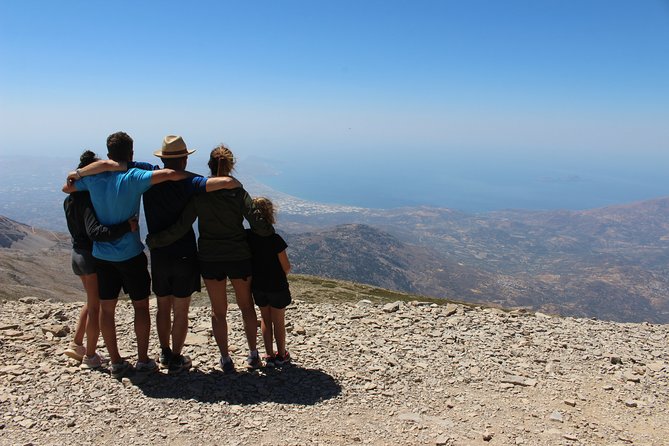
- Crete’s highest point at 2456m, with sweeping views back over the island
- Small-group format (max 8) for a calmer hike and more guide attention
- About 3 hours to the top, then enough time for the descent and time-on-feet
- UNESCO Global and European Geopark terrain, with flora and geology worth noticing
- Summit snack included (people talk about the Gipfelsnack)
- Good-weather dependent, with an alternate date or full refund if conditions ruin it
Still weighing it up? A handful of other Crete trips worth a look beside this one.
- Crete: Day Trip to Agios Nikolaos and Spinalonga Island
★ 4.6 · 4,416 reviews - Agios Nikolaos: Boat Trip to Spinalonga with Swim Stop
★ 4.4 · 3,031 reviews - Crete: Knossos Palace Entry Ticket with Optional Audio Guide
★ 3.9 · 2,251 reviews - From Chania: Day Trip to Elafonisi Island Pink Sand Beach
★ 4.5 · 2,014 reviews
Psiloritis: the climb that makes Crete feel huge
If you want one day that puts size and scale behind you, Psiloritis does it. You’re going to Crete’s highest point, so the view isn’t just nice. It’s the kind that makes you realize how much island is packed into one place.
The mountain also has a story layer. Zeus was raised on these slopes in Greek mythology, and the Psiloritis range is listed as both a UNESCO Global and UNESCO European Geopark. That means you’re not just trudging up to a number on a map. You’re moving through a protected mountain system where plants and geology are part of the reason it matters.
And because it’s a full-day expedition with a small group, it tends to feel more like a shared hike than a checklist. You’ll be walking long enough to earn the views, but not so long that it turns into a suffering contest.
Bali start point: what the morning sets you up for
The tour starts at the meeting point in Bali, Greece (CQ5J+QH Bali / CQ5J+QHR Bali). Ending back at the same spot keeps things simple, especially if you’re staying in or near the area.
Before you start climbing, you’ll get the basic setup you need for comfort and momentum. Trekking poles are provided, which is a big deal on a mountain like this. They take stress off your knees on the way down and help you stay stable on uneven ground.
The group size matters here. With up to 8 people, you’re less likely to spend the day playing speed-chess with strangers. A good guide can adjust pace and breaks without turning the day into a traffic jam.
Practical tip: wear real hiking shoes, not just “tourist sneakers.” This is a mountain hike, and even when the weather is good, trails can be rocky or uneven.
The climb to Psiloritis summit: steady work, real payoff
This hike is timed so you reach the top in about 3 hours. That’s a crucial detail for planning your energy. It means the ascent has structure: you’re not spending the entire day slogging upward in slow-motion.
What to expect is a variety of terrain on the way up. The range is known for unique flora and geological features, so the ground and the surroundings aren’t just one long repeat of the same view. You’ll likely notice changes as elevation increases—different textures underfoot, different vegetation, and a wider, airier feeling as you climb.
One detail that stands out from actual on-mountain experience: you should expect around 900 meters of ascent and descent. That’s enough vertical work to feel it in your legs, even if you’re not going for the fastest possible pace. Bring that in mind and you’ll hike smarter, not just harder.
Also, focus on your rhythm. On climbs like this, the biggest mistake is going out too fast because the start feels easy. If you keep your effort steady for the first stretch, the summit feels like a goal instead of a surprise.
UNESCO geopark terrain: what you should look for on the hike
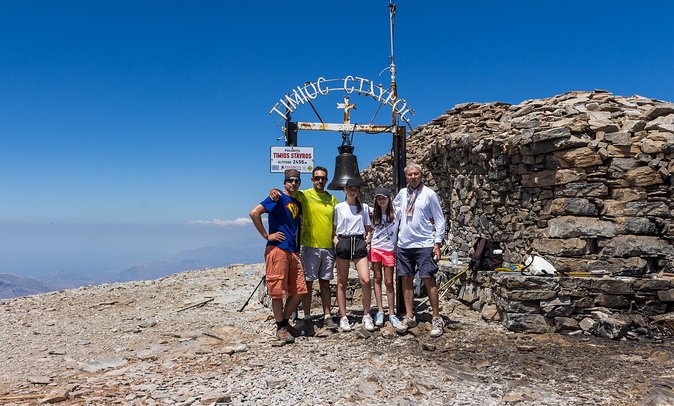
Psiloritis is recognized as a UNESCO Global and European Geopark because of unique flora and geology. You don’t need to be a botanist or a rock expert to get something out of it. The key is to slow down for a few seconds at a time and actually observe.
Here’s what you can realistically pay attention to:
- Vegetation shifts as you gain height, especially where the mountain changes exposure to sun and wind
- Rock and soil patterns along the trail edges and exposed sections
- Geological variety that makes the hike feel like more than “a straight line upward”
A guide is helpful here because they can point out what’s worth noticing without turning the day into a lecture. With small groups, you also get a better chance to ask questions when something catches your eye.
This is where the tour’s “variety of landscapes” gets practical. It means you’re less bored than with a one-note climb, and you’re more likely to remember the hike because the scenery changes as you go.
Summit time: Zeus views plus the Gipfelsnack
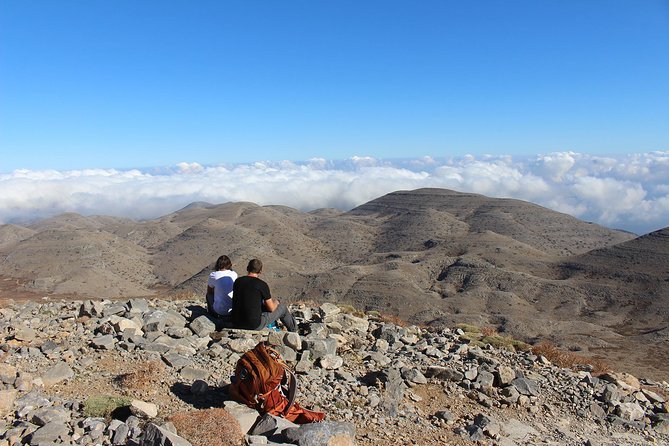
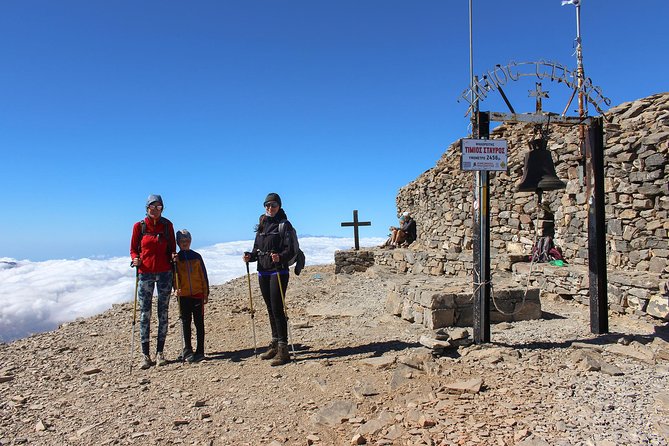
The big reward is reaching Psiloritis at 2456 meters and taking in the view over Crete. This is the moment where the earlier effort makes sense. You’ll get sweeping perspectives, and on a clear day you can see the island’s shape in a way that’s hard to grasp from the coast.
The tour also builds in a summit break, and this is one of the most praised parts. Snacks are included, and people specifically mention a Gipfelsnack, which makes sense: after hours of climbing, you want something real to reset your energy.
The Zeus connection adds a nice mental soundtrack to the stop. Even if you’re not a mythology person, it helps the summit feel less like an anonymous high point. You’re standing somewhere people linked to a big ancient story, and you’re looking out at the terrain that story supposedly inspired.
Practical summit advice: don’t treat the stop like a photo marathon. Keep moving enough that you don’t get cold or stiff. Eat, drink, look around, then head back down while you still feel good.
Descending smart: why the poles and pace matter
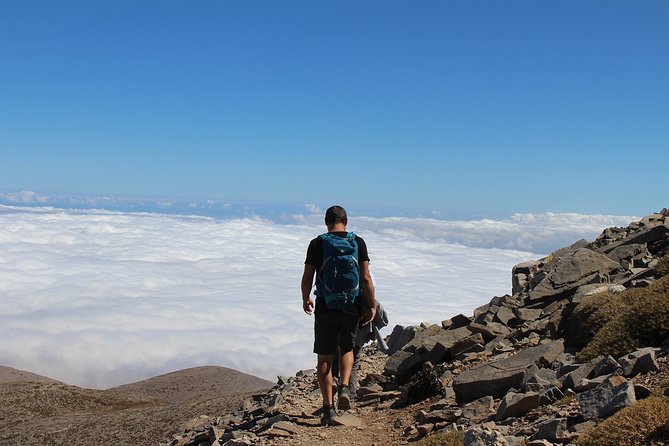
The descent is where many people feel the hike. Even if the climb is manageable, a 900-meter round trip can be a knee test, especially if the trail is rocky or slippery after movement.
That’s why the included trekking poles matter more than you might think. Use them during the downhill portions to reduce impact. Shorten your step slightly. Stay light on your feet. If you rush the descent, you’ll pay for it later.
The timing also helps. Since the climb is about 3 hours up, you’ve already earned your breaks and your pacing. The rest of the day gives you time to come down without feeling like you have to sprint back before your legs revolt.
One more thing: if weather turns, the descent can feel harder because visibility drops and footing becomes more cautious. Listen to your guide and slow down when in doubt. This isn’t about speed.
Small-group value with Creta Trekking (and guide Michaelis)
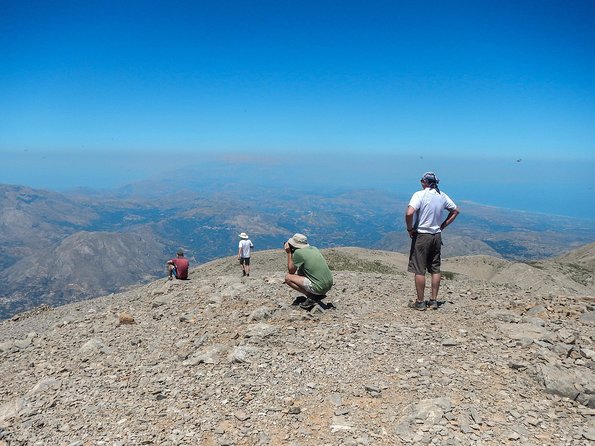
The tour is run by Creta Trekking, and group size is capped at 8 travelers. That cap changes the vibe. You’re not just a number; you can get help adjusting pace, using poles, or dealing with a slow patch.
Guide quality is a repeated theme from the experience. One review specifically highlights guide Michaelis as highly professional, and that matters because on a mountain, professionalism means safety, pacing, and good decision-making when conditions are less than perfect.
If you’re the kind of traveler who wants the route explained and the day guided without micromanaging, this kind of setup fits well. You’ll still do your own hiking, but you’re not left guessing.
Also, it helps that the tour includes small comforts—snacks and poles—so your attention stays on the hike rather than logistics.
Price and what you get for $347.05
At $347.05 per person, this isn’t a budget add-on. You’re paying for a guided full-day climb, a small group, and included hiking support.
Here’s how I think about the value:
- Small group (max 8) often costs more than mass tours, but it’s worth it for a mountain day
- Trekking poles and snacks included reduce what you’d otherwise buy or carry
- A full guided expedition to Crete’s highest point saves you from figuring out timing and mountain strategy on your own
If your vacation style is “one big hike day” instead of “many small walks,” the price is easier to justify. You’re spending your best daylight window on a summit that delivers a clear wow-factor view.
On the other hand, if you’re traveling with very limited hiking ability or you’re looking for an easy half-day stroll, you’ll likely feel like you overpaid for the effort. This one is best when you actually want a workout with a payoff.
Who this Psiloritis hike is best for
This tour asks for moderate physical fitness. That’s the sweet spot: you don’t need to be a mountain athlete, but you should be comfortable walking for hours and handling significant elevation gain.
You’ll probably enjoy it most if:
- You want Crete’s highest summit as a central goal for your trip
- You like hikes with changing scenery, not just one long line of the same trail
- You prefer a small-group experience where you can talk to your guide
- You want a guided day that includes practical gear and a real snack at the top
You might want to skip it if:
- Your schedule can’t handle a weather-dependent change
- Your legs struggle with steep, rocky descents
- You’re looking for a relaxed, flat walk type of outing
Should you book Psiloritis with Creta Trekking?
I’d book this if your travel plan includes one “earned view” day and you’re ready for a meaningful climb. Crete’s highest point at 2456m, plus a guided small-group format, and that summit snack payoff make it feel like a complete experience, not just a hike on a calendar.
Book especially if you care about getting value from the day. The included poles and snacks, the guided pacing, and the fact that the climb is structured around a clear summit target all help you have an enjoyable time even though it’s physically demanding.
I’d hesitate only if you’re not confident in your ability to handle roughly 900 meters of ascent and descent, or if you can’t be flexible about weather. This is the kind of hike where good conditions matter, and the tour follows through with alternate dates or a refund if weather cancels it.
FAQ
How long is the Psiloritis (Mount Ida) full-day hike?
The tour lasts about 8 hours (approx.).
What is the group size for this expedition?
The maximum group size is 8 travelers.
What fitness level do I need?
The tour is described for travelers with a moderate physical fitness level.
Is the hike to the summit only a short climb, or is it a full workout?
You’ll hike to the top in about 3 hours, and it’s a full-day expedition overall. One review noted around 900 meters up and down.
What is included during the hike?
Snacks and trekking poles are provided.
What happens if the weather is bad?
This experience requires good weather. If it’s canceled due to poor weather, you’ll be offered a different date or a full refund.
Where does the tour start and end?
It starts at the Bali meeting point (CQ5J+QH Bali / CQ5J+QHR Bali, Greece) and ends back at the same meeting point.