
Review · DRINKING TOURS
Monastery – Ancient Olive tree & Museum-Cretan Brewery Private Tour from Chania
Monastery views beat the bus ride. This private half-day outing from Chania mixes big countryside scenery with two very hands-on stops: the Transfiguration Monastery on Kastelos and the world-famous olive tree at Vouves. I especially liked how the day feels like more than sightseeing, with real context for Cretan customs plus tastings along the way.
Two standouts do the heavy lifting: the monastery’s dramatic setting over the White Mountains and the Aegean, and the Vouves olive tree’s museum, where you can see the tools behind olive cultivation. One thing to consider: it’s a tight schedule for a 5-hour day, and you’ll be on the move between rural spots—so plan for some uphill/uneven ground around the monastery area.
If you’re the kind of traveler who likes your vacation with structure (but not crowd chaos), this works well. And with guides like Christine and Thanasis, it tends to feel less like a lecture and more like a thoughtful local day out.
In This Review
- Key highlights to know before you go
- Kastelos’ Transfiguration Monastery: calm, views, and a 2002 milestone
- Practical tip
- Inside the Monastery of Metamorphosis: how the architecture supports the setting
- What you should watch for
- Vouves Olive Tree: the world’s oldest tree story you can walk through
- The kotinos connection (and why it matters)
- Timing and what to do with it
- Olive Tree Museum: traditional tools, not just talking points
- Cretan Brewery S.A.: Charma beer and the practical side of making it
- What you learn during the tour
- Beer tasting: how to make it worth your time
- The bus ride perks: coffee, olive oil, WiFi, and fridge-cold drinks
- Price and value: does $555.27 per group make sense?
- My honest take on value
- Who this tour suits best (and who might want something else)
- Quick FAQ
- FAQ
- How long is the Monastery and Olive Tree + Brewery tour?
- What time does the tour start?
- Is this a private tour or shared group?
- How big is the group?
- What’s included in the tour price?
- What tastings happen during the day?
- Which stops are part of the itinerary?
- Who guides the tour, and what languages are offered?
- Should you book this private Chania countryside tour?
Key highlights to know before you go
- Transfiguration Monastery at Kastelos: founded on a rocky hill with sweeping views over the Aegean and the White Mountains
- Vouves Olive Tree facts you can actually picture: productive for unknown centuries, with age estimates from at least 2,000 to up to 4,000 years
- Olympic olive branches connection: kotinos from Vouves were used for wreaths at Athens 2004
- Olive Tree Museum in a 19th-century house: displays traditional cultivation tools
- Cretan Brewery S.A. tour + Charma tasting: organized brewery set among orange trees and olive groves
- Private group of up to 6 with modern bus comforts: WiFi and USB charging, plus small-drink perks like a fridge on board
More time indoors, out of the heat
- Minoans World 3D Museum & 9D Cinema
★ 4.5 · 315 reviews - Knossos Palace, Museum & Rethymno city Private Tour from Chania
★ 5.0 · 69 reviews - Knossos Palace, Museum & Heraklion City Tour From Chania
★ 4.2 · 61 reviews - Private Tour Knossos Palace-Archaeological Museum-Heraklion Town
★ 4.5 · 11 reviews
Kastelos’ Transfiguration Monastery: calm, views, and a 2002 milestone
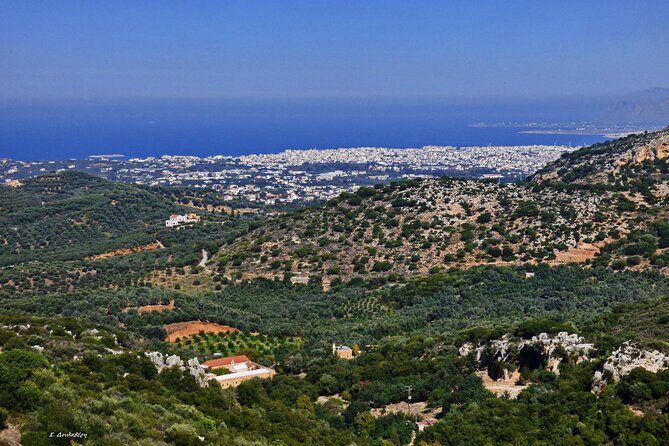
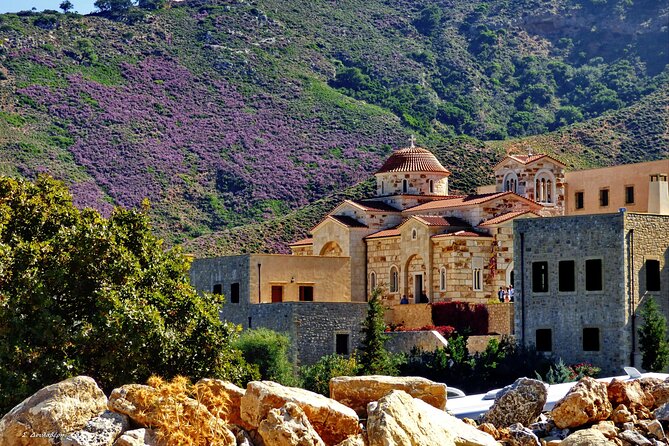
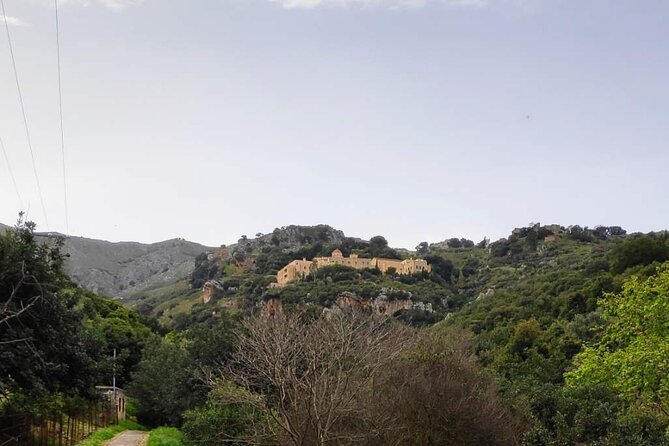
The day starts with a trip from Chania into the Varypetros area, about 10 km south of the city. Your first major stop is the Monastery of Metamorphosis (Transfiguration), set on a rocky hill under the older ruins of the Byzantine castle “Kastellos.” Even before you get into the details, the location is the point: you look out over the White Mountains and toward the Aegean.
This monastery isn’t just an old church you pass by. It’s newly built and part of the wider Monastery of Chrisopigi, continuing a century-long ascetic tradition. The setting is designed to balance built space with the natural environment—so when you’re standing there, you don’t feel like you’re trapped inside a monument. You feel like you’re in a place that was meant to let the scenery do part of the work.
There’s also a modern “remember this date” moment tied to the site. In 2002, Ecumenical Patriarch Bartholomew walked the paths of the region and laid the foundation stone for the new monastery temple, dedicated to the Transfiguration of Jesus. It gives the stop a sense of continuity: old roots, new chapter.
Practical tip
Plan on wearing comfortable shoes. The monastery is on a rocky hill, and it’s the kind of place where you’ll appreciate grip when paths aren’t totally even.
Inside the Monastery of Metamorphosis: how the architecture supports the setting
You’ll have about 1 hour 30 minutes here, which is just enough time to slow down without feeling stuck. I like that the experience is long enough for two passes: a first walk for the big view moments, and a second pass where you start noticing the monastery’s layout and how it’s meant to sit in harmony with the land.
If you’re curious about why places like this matter, this one offers an easy explanation. The monastery’s goal is an assemblage—structured and unstructured space in balance. Translation: you don’t get the feeling that the building is fighting the landscape. The building is acknowledging where it is.
There’s also something reassuring about the guide-led pacing here. A good explanation helps you avoid the common mistake of treating a monastery like a quick photo stop. In a place like this, the story of the site is part of the experience.
Worth lining up before you lock in this one:
What you should watch for
Look for the details related to the monastery’s expansion and the temple dedication. You’ll get more out of it when someone connects those points to what you’re actually seeing around you.
Vouves Olive Tree: the world’s oldest tree story you can walk through
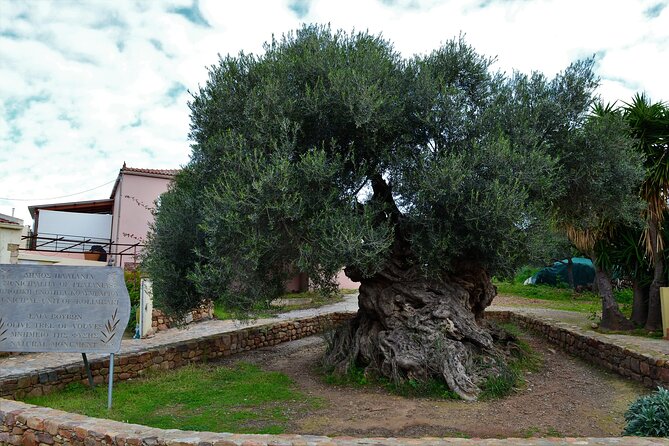
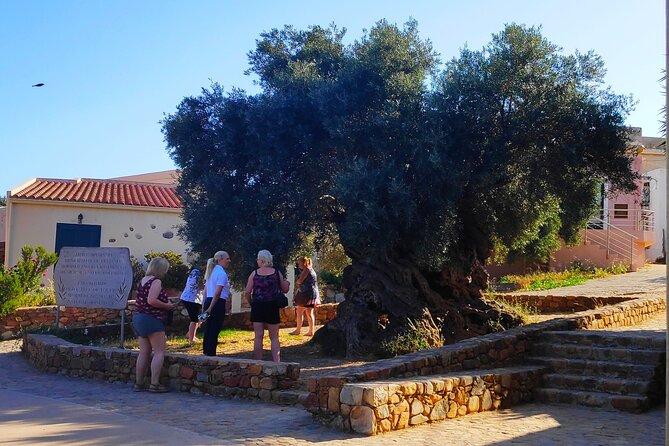
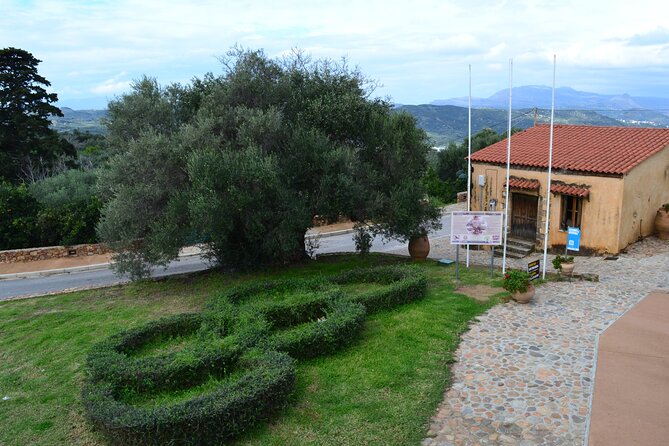
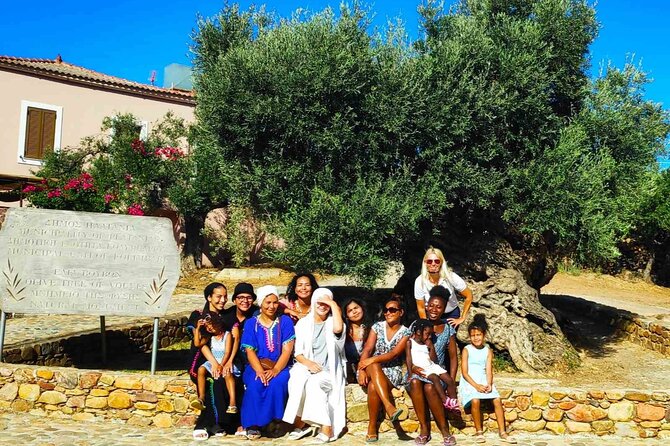
Next comes the traditional village of Vouves, where you’ll visit the Monumental Olive Tree. This is one of those attractions that sounds like a superlative until you’re actually standing near it. The olive tree remains productive today, which makes it feel alive rather than museum-like.
Age estimates here are part of the fascination. Tree ring analysis suggests at least 2,000 years old, while scientists from the University of Crete have estimated it could be closer to 4,000 years. You may never get a single exact number, but you do get something more useful for real visitors: a clear sense of why this tree is protected and why it became a symbol.
In 1997, the tree was declared a protected natural monument. Then, in 2009, the Olive Tree Museum of Vouves opened in a nearby 19th-century house. That means you’re not only looking at an ancient tree—you’re also stepping into the human tools and techniques that kept olive cultivation going.
The kotinos connection (and why it matters)
Here’s a detail I love because it links ancient agriculture to modern ceremony: as of the Olympic Games in Athens in 2004, olive branches (kotinos) from this ancient olive tree were used for the wreaths. It’s a reminder that olive culture isn’t just history on a wall—it’s still part of how people mark important moments.
Timing and what to do with it
You’ll have about 1 hour 30 minutes here, which gives you enough time to:
- take in the olive tree
- visit the museum displays
- read the story at a relaxed pace
The museum shows traditional tools used for olive cultivation. That’s the key difference between “seeing something old” and understanding how people used to work.
Olive Tree Museum: traditional tools, not just talking points
The museum is in a nearby 19th-century house, which is a small bonus you might not expect to matter. It helps the experience feel grounded in daily life instead of turning it into a sterile stop.
You’ll see tools associated with olive farming, which makes the whole day connect. When you later taste olive-based products or hear about Cretan life, the museum gives you a reference point. You start to recognize olive cultivation as a system—seasonal work, tools, and patience.
One more reason this stop lands well: it gives you variety. The monastery is about faith and setting. Vouves is about time, farming, and survival. Same region, totally different angle.
Cretan Brewery S.A.: Charma beer and the practical side of making it
After the olive tree, the route moves toward Zounaki village in the municipality of Platanias, around 25 km from Chania city center. You’ll arrive at the Cretan Brewery, set in an organized industrial installation of about 1,500 m², surrounded by orange trees and olive groves.
It’s the kind of contrast that’s fun: you’re in a modern brewing facility, but the place feels connected to what grows outside. That combination keeps the tour from feeling like a standard factory visit.
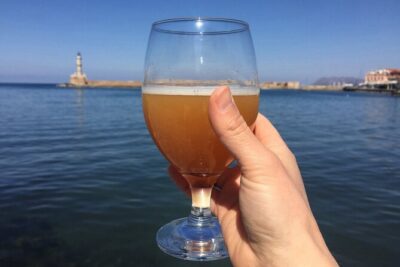
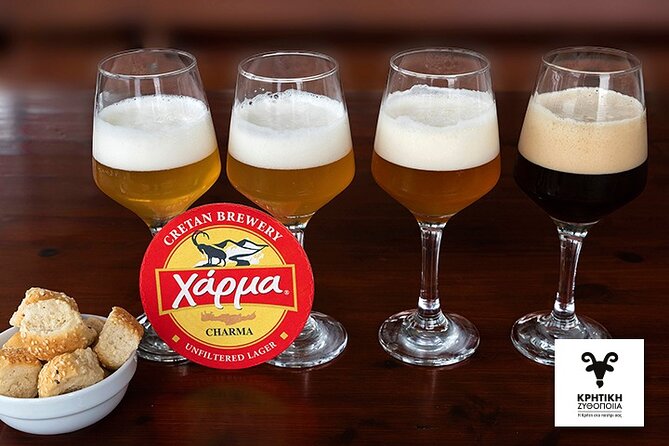
You’ll have about 1 hour here, including the guided process tour and tastings. The highlight is Charma beer—the first beer from Chania—offered in blonde or dark versions. The brewery describes it as full flavored, aromatic, refreshing, and easy to drink, and the tasting is the moment you decide for yourself.
What you learn during the tour
If you like knowing how something gets made, the brewery portion gives concrete details, including:
- high-quality malts from Greece and Belgium
- hops sourced around the world
- crystal water from the White Mountains of Crete
Those specifics help you understand why beer taste isn’t random. It’s ingredient choices plus process.
Beer tasting: how to make it worth your time
A tasting can be either quick and forgettable or genuinely useful. For this one, I’d approach it like a mini lesson.
Try to pay attention to the difference between the blonde and dark Charma, not just how it hits your palate. When you hear about water and malts, suddenly the beer becomes a real product with a story, not just a sample you sip and move on.
Also, remember this is a 5-hour day total. If beer isn’t your thing, you’ll still get value from seeing an organized brewery and hearing the basic process—but if beer is your thing, this is the most fun payoff moment.
The bus ride perks: coffee, olive oil, WiFi, and fridge-cold drinks
This isn’t only about the three big stops. The “in-between” time also matters because it’s where you learn how Cretan life works.
On board, you get an audiovisual presentation on Cretan customs, delivered during the drive. It’s a low-effort way to get context before you reach the monastery and olive sites. There are also USB charging ports and WiFi on board, which is helpful if you want to keep your phone battery alive for photos.
You’ll also stop for Greek coffee and an olive oil tasting in a traditional kafenion. That combo is smart. It slows the day down and gives you a taste of everyday Cretan flavors in a setting that’s not rushed.
One extra detail I really liked from the way the day is run: the minibus can include a fridge, so you can get a cold drink on warm days. It’s a small thing, but it changes the comfort level when you’re out in the sun and moving between countryside stops.
Price and value: does $555.27 per group make sense?
This tour is priced at $555.27 per group (up to 6 people), for about 5 hours. That means the value depends heavily on how many people you pack into your group.
Here’s what’s included for that group rate:
- air-conditioned vehicle and private transportation
- a local tour leader (English and German speaking)
- all fees and taxes
- admission tickets for the monastery and the olive tree museum
- the guided brewery experience plus beer tasting
- Greek coffee and olive oil tasting
- WiFi and USB charging
- public liability insurance
- mobile ticket
Tips aren’t included, so plan a little extra if you want to reward good service.
My honest take on value
If you can fill a few spots—say you’re a family or a small group—this feels more like a smart way to buy time and avoid logistics. You’re not just paying for a vehicle; you’re paying for access (admissions), guided interpretation, and tastings that would be annoying to stitch together on your own in a half-day.
If it’s just one person, the per-person cost can feel high. In that case, you’ll want to be sure you really care about all three themes: monastery + ancient olive culture + organized brewery beer.
Who this tour suits best (and who might want something else)
I think this tour fits best if you:
- want a private day with a small group
- like rural stops with meaning, not only photo stops
- enjoy food culture, especially olive-related tastings
- appreciate a guided explanation that connects the dots
It’s also a strong choice if you’re traveling with mixed ages or interests, because each stop offers something different: quiet spirituality, ancient agriculture, and a hands-on brewery experience.
If you’re chasing only beaches and “maximum time outdoors with minimal stops,” you might prefer a simpler itinerary. But if you want the countryside story behind Chania, this one gives it to you in a focused chunk.
Quick FAQ
FAQ
How long is the Monastery and Olive Tree + Brewery tour?
It runs about 5 hours (approximately).
What time does the tour start?
The start time is 8:00 am.
Is this a private tour or shared group?
It’s a private tour/activity. Only your group participates.
How big is the group?
The price is per group of up to 6 people.
What’s included in the tour price?
All fees and taxes are included, along with the monastery and olive tree admissions, Greek coffee and olive oil tasting, beer tasting at the brewery, and private air-conditioned transportation with WiFi and USB charging.
What tastings happen during the day?
You’ll have Greek coffee and olive oil tasting at a traditional kafenion, plus a beer tasting at Cretan Brewery S.A. (Charma).
Which stops are part of the itinerary?
You’ll visit the Transfiguration Monastery at Kastelos, the Monumental Olive Tree and Olive Tree Museum in Vouves, and Cretan Brewery S.A.
Who guides the tour, and what languages are offered?
There’s a local tour leader who speaks English and German.
Should you book this private Chania countryside tour?
If you’re looking for a half-day that feels focused and personal—monastery views, ancient olive culture, and Charma beer in one smooth route—this is a strong pick. The biggest reason to book is the combination of included admissions and tastings wrapped into a private small-group format.
Book it especially if you’ll have a group of 2–6 people, because the $555.27 rate works best when split across a few minds and appetites. If you’re just one person and you only care about one theme (say, only beer or only the olive tree), you might get better value with a shorter, more targeted option. But if you like the “three stories in one day” style, you’ll likely leave with more than photos—you’ll have a clearer picture of Cretan life beyond the coastline.
More Drinking Tours in Chania




Cool, Indoor Crete


More Tour Reviews in Chania

Fresh Off the Boat: Newest Crete Reviews



Drinking Tours, compared.
 ★ 4.8Rethymno: Sunset Catamaran Cruise – Sushi & Open BarFrom $100446 reviews
 ★ 4.8Hersonissos: Luxury Sunset Catamaran Cruise Sushi & Open BarFrom $94442 reviews
 ★ 4.9Heraklion: Catamaran Cruise to Dia with Sunset, Meal & BarFrom $132181 reviews
 ★ 4.8Heraklion: Sunset Luxury Cruise with Sushi and Open BarFrom $106169 reviews
 ★ 5.0Luxury Catamaran Cruise, Dia Island –Open Bar & Lunch -Top Rated!From $145143 reviews
 ★ 5.0Dia Island Catamaran – Premium Lunch, Open Bar, Small GroupFrom $181126 reviews
 ★ 5.0Sunset Craft Beer & Food Tour – Chania Old PortFrom $13286 reviews
 ★ 5.0Panormo: Luxury Catamaran Cruise with Lunch & Open BarFrom $17480 reviews
Browse the lists this tour appears in