Review · CRETE
Battle of Crete WW2 Private Tour (price per group of 6)
One day, five places, and the story clicks into place.
This private Battle of Crete tour turns memorial stops into a clear timeline, led by a passionate guide who can tailor the day to what you care about. I like that it stays human in scale: walking grave lines, reading names, and seeing how terrain shaped the fighting. You also get private, round-trip transfers that keep the logistics painless.
What I love most is the way the guide connects each location to the battle’s next step, instead of treating sites like checkboxes. I also like the customization angle, including the option to focus on individual units and the parts of the campaign you want explained. One thing to keep in mind: it runs as a structured 6-hour loop, so the pace can feel full if you prefer long, slow stays in just one spot.
In This Review
- Key highlights at a glance
- A private way to trace the Battle of Crete, stop by stop
- Price for up to 6: when this makes sense
- Pickup, timing, and how the 6-hour pace feels in real life
- Souda Bay War Cemetery and the 42nd Street memorial
- Hill 107, the German military cemetery, and the Maleme airfield views
- Tavronitis Bridge and the RAF memorial stop
- Galatas village square: Greek-New Zealand and Welsh memorials
- Agia Prison Valley at Alikianos: where the occupation turned brutal
- What the guide customization and the take-home USB download really add
- Practical tips: what to bring, wear, and ask
- Should you book this Battle of Crete tour?
- FAQ
- Where in Chania does pickup happen?
- How much is the tour for a group?
- How long is the tour?
- What language is the tour offered in?
- Is the tour private or shared?
- Are admission tickets included for the memorial stops?
- What’s included in the price?
- Are snacks or lunch included?
- What should I bring to get the take-home materials?
- When does the tour run?
- What happens if weather is bad or I need to cancel?
Key highlights at a glance
- Private guide, English-speaking, with room for your questions and interests
- Souda Bay War Cemetery walk-through of the Allied Commonwealth graves plus the 42nd Street memorial
- Hill 107 and views over Maleme airfield, including how access rules shape what you can see
- Tavronitis Bridge and RAF Memorial stop for the airmen lost in the battle
- Galatas memorials tied to Greek-New Zealand and Welsh remembrance
- Agia Prison Valley finale at the prison-site valley tied to executions during occupation
Still weighing it up? A handful of other Crete trips worth a look beside this one.
- From Kissamos Port: Boat Cruise to Balos Lagoon & Gramvousa
★ 4.2 · 6,755 reviews - From Chania: Full-Day Samaria Gorge Trek Excursion & Guide
★ 4.6 · 3,191 reviews - Cretan Safari – 4×4 Adventure to Preveli Beach with Lunch
★ 5.0 · 780 reviews - Elafonissi Beach Day Trip from Chania -Stop in Elos Village
★ 4.5 · 744 reviews
A private way to trace the Battle of Crete, stop by stop
The Battle of Crete can feel like a blur in textbooks: landings here, fights there, and then a frantic spiral of airborne troops, ports, and airfields. What makes this tour work is the order of the stops and the way your guide translates the geography into cause and effect. You end the day with a stronger sense of where decisions mattered and why some places attracted so much attention.
Because it is private, you are not stuck listening through a script while other people chase their own interests. The guide can slow down when you want details, and speed up when you just want the big picture. If you’re traveling as a family with mixed interest levels, this format is especially useful. One person can be focused on specific units or moments, while someone else can concentrate on what each memorial site represents.
And yes, the day is emotional. You are walking among graves and remembrance markers tied to people who were killed, displaced, or later targeted during the occupation. The tone stays respectful and grounded, not dramatic.
Price for up to 6: when this makes sense
The price is $555.98 per group (up to 6). That is a per-group rate, so the value improves a lot if you book with friends or with family members in the same “we want the same plan” mood.
Here is the practical math: if you have a full group of 6, you are effectively paying around $93 per person for a full day with a private vehicle and guide. Even at fewer people, you still get something you usually pay a lot more for elsewhere: a dedicated driver-guide relationship and transfers door-to-door around greater Chania.
This is also one of those tours where the extras are clear upfront. The memorial entries themselves are free, while snacks and lunch are optional adds. If you budget for those separately, you will not feel surprised later.
If you are a solo traveler or a couple who prefers chatting less and standing still more, a private tour can be pricier than a bus day. But if you want the flexibility to customize the day, and you care about understanding what you’re seeing, it usually holds its own.
Pickup, timing, and how the 6-hour pace feels in real life
This tour is designed for about 6 hours, and pickup works from the address of your choice in greater Chania (within about 10 km / 6 miles around Chania old town) or near the national road up toward Maleme airport. The provider also lists Souda port as a pickup option.
You get two-way transfers, which matters more than it sounds. West Crete has places that are not right next door to each other, and memorial stops are often spread out along roads and viewpoints. Having the car waiting means you do not burn half the day figuring out routes, parking, and timing.
Start time is tied to the morning window (the experience lists service hours from 7:00 AM to 11:00 AM). If you are an early riser, that helps you arrive before it gets too hot. One practical note: the tour requires good weather, so if a forecast turns bad, you should expect a change of date or a refund.
The pace is active: short walks, driving segments, and a few timed stops. That’s a good fit for most people, and it is especially workable if you are comfortable walking at a memorial pace rather than a sightseeing crawl.
Souda Bay War Cemetery and the 42nd Street memorial
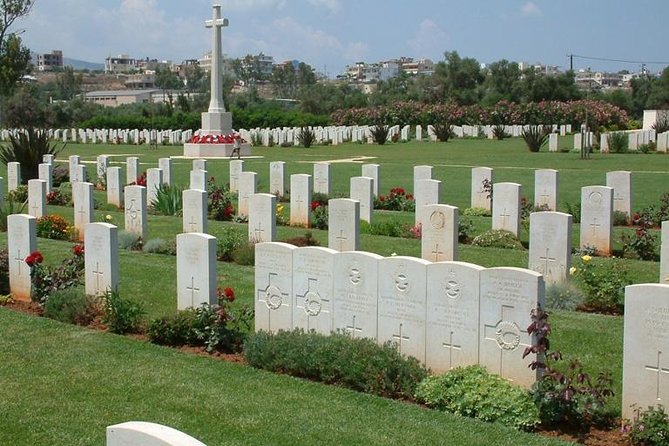
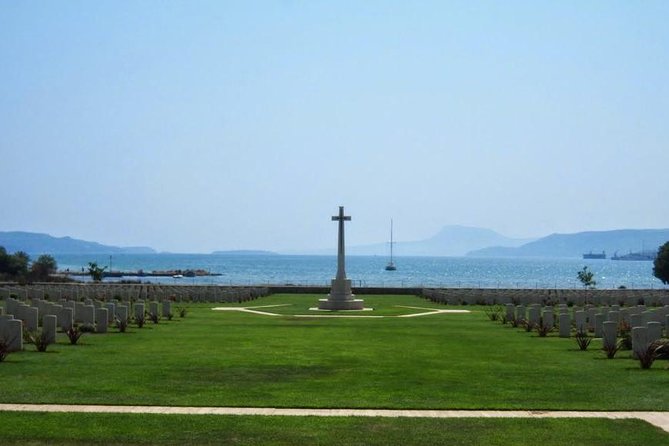
The day starts at Souda Bay War Cemetery, in the Commonwealth Cemetery where Allied soldiers who died in the Battle of Crete are buried. Your walk is not rushed. You move along the graves, and your guide provides stories to give the names context rather than treating the site like a list.
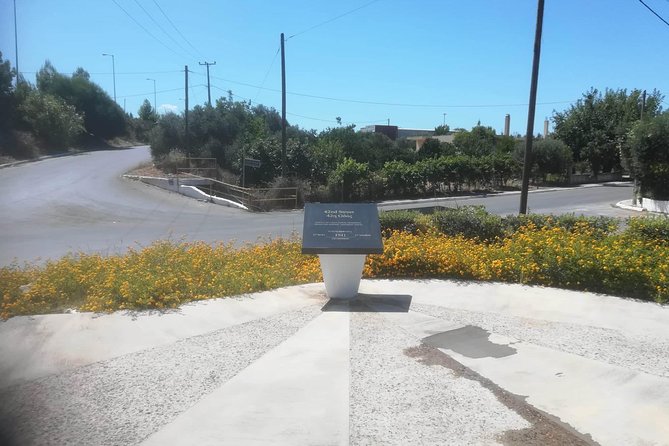
A nice touch is the connection to the 42nd Street memorial, where the tour includes a bayonet-charge reference. This is the kind of detail that helps you understand why a specific spot matters, even if you are not standing on a battlefield in the Hollywood sense.
You will appreciate how this stop frames the whole tour. It gives you a baseline of what was lost, before you start learning how the fight unfolded in hills, bridges, and airfield approaches later in the day. Admission here is listed as free, so you will not spend time handling tickets.
Hill 107, the German military cemetery, and the Maleme airfield views
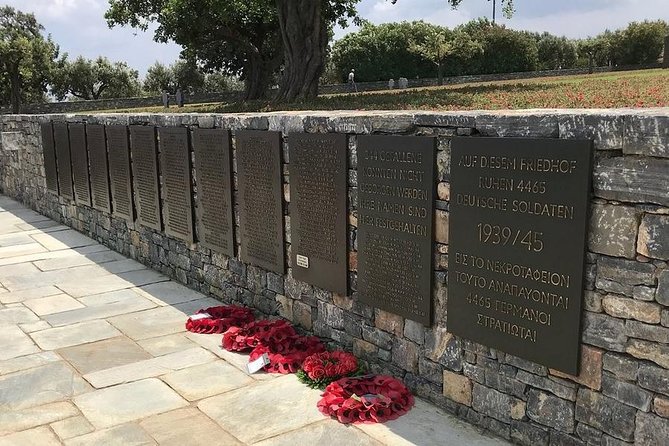
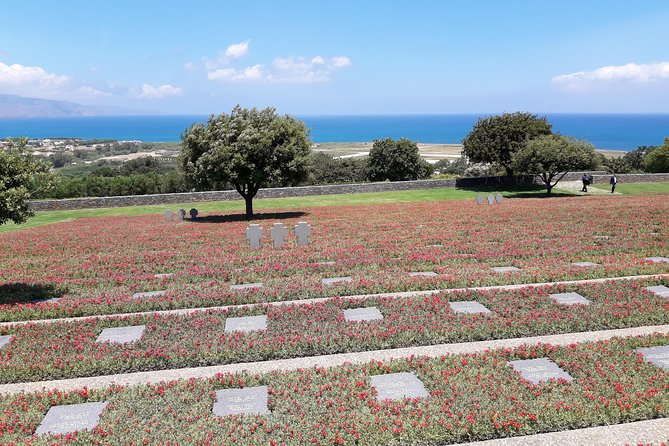
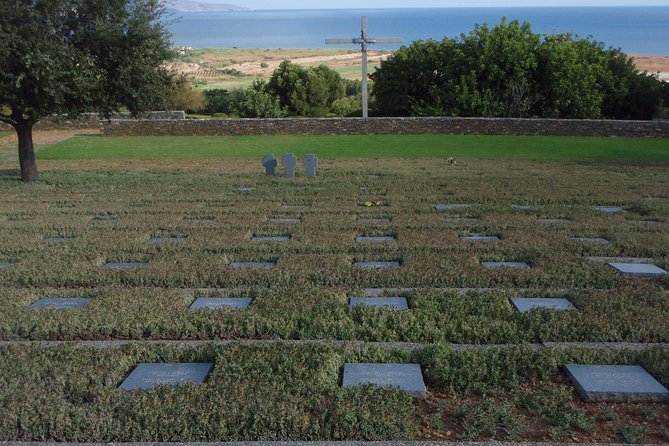
Next comes the German Military Cemetery on Hill 107, which overlooks Maleme airfield. Your guide explains how the battle developed from this vantage, and you’ll see why control of airfields wasn’t just a detail—it was the backbone for reinforcement and resupply.
There is also a quick stop near Maleme airfield. One key reality check: it is still an active military area, so access is restricted and entry is forbidden. You’ll get views, but you won’t wander onto restricted ground. That keeps expectations realistic.
From Hill 107, you will also walk to the Allied headquarters on top of the hill. The benefit of that walk is not only the scenery—it’s the way it clarifies command decisions and observation. When you can stand somewhere that once mattered for planning, your mental map snaps into focus.
Admission at this stop is also listed as free. In other words, this is a high-impact segment of the day without extra site fees.
Tavronitis Bridge and the RAF memorial stop
Tavronitis Bridge played a vital role in the Battle of Crete, and the guide explains how it became one of the Germans’ primary targets. Even if you know the broad outline of the invasion, a bridge is a different kind of lesson: it’s a choke point, a movement route, and a place where attackers can aim at more than just a line on a map.
Your time here includes a stop at the nearby RAF Memorial, dedicated to the RAF pilots who fell during the battle. This gives the day a more complete air-and-land picture. You stop seeing the campaign as only infantry fights and start understanding how aircraft crews became part of the story too.
The allotted time is about 45 minutes, so you will have enough time to walk, look around, and absorb the explanation without feeling you are being herded. It’s a segment that works well if you’re curious about different arms of the conflict, not just ground battles.
Galatas village square: Greek-New Zealand and Welsh memorials
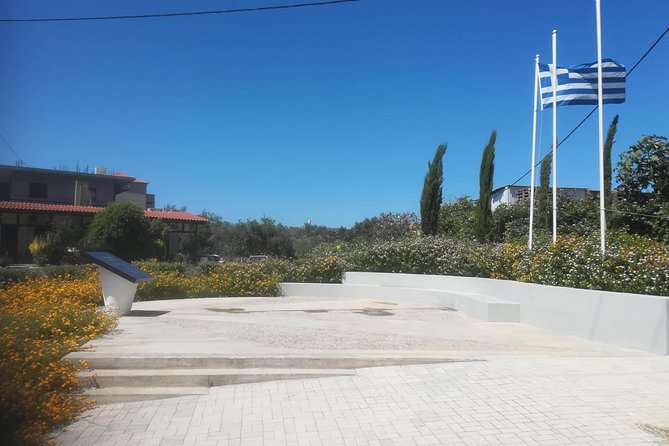
In Galatas, you visit the Greek-New Zealand memorial in the village main square. This stop helps connect Crete’s local story to the wider Allied forces, and it’s a meaningful place to learn about the battle events tied to the area.
Your guide also covers the significance of the site and what happened there, then you’ll visit the Welch memorial as well. The effect of pairing these memorials is that you start seeing the battle as both local and international. The place names make it easier to remember what you just learned—Galatas becomes not just a dot on a route, but a remembered location tied to specific remembrance.
This stop runs about 1 hour, giving you time to read, ask questions, and let the guide’s narrative connect the dots between earlier cemetery context and later, grimmer occupation history.
Agia Prison Valley at Alikianos: where the occupation turned brutal
The final stop is Alikianos, centered on Agia Prison Valley. Here you see where Greek units were stationed, and you visit Agia Prison, a site that has layered meaning across the conflict. During the battle period it had a role as a hospital, and during the occupation it became a prison where hundreds of Greeks were executed.
This is the stop that will slow you down the most. It’s also the one where respectful silence often feels appropriate—there’s no way to treat this lightly, because it’s about real people who were harmed after the main battles ended.
The time allotted is short, about 20 minutes, but it is built for meaning rather than sightseeing. If you want to ask more questions, you can—just know the day’s schedule is structured around covering multiple sites with time to walk and absorb.
What the guide customization and the take-home USB download really add
This is a private tour, but the customization option is what makes it feel personal rather than just private. The tour can be tailored to your areas of interest, including focusing on individual units. That matters because different people travel for different reasons: some want the tactical story, some want unit connections, and some want the human story of memory and sacrifice.
Another practical, surprisingly useful feature is the USB stick idea. The tour says you can bring a USB stick to take home reports, books, diaries, maps, and photos. In other words, your day doesn’t end when you get back to your room. You can review materials later and keep the learning going, which is especially helpful if you’re a WW2 buff or if you want to share follow-up reading with family.
From the experience feedback, the guide approach also connects places to lived perspectives—there’s a real sense of care in explaining why local people took huge risks and why those from other countries showed up to fight. That kind of framing helps you understand not just the battle timeline, but the moral complexity of what happened on the ground.
And if your group includes multiple interests, the private format lets the guide pace the day around you. One person can ask for more detail on a unit, while someone else can focus on memorial inscriptions and what they mean.
Practical tips: what to bring, wear, and ask
You’ll get the most out of the day if you plan for a mix of walking and road time. Bring comfortable shoes for short walks on memorial grounds and viewpoints. The tour includes an air-conditioned vehicle, which helps during driving segments on warmer days.
Also, consider the human side of the memorial stops. Some people want to read slowly; others just need the key context quickly. Since you have a private guide, you can usually steer the balance.
A few concrete things to bring:
- A USB stick for the take-home materials
- Water and a light snack plan, since snacks are not included (listed at 10 euro for snacks and drinks)
- A plan for lunch if you want it: lunch is optional and listed at 25 euro per person
If you’re the kind of traveler who likes to leave with a sharper mental map, ask your guide to repeat the “why this place mattered” explanation at least once in plain terms. That turns a collection of sites into one clear narrative.
If you have serious health concerns, the tour notes that you should notify the provider so participation can be considered appropriately.
Should you book this Battle of Crete tour?
If you care about WW2 history but you also want the day to feel personal and respectful, I think this one is a strong choice. The combination of a private guide, free memorial-site entries, and door-to-door transfers makes it easier to focus on learning rather than logistics.
You should consider skipping it only if you want a long, slow day in just one or two places, or if you dislike structured memorial stops that can be emotionally heavy. With a fixed loop and multiple sites, the tour is better for travelers who like a clear, guided storyline.
A quick “best fit” checklist:
- You want customization and unit-level details
- You like memorial walks with context, not just photos
- You’re traveling with 2 to 6 people and can share the group price
- You’re happy to bring a USB stick for take-home materials
FAQ
Where in Chania does pickup happen?
Pickup is offered at Souda port, your accommodation, or any other convenient location within about 10 km (6 miles) around Chania old town, and near the national road up to Maleme airport. You need to contact the provider to confirm your exact pickup place.
How much is the tour for a group?
The price is $555.98 per group, up to 6 people.
How long is the tour?
The duration is about 6 hours.
What language is the tour offered in?
The tour is offered in English.
Is the tour private or shared?
It’s a private tour/activity, meaning only your group participates.
Are admission tickets included for the memorial stops?
Admission tickets are listed as free for the stops included in the tour.
What’s included in the price?
Included features are an air-conditioned vehicle, private transportation, and guiding services for the WW2 memorials in Chania.
Are snacks or lunch included?
Snacks are not included (listed at 10 euro for snacks and drinks). Lunch is also not included but is optional (listed at 25 euro per person).
What should I bring to get the take-home materials?
You may bring a USB stick to take home reports, books, diaries, maps, and photos.
When does the tour run?
The listed service window is Monday to Sunday from 7:00 AM to 11:00 AM.
What happens if weather is bad or I need to cancel?
The experience requires good weather. If it’s canceled due to poor weather, you’ll be offered a different date or a full refund. Cancellation is free up to 24 hours in advance for a full refund.